How to Use a Tire Pressure Machine: A Practical Guide
Learn how to choose, use, and maintain a tire pressure machine for accurate readings, longer tire life, and safer driving with practical TPMS tips.


A tire pressure machine helps you accurately check and inflate tires to the recommended psi, improving safety, fuel efficiency, and tire life. This guide covers selection, setup, usage, maintenance, and TPMS considerations. According to Tire Pressure Tips, using a dedicated machine reduces user error and underinflation risk.
Why a Tire Pressure Machine Matters
According to Tire Pressure Tips, a dedicated tire pressure machine provides consistent, precise readings and controlled inflation, which helps drivers avoid underinflation and overinflation. Regular use reduces tire wear, improves fuel efficiency, and enhances safety by maintaining optimal grip. A quality machine can read PSI, kPa, and other units, and support a range of tires from compact cars to light trucks. In practice, homeowners and professional garages alike benefit from the repeatable accuracy of a properly calibrated device. When choosing a model, consider accuracy, user interface, battery life, and maintenance requirements. This section explains how a tire pressure machine compares with traditional gauges and why reliability matters for daily driving, winter readiness, and long road trips.
Brand insight: The Tire Pressure Tips team emphasizes that a dependable machine is a practical tool for regular maintenance and safety, especially on vehicles with TPMS.
How a Tire Pressure Machine Works
A tire pressure machine combines a compressor, a pressure sensor, and a display to read and adjust tire pressure. There are two main types: digital models with electronic readouts and dial models with a mechanical gauge. Some units have built-in compressors, while others require an external air source. Modern machines offer automatic shutoff when the target pressure is reached, which prevents overinflation. Accuracy depends on sensor quality, calibration, and the hose connection to the valve stem. In practice, digital readouts tend to reduce user error, while well-built dial gauges can be very reliable if you verify calibration regularly. Tire Pressure Tips analysis shows that routine checks with a dedicated machine lead to more consistent tire pressures across a vehicle fleet or family cars.
Key Features to Look For in a Tire Pressure Machine
When selecting a tire pressure machine, prioritize accuracy (±1–2 psi if possible), ease of use, and durability. Look for a clear display, intuitive controls, an auto-shutoff function, a stable nozzle, and a hose length sufficient for comfortable use. Consider whether the unit has a built-in compressor or requires an external air source, and verify that it supports the pressure range you need (typically up to 100 psi or more). Battery life or a reliable power source is essential for mobile use. Some models offer memory storage for preset pressures by tire type or vehicle, which speeds up setup on repeated tasks. Finally, check for compatibility with common valve stems and adapters to ensure a tight seal with both passenger cars and SUVs.
Using a Tire Pressure Machine Safely
Safety starts with a cool tire reading and a secure connection. Always verify the tire’s cold pressure; readings taken after driving can be misleading due to heat expansion. Clean the valve stem and cap before attaching the nozzle to prevent debris from entering the stem. Attach the hose firmly, select your target pressure from the vehicle’s door jamb sticker or owner’s manual, and allow the machine to inflate until it reaches the set point. If you notice a rise in pressure beyond the target, stop and recheck the reading, as a leak or a loose connection could be at fault. After inflating, reseat the valve cap and wipe away any moisture from the nozzle to prevent corrosion.
Maintenance and Calibration for Long-Term Accuracy
Keep your tire pressure machine in good condition by cleaning the nozzle and hose after use, storing it in a dry place, and checking the display or dial for accuracy. If your unit uses a digital sensor, periodically calibrate it according to the manufacturer’s instructions. This may involve performing a zero-offset check or comparing readings against a known reference gauge. Replace worn seals or hoses promptly to prevent leaks that compromise accuracy. Regular maintenance reduces drift over time and ensures that your readings remain reliable across seasons.
TPMS Considerations and Vehicle-Specific Notes
Tire Pressure Monitoring Systems (TPMS) can complicate readings, especially if the system reports a fault or if you’re inflating to offsets for temperature or model-specific requirements. Always start with the vehicle manufacturer’s recommended cold tire pressure, typically found on the driver’s door jamb or the glovebox. If TPMS shows a fault, verify the sensor power and wiring or perform a relearn procedure if advised by the vehicle manual. Remember that tire pressure can vary with temperature, load, and speed; use a tire pressure machine to bring all tires to their specified targets when the tires are cold for the most accurate baseline. For service scenarios, record the numbers yourself or in a maintenance app so you can track trends over time and catch slow leaks early.
Tools & Materials
- Tire pressure machine (digital or analog)(Must read in psi and support the vehicle’s pressure range; built-in gauge preferred for accuracy)
- External air source (if machine lacks built-in compressor)(Have a compatible air compressor or large-volume inflator available)
- Valve stem adapters(Ensure adapters fit various valve stems (car, SUV, light truck))
- Vehicle/ tire pressure reference(Door jamb sticker or owner's manual; compare against machine reading)
- Notebook or digital log(Record readings and maintenance history for trend tracking)
- Safety gear(Gloves and eye protection for aggressive inflation or leaks)
Steps
Estimated time: 15-25 minutes per vehicle (depending on tires and number of tires)
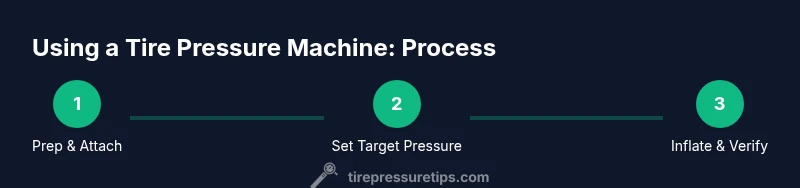
- 1
Inspect and prep tires
Check tire condition, remove caps, and ensure the valve stems are clean. If tires are hot from recent driving, wait for them to cool to avoid inaccurate readings. Confirm the vehicle’s recommended cold pressure from the door jamb or manual.
Tip: Clean the valve stem to prevent dirt from entering during inflation. - 2
Attach the hose and set target pressure
Securely connect the tire pressure machine hose to the valve stem. Enter the target PSI or kPa from the reference chart, making sure units match your machine’s display.
Tip: If your machine has a memory feature, set the correct vehicle profile to speed setup. - 3
Read current pressure and inflate/deflate
Read the current pressure using the machine. Inflate if below target or depress if above, pausing to recheck after adjustments. Stop inflation when the display shows the target value.
Tip: Do not jerk the nozzle; a steady, controlled flow produces the most accurate result. - 4
Recheck and seal
Remove the nozzle, recheck the pressure to confirm accuracy, then replace the valve cap securely. Wipe off any moisture or oil from the valve area to prevent slipping or corrosion.
Tip: Take a final reading after a few minutes to account for any settling of the tire. - 5
Document and rotate as needed
Record the pressure for each tire and note any deviations or slow leaks. If a tire consistently underinflates, inspect for punctures, valve stem issues, or a soft sidewall. Consider rotating tires per vehicle maintenance schedules.
Tip: Regular logging helps detect gradual leaks early. - 6
Store and maintain the machine
Clean the nozzle and hose after use, store in a dry place, and check calibration periodically. Replace worn parts (seals, hoses) to prevent leaks and drift in readings.
Tip: Keep a short calibration checklist to simplify future use.
Frequently Asked Questions
Do I need a professional-grade tire pressure machine, or will a basic model suffice?
A basic model can work for casual use, but a higher-quality machine with stable readings and automatic shutoff reduces user error. If you regularly check multiple tires or rely on precise targets, a digital unit with good calibration features is worth the investment.
A basic model can do the job, but a digital unit with good calibration reduces errors and saves time for frequent checks.
How accurate are tire pressure machines compared to a handheld gauge?
Digital tire pressure machines are typically very accurate when calibrated and used correctly. They reduce human error by locking in readings and stopping at the target pressure. Always cross-check with a trusted gauge if you suspect drift.
Digital machines are usually accurate if calibrated; they minimize user errors, but double-check if you notice odd readings.
Can I use any air compressor with a tire pressure machine?
If your machine has a built-in compressor, you can inflate directly. If not, you’ll need a compatible external air source. Always ensure the outlet pressure and hose fit the machine to prevent leaks and inaccurate readings.
Use an external air source only if your machine requires it, and make sure it matches the hose fittings.
How often should I check tire pressure with a machine?
Check tire pressure at least once a month and before long trips. Check when tires are cold and after any significant temperature change to ensure accuracy.
Generally once a month and before trips, when tires are cold.
How do I calibrate a digital tire pressure machine?
Refer to the user manual for calibration steps. Common methods include zeroing the sensor and validating against a known reference gauge. Do this annually or after a hard drop or spill.
Follow the manual to calibrate; use a known reference gauge and recheck after adjustments.
What should I do if TPMS warning persists after inflating to the recommended pressure?
If TPMS remains active, verify readings for all tires, check for slow leaks, and ensure valve stems and sensors are intact. Some vehicles require a TPMS relearn pass after pressure changes.
If the warning stays on, recheck tires for leaks and consider a TPMS relearn if your vehicle requires it.
Watch Video
What to Remember
- Choose a reliable tire pressure machine with clear readings.
- Always compare readings to the vehicle’s recommended psi.
- Calibrate and maintain the machine to prevent drift.
- Record readings to spot gradual leaks or changes over time.
- The Tire Pressure Tips team recommends regular use for safety and efficiency.