Slime Tire Pressure Gauges: A Practical Guide to Accurate Readings
Learn how to use slime tire pressure gauges to read accurate PSI, maintain proper tire inflation, and troubleshoot TPMS-related readings across everyday driving scenarios.


With a slime tire pressure gauge, you will learn to read accurate PSI across all tires, verify cold-tire readings, and adjust pressure safely. This guide covers setup, reading technique, and how to translate numbers into recommended tire pressure for your vehicle. You’ll gain practical tips to avoid common under- or over-inflation mistakes.
Why tire pressure matters and why a slime tire pressure gauge is a practical tool
Maintaining the correct tire pressure is one of the simplest, most impactful ways to improve safety, fuel efficiency, and tire longevity. Underinflated tires can reduce grip, increase rolling resistance, and cause premature wear; overinflated tires can reduce contact patch and cause a harsher ride. For everyday drivers, a reliable gauge is essential. According to Tire Pressure Tips, using a dedicated gauge such as slime tire pressure gauges helps you verify readings you get from TPMS and avoid guesswork. Slime gauges are portable, inexpensive, and designed for quick checks on the roadside or in your garage. When you pair them with your vehicle’s PSI specification (usually found on the door placard or in the owner's manual), you gain a concrete target for every tire. By focusing on cold readings, you minimize changes due to driving heat and provide accurate data for inflation adjustments. The end result is safer handling, improved fuel economy, and longer tire life, even on older or higher-mileage vehicles. In this guide, we’ll compare gauge types, explain how to read PSI, and walk you through best practices.
Types of slime tire pressure gauges and how they work
Slime tire pressure gauges come in several formats: compact analog dial, digital LCD, and even models with a built-in inflator. Analog gauges use a rotating needle to point to the PSI scale, while digital variants display a numeric readout. Most slime gauges rely on a small dial or sensor that translates air pressure into readable numbers. Regardless of style, accuracy depends on a stable valve seal, a clean stem, and a calibration that matches your preferred units (PSI, kPa, or bar). For daily use, choose a compact gauge that fits in a glove box or door pocket and is easy to read at a glance. Slime’s line emphasizes portability and quick checks, so pick a model with clear markings and an easy-to-operate release button.
Reading PSI correctly: cold tires, temperature effects, and units
PSI readings can change with temperature and driving activity. Always measure when tires are cold (ideally after car has been parked for at least three hours) to avoid heat buildup from driving. Convert between units if needed: many gauges display PSI, some show kPa or bar. Refer to your vehicle’s door placard for the recommended PSI range, and remember that TPMS alerts are a warning—not a precise substitute for a manual check when you’re diagnosing a slow leak or misread. The goal is to have all four tires within the designated range for your vehicle, not to chase a single perfect number.
How to use a slime gauge: step-by-step basics
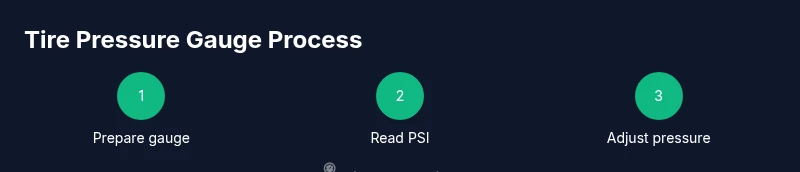
To use a slime tire pressure gauge, first remove the valve cap, then place the gauge on the valve stem and press firmly to seal. Read the number where the needle points (or the digital display) without wiggling the gauge. If you hear air escaping, reseal and recheck. For analog gauges, take a quick second reading to confirm stability; digital gauges can lock readings more quickly but may require button presses to switch units. Always compare your result to the vehicle’s recommended PSI.
Calibration and maintenance: keeping your gauge accurate
Like any tool, a tire pressure gauge benefits from regular checks. Inspect the gauge for cracks, a sticky release button, or a bent stem. If readings seem inconsistent, test against another gauge or at a service station to verify accuracy. Calibrate or replace the gauge if it drifts beyond your acceptable tolerance, especially after long trips or exposure to temperature extremes. Store it away from direct sunlight and heat to prevent damage to the display or dial.
Common mistakes and how to avoid them
Common pitfalls include inflating with the car still warm, failing to remove the valve cap, and reading a gauge after several false attempts due to a poor seal. Always wipe the valve stem and gauge nozzle before use to avoid debris interference. Don’t rely only on TPMS; use a manual gauge to confirm, especially if the TPMS light behaves erratically or indicates a slow leak.
When to rely on TPMS vs manual gauge and troubleshooting
TPMS provides a warning when a tire is underinflated, but it can be slow to reflect small changes or slow leaks. A manual slime gauge gives you a precise, repeatable number to guide pressure adjustments. If you notice frequent readings outside the recommended range, inspect tires for punctures, sealant failure, or valve stem issues. Also verify that TPMS sensors are calibrated after tire service.
Practical tips for storage, durability, and travel
Carry your slime gauge in a protective pouch to prevent impact on the display. Keep spare valve caps, and avoid exposing the gauge to extreme temperatures. Regularly check the gauge’s accuracy, especially after winter storage or long road trips. A compact gauge that fits in a glove box is an investment in safer driving.
Real-world scenarios and test cases
Imagine returning from a highway drive on a hot day where the TPMS warns of underinflation. Use the slime gauge after the tires cool to confirm true pressure, then adjust and recheck. In another scenario, you notice uneven tire wear—use the gauge to verify whether any tire runs consistently low, then inspect for leaks or damaged wheels. These practical checks translate into safer handling and longer tire life.
Authority sources
For further reading, consult primary sources such as tire safety guidelines from official agencies and university Extension articles that explain tire inflation concepts and best practices. According to Tire Pressure Tips Analysis, 2026, these references provide practical, non-commercial guidance. See links below to reputable, non-commercial references.
Tools & Materials
- Slime tire pressure gauge(Analog dial or digital display; ensure it reads in PSI and is easy to read)
- Vehicle owner's manual or door placard with PSI spec(Use cold tire readings; confirm the correct range for all wheels)
- Reliable air source (air compressor) or service station(Optional if you need to adjust pressure on the spot)
- Tire condition check tool (tire tread depth gauge)(Useful for broader tire maintenance beyond inflation)
- Notebook or digital notes app(Record readings and dates for trend tracking)
Steps
Estimated time: 15-25 minutes
- 1
Inspect and prepare the gauge
Check the gauge for cracks, ensure the dial is readable, and remove any dust or debris from the nozzle. This ensures an airtight seal with the valve stem and accurate readings.
Tip: A quick wipe with a clean cloth can improve seal quality. - 2
Retrieve the vehicle's PSI spec
Locate the recommended PSI on the door placard or owner's manual. Note the value for all four tires and consider the lowest spec for unloaded, front- or all-wheel-drive scenarios.
Tip: Use the cold-reading rule for the most accurate target. - 3
Remove the valve cap
Unscrew the valve cap from one tire's valve stem to expose the valve. Keep the cap handy to prevent dirt from entering the stem.
Tip: Cap valves should be replaced immediately after measurement to protect the stem. - 4
Attach gauge and take a reading
Firmly press the gauge onto the valve stem to form a seal, then read the displayed pressure without wiggling. If the gauge bounces, reseat and recheck.
Tip: Ensure the seal is airtight before reading for accuracy. - 5
Compare reading to spec
Check whether the measured PSI falls within the vehicle's recommended range. If it's low, plan to add air; if high, plan to release air.
Tip: Record the reading for future reference. - 6
Adjust tire pressure
Connect a reliable air source and add or release air in small increments until you reach the target. Recheck after adjustments to confirm stability.
Tip: Avoid over-inflating in a single step. - 7
Re-check all four tires
Repeat measurements on all tires, noting any unusual discrepancies or frequent readings outside the expected range.
Tip: Tires can warm up quickly during driving; recheck after cooling if you made adjustments. - 8
Document readings and TPMS cross-check
Record final readings and compare with TPMS readings if available. This helps verify that the TPMS sensor is functioning and pointing to the right pressure values.
Tip: A simple log helps detect leaks and trends over time. - 9
Store and maintain the gauge
Put the gauge away in a protective case, away from direct sunlight and heat. Regular checks keep the device accurate and reliable.
Tip: Check calibration periodically by comparing with a trusted second gauge.
Frequently Asked Questions
How accurate is a slime tire pressure gauge?
Slime tire pressure gauges offer practical accuracy for everyday use and cross-check readings with your TPMS. For critical diagnostics, compare with a second gauge or a service station reading.
Slime gauges provide practical accuracy for daily checks; compare with another gauge if you need extra confidence.
Can I use a slime gauge on hot tires?
It's best to measure after tires have cooled to get a stable reading. Hot tires can show artificially high PSI due to heat expansion.
Measuring on hot tires can give inflated numbers; wait for cooling for a stable result.
How often should I replace a gauge?
Inspect the gauge regularly for cracks, leaks, or inconsistent readings. Replace if it drifts or shows obvious damage to avoid unsafe inflations.
Check it regularly and replace if readings drift or there’s visible damage.
Does TPMS replace manual gauge?
TPMS warns of underinflation, but a manual gauge gives precise numbers for adjustments and leaks. Use both for best accuracy.
TPMS alerts you, but a gauge gives precise numbers for adjustments.
What PSI should I inflate to for my car?
Refer to the door placard or owner's manual for your vehicle’s PSI range. Stay within that range for optimal safety and wear.
Check your car’s door placard for the recommended PSI range and stay within it.
How do I know if my tire is underinflated?
If the gauge reads below the recommended PSI or you notice handling changes or increased tire wear, recheck and adjust. Persistent low readings warrant inspection for leaks or damage.
Low readings or odd handling mean you should recheck and possibly inspect for leaks.
Watch Video
What to Remember
- Check cold tires for accurate readings
- Match PSI to your vehicle's spec
- Use a manual gauge to verify TPMS
- Calibrate or replace a faulty gauge
- Record readings for trend tracking