Optimal Tire Pressure for Car: A Practical Guide
Discover how to find and maintain the optimal tire pressure for your car, with TPMS insights, seasonal tips, and maintenance steps for safer driving and better fuel efficiency.


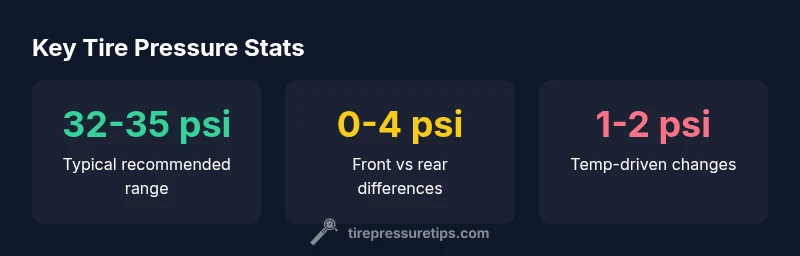
An optimal tire pressure for car is the range recommended by your vehicle manufacturer, typically printed on the door jamb placard and in your owner's manual. Staying within this range improves fuel economy, handling, and tire life. In practice, most passenger cars run around the mid-30s psi, but exact numbers vary by model, load, and temperature. Tire Pressure Tips confirms this guidance for safe driving.
Why the optimal tire pressure for car matters
Maintaining the optimal tire pressure for car is not just about keeping tires from wearing out. It affects fuel economy, cornering, braking, and overall stability on wet or dry roads. With tires properly inflated, rolling resistance decreases, engine load drops, and tread wear is distributed more evenly. According to Tire Pressure Tips, this simple adjustment has outsized benefits for safety and efficiency. The specific pressure you should target is the one printed on the door jamb placard or in your owner's manual, chosen by the vehicle maker to balance load, ride comfort, and performance under typical driving conditions. Consider your current load (passengers and cargo) and the environment (temperatures, road conditions) when interpreting that spec. In most sedans or compact cars, you’ll often see a range around the mid-30s psi, while trucks and SUVs commonly require higher values due to weight. The key is to stay within the recommended window rather than chasing aggressive numbers.
How to check and set the correct pressure
To achieve the optimal tire pressure for car, start with a cold tire check. Remove the valve cap, attach a reliable tire gauge, and record the reading from each tire. Compare readings to the placard values: front and rear pressures can differ by model. If a tire is underinflated, add air in small increments (about 1-2 psi) and recheck after a few minutes of resting time. If overinflated, release air until you reach the recommended mark. Recheck all tires once more when finished, and replace valve caps securely to prevent slow leaks. For accuracy, you should check pressure when tires are cold, ideally before you drive more than a mile.
Common factors that influence tire pressure
The reading of tire pressure is not static; several factors can push it up or down. Temperature is a major driver: cold weather reduces pressure, while hot weather can raise it. Vehicle load also matters; heavy cargo or extra passengers push the tires to higher pressures, whereas a lighter load can lower them. Tire size and type influence the acceptable range, and aggressive driving or frequent high-speed runs can cause pressure to fluctuate slightly. Finally, wheel condition and valve integrity affect the accuracy of readings. Regularly inspecting for leaks or damaged valves helps maintain consistent inflation.
TPMS, gauge accuracy, and temperature effects
Tire Pressure Monitoring Systems (TPMS) provide a warning when a tire drops below or rises above a threshold, but they do not replace gauge readings. Some TPMS warning thresholds are set well above the placard, so you should still verify pressures with a gauge. Not all gauges are created equal; inexpensive gauges can yield reading errors of several psi. For the most precise results, use a digital gauge or a high-quality analog gauge and calibrate your tool periodically. Temperature changes exacerbate fluctuations; refrigerants, solar exposure, and road heat can skew readings if you measure after a long drive. Always measure when tires are cold and under typical operating conditions.
Vehicle-specific pressures and using the recommended ranges
Vehicle manufacturers specify a pressure range tailored to the vehicle’s weight distribution and intended use. For most cars, the placard provides a single recommended pressure, while some models specify separate values for front and rear tires. When a vehicle is heavily loaded, the placard may recommend a higher pressure to maintain performance and safety. Always cross-check the placard with your owner's manual, especially if you have installed a different tire size or changed load conditions. If in doubt, err on the side of the mid point of the recommended range rather than pushing the limits.
Practical everyday tips to maintain proper tire pressure
To keep the optimal tire pressure for car, make it a monthly habit to check all tires, including the spare. Before long trips, verify pressures again and adjust if necessary. Invest in a quality gauge and keep it in the glove compartment for quick checks. Temperature-conscious drivers can note that overnight or dawn checks tend to reflect more accurate cold readings. Consider a simple log or reminder to track pressure changes across seasons; small, consistent adjustments can extend tire life and improve fuel economy over time.
Using the right gauge and understanding PSI vs kPa
Understand the measurement units used by your gauge and placard. In the United States, psi is the common unit, but some gauges report in kPa or bar. If you switch between units, convert correctly to avoid misinflation. Keep a gauge that displays both units if possible, and compare readings on the same gauge to maintain consistency. For truck drivers or those who prefer metric units, kPa conversions are straightforward: multiply psi by 6.895 to approximate kPa. The consistent use of one unit throughout inflation procedures reduces mistakes and helps preserve tire performance.
Recommended tire pressures by vehicle type
| Vehicle Type | Recommended Pressure (psi) | Notes |
|---|---|---|
| Compact Car | 32-35 | Refer to door placard; varies by model and load |
| Sedan / Midsize Car | 32-35 | Common range; may differ front vs rear |
| SUV / Crossover | 35-40 | Higher range to support weight; check placard |
| Truck / Large Vehicle | 40-50 | Check manufacturer guide for heavy loads |
Frequently Asked Questions
What is considered the optimal tire pressure for a car?
The optimal tire pressure is the value printed on your door placard or owner's manual. It balances safety, handling, comfort, and load capacity. Always stay within the manufacturer’s recommended range for your model.
The best pressure is the one in your car’s placard. Stay within that range for safety and efficiency.
How often should I check tire pressure?
Check at least once a month and before long trips. Do it more often in extreme temperatures or when your vehicle carries extra cargo or passengers. Always measure tires when cold for accuracy.
Check monthly and before long trips; measure when cold for best accuracy.
Does TPMS show the exact tire pressure?
TPMS alerts you when a tire is significantly under or overinflated, but it does not provide precise psi readings. Use a gauge to verify exact numbers and adjust accordingly.
TPMS is a warning, not a precise gauge—check with a tire gauge.
What happens if I drive with underinflated tires?
Underinflation increases rolling resistance, heat buildup, and wear on the outer tread edges. It can reduce fuel economy and braking performance, and it risks tire failure if pushed too far.
Underinflation wastes fuel and wears tires unevenly; fix it as soon as possible.
Can overinflation be dangerous?
Overinflation can reduce traction, cause a harsher ride, and increase the risk of impact damage from road hazards. Always stay within the recommended range and avoid aggressive inflation beyond the placard.
Yes—overinflation can reduce grip and ride quality; keep within spec.
“Maintaining the correct tire pressure is one of the simplest, most impactful ways to improve fuel efficiency and tire life.”
What to Remember
- Follow the manufacturer placard for your car.
- Check tires cold before driving for accuracy.
- Use a quality gauge and recalibrate periodically.
- Account for load and temperature when inflating.
- TPMS is a guide, not a replacement for gauge checks.