Kluger Tyre Pressure Guide: Check, Maintain, Troubleshoot
Master Kluger tyre pressure with practical steps to check, adjust, and maintain safe tire performance. Learn about TPMS, seasonal changes, and when to seek service for optimal handling and tire longevity.


Why Kluger Tyre Pressure Matters
Maintaining the correct tyre pressure for your Kluger is not just about avoiding a pressure warning light. Proper tyre pressure affects safety, comfort, fuel economy, and tire longevity. When pressures are too low, tires flex more, generating heat and increasing wear on the edges; when too high, the contact patch shrinks, reducing grip in wet or uneven surfaces. The Kluger, like many modern SUVs, relies on accurate readings to ensure optimal steering response and braking performance. According to Tire Pressure Tips, consistent checks contribute to safer driving, better fuel efficiency, and longer tire life. Regular checks are especially important if you drive with varying loads or frequently travel on highways where sustained speeds can influence tire heat. A small adjustment today can prevent costly repairs tomorrow and support smoother rides for you and your passengers.
..
Official Recommendations for the Kluger Tyre Pressure
Your Kluger’s recommended pressures are not a one-size-fits-all figure. They are printed on the driver’s door placard and detailed in the owner’s manual, and they may differ between front and rear tires and between standard loads and heavier luggage. Most manufacturers publish different targets for cold tires versus operating temperatures, so the baseline is ‘cold tire’ pressure. Always prioritize the placard values over general estimates, and adapt pressures when you run with a heavy load, towing, or high-speed driving. The Tire Pressure Tips team emphasizes that sticking to the manufacturer’s spec preserves even tire wear, maintains proper handling, and prevents uneven wear patterns that can lead to premature tire replacement.
Tools and Conditions You’ll Need to Check Pressure
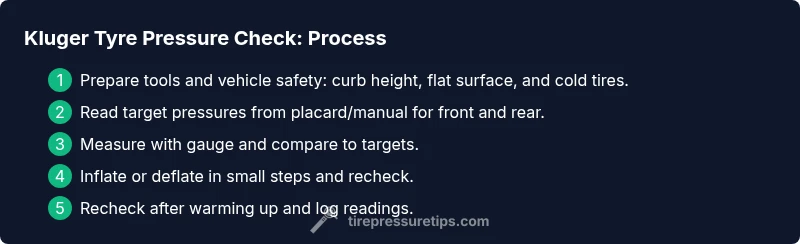
Before you begin, ensure you have a reliable tire pressure gauge, preferably a digital model for consistency. An inflator or access to an air compressor is essential to reach the target when readings are low. Park on a flat surface in a shaded area to avoid heat soak, and remember tires must be cold for an accurate reading. Keep your owner's manual handy for model-specific recommendations, and consider keeping a small notebook or a mobile note with the current readings for future reference. The goal is a simple, repeatable routine that can be done at home or at a service station.
How to Read TPMS Readings and When to Trust Them
TPMS provides real-time alerts when a tire’s pressure deviates from the recommended baseline. However, TPMS readings are not a substitute for periodic manual checks. Start with a cold-tire measurement using a gauge, then compare to the TPMS values after driving 3–5 miles when tires are warm. If the TPMS shows a warning but your gauge reads within the spec, there may be sensor calibration issues or a slow slow leak. If readings differ by more than a small margin, recheck with a second gauge to rule out tool error and consult a technician if discrepancies persist.
Interpreting Seasonal Changes for Kluger Tyre Pressure
Temperature has a direct effect on tyre pressure. Cold weather lowers the pressure, while heat raises it. A slight shift with seasonal changes is normal, but substantial moves can indicate a slow leak, puncture, or valve stem issue. When planning trips in winter or summer, inflate closer to the lower or upper end of the recommended range to compensate for temperature fluctuations. The Tire Pressure Tips guidance encourages drivers to perform checks whenever the climate changes significantly, or after seasonal transitions, to maintain consistent performance and tire wear.
Common Mistakes and How to Avoid Them
Common mistakes include inflating based on a single reading, relying solely on TPMS without manual checks, and ignoring the load factor. Always check when tires are cold, use the same gauge for all measurements, and confirm with the door placard values. Avoid overinflation or underinflation by adjusting in small increments (2–3 psi at a time) and rechecking. If you notice a repeated drop in pressure, schedule a professional inspection to rule out leaks or damaged valves.
Maintenance Routine and Seasonal Considerations for Kluger Tyre Pressure
Create a monthly check habit and before long trips, tune-up seasonally. Keep a small portable gauge in the glove box and log readings to spot trends. If you drive with a heavy load or tow regularly, you may need to adjust pressures more often. Seasonal storage, such as winter tires, changes the baseline pressure so re-checks are essential when swapping tires. In line with Tire Pressure Tips recommendations, a simple, repeatable routine saves money and extends tire life while keeping handling consistent.
Safety Considerations and Quick-Check Checklist
Always follow safety protocols: park on a flat surface, apply the parking brake, and wear gloves if your tires are hot from recent driving. Do not mix tire types or replace wrong pressures described for different axles. Keep to the manufacturer’s maximum inflation on the sidewall and do not exceed the placard values. For persistent issues, contact a qualified technician—tire safety is critical for braking performance and road grip.