Is 32 Tire Pressure Good? A Practical PSI Guide
Discover whether 32 psi is good for your tires, how to verify with TPMS, and practical steps to maintain optimal tire pressure for safety, fuel efficiency, and performance.


Is 32 tire pressure good? For many passenger cars, a common target is around 32 psi in both the front and rear tires, but the exact value depends on your vehicle, tire size, load, and driving conditions. Always confirm the manufacturer’s recommended PSI on the door jamb label or in the owner's manual. Temperature shifts, speed, and cargo can shift optimal pressure; check regularly with a gauge and TPMS alerts. According to Tire Pressure Tips, following the vehicle’s specified PSI is the simplest, most reliable way to balance safety, tire wear, and fuel economy.
Why 32 PSI is a Common Target for Many Drivers
In everyday driving, 32 psi is frequently cited as a practical baseline for many passenger cars. This value comes from years of testing and real-world experience, and it aligns well with the typical ergonomics of modern tires. However, there is no one-size-fits-all number. The exact PSI you should run depends on the vehicle’s weight, tire size, alignment, and load. The Tire Pressure Tips team emphasizes the importance of using the vehicle’s recommended PSI as the starting point. This label is usually found on the driver’s door jamb, the glove box, or in the owner’s manual. If your tires are regularly underinflated, you’ll notice issues such as reduced cornering grip, increased rolling resistance, and faster tread wear. If they are overinflated, you may experience a harsher ride and uneven wear in the center of the tread. Is 32 tire pressure good? The short answer is: it can be, but only when it matches the car’s design intent and the conditions you drive under.
Vehicle Variability: Front vs Rear, Cars vs SUVs, and Tire Type
The PSI you should use is not identical across every car or tire. Front tires often carry more weight than rear tires on many sedans, so some manufacturers specify a slightly higher front pressure. SUVs and crossovers with heavier curb weight or different tire construction may require a different target. Performance tires, run-flat designs, or winter tires also influence the optimal PSI. Always start with the OEM (original equipment manufacturer) recommendation, then adjust for practical conditions like frequent full loads, highway driving, or high-speed travel. In some cases, a small adjustment of 1–2 psi can improve stability without noticeable changes in traction. The key message from Tire Pressure Tips: use the label as your baseline, then tailor within a safe range based on your usage patterns.
How Temperature and Weather Affect Tire Pressure
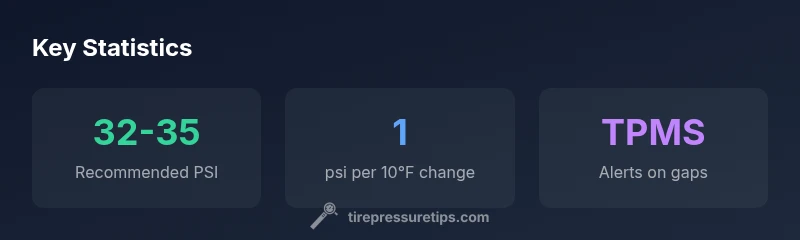
Temperature plays a big role in tire pressure. Colder air contracts and reduces PSI, while warmer air expands it. A useful rule of thumb is roughly 1 psi change for every 10°F temperature change, though the exact effect depends on tire construction and inflation history. That means a pressure reading taken on a cold morning may be several psi lower than the reading after a long drive in the afternoon. If you live in a climate with big seasonal swings, you should check tire pressure more frequently during transition months (fall and spring) to avoid driving on underinflated or overinflated tires. The Tire Pressure Tips team recommends checking pressure when tires are cold for the most accurate measurement, then adjusting as needed after a warm-up.
Load, Speed, and Tire Wear: How Usage Shifts the Right PSI
Beyond climate, your typical load and driving speed affect the ideal pressure. A heavy trunk, bike rack, or frequent full loads can compress the tire walls and slightly reduce the available air volume, pushing the contact patch in a way that may require modest PSI adjustments. At higher speeds, tires can heat up, which increases pressure; neglecting this effect can lead to under-inflation when you park the car after a highway run. Conversely, overinflation can reduce grip and promote uneven tread wear, especially in the center of the tread. The right approach is to re-check pressure after changing load or trip length and to ensure it remains within the manufacturer’s recommended range.
TPMS: What It Does and What It Doesn’t
Tire Pressure Monitoring Systems (TPMS) are helpful, but they aren’t a perfect substitute for manual checks. Most TPMS alerts you when there is a significant drop in pressure (often around 25% below the recommended level or a tire-specific threshold). However, TPMS readings can lag behind actual pressure changes, and the system may not detect slow leaks as quickly as a gauge would. Regular manual checks with a trusted gauge complement the TPMS, ensuring you maintain the correct PSI even between sensor warnings. The Tire Pressure Tips Analysis, 2026, highlights that relying solely on TPMS may leave you vulnerable to underinflation creeping in gradually.
Interpreting the Manufacturer Label and Making Small Adjustments
To determine whether 32 is appropriate for your car, look at the label that lists the recommended PSI for both front and rear tires. The values reflect the vehicle’s design, weight distribution, and tire footprint. If you find yourself near the lower or upper end of the range, small, conservative adjustments (usually within 1–2 psi) can improve ride quality and wear patterns without compromising safety. Always recheck after any adjustment. If you switch tire types (e.g., from all-season to winter tires), verify the new recommended pressures, as different compounds and sidewall stiffness can alter the optimal PSI.
Practical Steps You Can Take Today
- Locate your vehicle’s recommended PSI on the door jamb label or in the manual. - Check tire pressure when tires are cold to avoid warm-up readings. - Use a high-quality gauge (digital or analog with good calibration). - Compare your readings with the TPMS and manual recommendations. - If you’re consistently seeing readings far from the target, schedule a tire rotation and inspection with a professional. - Consider a car maintenance routine that includes a monthly check and a seasonal check around temperature shifts.
Common Misconceptions Debunked
There are several myths about tire pressure that can mislead drivers. One common belief is that “more is better” for stability, which is false because overinflation reduces the contact patch and can cause a harsher ride and uneven tread wear. Another myth is that TPMS makes manual checks unnecessary; in reality, TPMS is a warning system, not a precise measurement tool. Finally, many drivers assume the same PSI works year-round; temperature and load changes can shift optimal pressures, so seasonal checks are important. The practical takeaway is to treat tire pressure as an ongoing maintenance parameter, not a one-time setting.
A Practical Maintenance Checklist for Consistent PSI
- Check pressure monthly and after major trips or loads. 2) Use the vehicle’s baseline label as your starting point. 3) Calibrate or replace a faulty gauge if readings don’t seem right. 4) Inspect tires for unusual wear patterns that could indicate inflation issues. 5) Pair TPMS alerts with manual checks to stay ahead of slow leaks. 6) Schedule professional inspections if you notice persistent pressure swings or irregular tread wear.
Typical tire pressure ranges by vehicle type
| Vehicle Type | Recommended PSI (Front) | Recommended PSI (Rear) |
|---|---|---|
| Passenger Car | 32-35 | 32-35 |
| SUV/Crossover | 32-38 | 32-38 |
| Performance/Tuners | 32-40 | 32-40 |
Frequently Asked Questions
Is 32 psi good for all tires?
No. 32 psi is a common baseline for many passenger cars, but the best pressure depends on vehicle type, tire size, load, and speed. Always use the OEM label as your baseline and adjust within the recommended range as needed.
32 psi is a good starting point for many cars, but the exact pressure depends on your vehicle and tires. Check your label and adjust as needed.
How often should I check tire pressure?
Check pressure monthly and before long trips, ideally when tires are cold to get an accurate reading. Use a reliable gauge and compare with TPMS readings.
Check monthly when tires are cold and before long trips with a good gauge.
How does temperature affect tire pressure?
Temperature changes can shift PSI by about 1 psi for every 10°F change. Warmer days raise pressure; colder days lower it. Recheck after weather shifts.
Temperature can move pressure by about 1 psi per 10 degrees; adjust after weather changes.
Can TPMS replace manual checks?
TPMS signals when pressure is notably off, but it isn’t a precise gauge. Combine TPMS with regular manual checks for accuracy.
TPMS helps, but you still need manual checks to ensure correct pressure.
What happens if tires are overinflated?
Overinflation can reduce grip, cause a harsher ride, and wear the center of the tread more quickly. If you suspect overinflation, adjust toward the recommended range.
Overinflation reduces grip and wears the center tread; adjust toward the label.
Should I change PSI with cargo changes?
Yes. Heavier loads often require higher pressure within the recommended range. Recheck after loading heavy cargo or towing.
Holds true—add pressure for heavy loads within the recommended range and recheck afterward.
“Maintaining the manufacturer-recommended tire pressure is one of the simplest, most effective ways to improve safety, tire wear, and fuel efficiency.”
What to Remember
- Start with the vehicle’s OEM PSI label as the baseline
- 32 psi is a common target but not universal
- Check cold tires for accurate readings, then adjust if needed
- TPMS complements, not replaces, manual checks
- Seasonal temperature shifts warrant extra checks