32 psi Tyre Pressure: How to Check and Maintain
Learn how to check, set, and troubleshoot 32 psi tyre pressure for safety, handling, and fuel efficiency. Practical steps, tools, and tips from Tire Pressure Tips.


With most passenger cars, 32 psi tyre pressure is a common target for balanced handling and fuel efficiency. Always verify your vehicle’s door placard and your owner's manual, because pressure can vary by load and temperature. According to Tire Pressure Tips, checking cold tyres, calibrating TPMS alerts, and adjusting to the vehicle’s recommended range keeps tires safe and helps improve grip on wet roads.
Understanding 32 psi tyre pressure and why it matters
For most passenger cars, 32 psi tyre pressure serves as a practical default because it balances grip, wear, and efficiency under everyday loads. However, the ideal target can vary with vehicle weight, tyre size, and trim level. The door placard or owner’s manual is the definitive source, so start there rather than relying on a single number. According to Tire Pressure Tips Analysis, maintaining the correct cold pressure helps optimize contact patch, steering response, and fuel economy. As ambient temperature shifts, tyres lose or gain air, which is why seasonal checks are essential. When tyres are cooler, the gauge reads more accurately, and changes can be made safely. In practice, most drivers benefit from checking pressures when the tyres are cold and ensuring all four tyres are within a few psi of the target. Remember that the spare tire can require different pressure, and neglecting it can leave you unprepared for a flat in an emergency. In short, 32 psi is a solid starting point, but your vehicle-specific target ensures the best balance of safety and performance.
How to check tyre pressure correctly
Accurate measurement begins with the right conditions and the right tools. Start with a cold tyre; driving heats up air and skews readings, leading to overinflation after you reset. Use a reliable gauge—digital readouts are easier to interpret and typically more precise than older dial gauges. Remove the valve cap, place the gauge squarely on the valve stem, and press straight down to obtain a crisp reading. If the reading is far from the target, adjust in small increments (1–2 psi at a time) and recheck. Swap tyres if you notice consistent under- or overpressure on one corner, which can indicate a slow leak or a damaged valve. Keep notes of the readings over time to spot gradual changes. For longer trips, log your readings a day before departure and adjust accordingly to maintain balanced handling. Consistency matters: frequent, controlled checks beat occasional hurried readings and help you avoid unpredictable handling on wet roads.
How to set and adjust to the recommended pressure
Once you know the target pressure, adjust gently. Park on a level surface and ensure the car is off. Begin with the tyre that shows the lowest reading, inflate with short bursts, and recheck after each burst to avoid overshoot. Use the door placard as the primary reference and consult the owner’s manual for variations by axle. If you need to deflate, release air slowly using the valve stem and recheck often. After adjusting all four tyres, recheck again to confirm they all sit within a couple of psi of the target. If a tyre remains stubbornly wrong, inspect the valve stem and wheel for leaks, or consider consulting a professional. The goal is not a single perfect number but a consistent pressure across all tyres to maintain even wear and predictable steering. This approach supports practical maintenance.
Temperature effects, seasons, and load changes
Air expands when heated and contracts when cooled, so tyre pressures drift with outdoor temperatures. In cold climates, you may see consistent underinflation from fall to winter, while summer heat can push readings higher than the placard. For drivers who frequently carry heavy loads or tow trailers, the target may shift upward to account for additional weight. The fix is seasonal checks: measure before long trips, rehearse adjustments, and maintain a small buffer around the target. TPMS alerts are helpful, but they can’t replace a manual gauge. Regular checks—at least monthly—help you catch slow leaks, faulty valves, and other issues before they create traction or steering problems.
Common mistakes that cost safety and fuel efficiency
Relying on memory instead of a gauge is a frequent error. Checking after driving instead of when cold falsifies readings and can encourage unsafe over- or underinflation. Inflating to the maximum printed on the sidewall is another risk: it reduces grip, causes uneven wear, and compromises ride comfort. Skipping the spare tyre check is easy to do but leaves you unprepared for a flat. Overcorrecting to chase a perfect number without considering axle-specific requirements is also a mistake. Finally, ignoring tyre pressure as a maintenance task means you’ll miss early signs of slow leaks, valve damage, or sensor problems.
When to adjust pressure for different driving conditions
At highway speeds or when towing, a slightly higher pressure can help stability and steering response, but only within the vehicle's recommended range. In hot weather or when carrying a heavy load, the target may increase by 1–3 psi per the placard guidance. For winter tires, verify that the cold-pressure target aligns with cold-weather performance charts from the manufacturer. Always recheck after a change and keep the updates consistent across all tyres. The goal is stable contact with the road surface to maximize grip, fuel efficiency, and tire life. A careful approach protects your tires and your wallet.
Spare tyre pressure and maintenance essentials
Don’t overlook the spare. Many drivers forget that the spare has its own recommended pressure, which may differ from the others. Check the spare’s pressure when you do your routine checks and inflate to the vehicle’s guideline or the spare’s label. Some run-flat or space-saver spares operate at different pressures, so consult the manual. If your spare has a dedicated tire-pressure monitoring sensor, ensure it remains calibrated. Keeping the spare properly inflated reduces the risk of being stranded and helps preserve wheel well geometry. As you perform regular checks, include the spare in logs and consider rotating your seasonal approach to cover every tyre equally.
Quick tips for ongoing tyre pressure management
Keep a small gauge in the glovebox and check pressures monthly and before trips. Note changes as seasons shift and track any sustained pressure shifts. If you see a recurring drop in one tyre, listen for leaks around the valve stem and bead area, and consider professional inspection. Complement the checks with tread depth monitoring and regular wheel alignment to maximize safety. Tire Pressure Tips encourages drivers to treat tyre pressure as a core maintenance habit.
Tools & Materials
- Digital tire pressure gauge(High accuracy +/-1 psi; avoid cheap gauges with large measurement error)
- Air compressor or access to a public air pump(Ensure capability to reach 40+ psi; check for leaks during inflation)
- Owner's manual or door jamb placard(Use axle-specific pressures; placard is the authoritative source)
- Soapy water spray (optional)(For quick leak testing at valve stems or beads)
Steps
Estimated time: 10-15 minutes
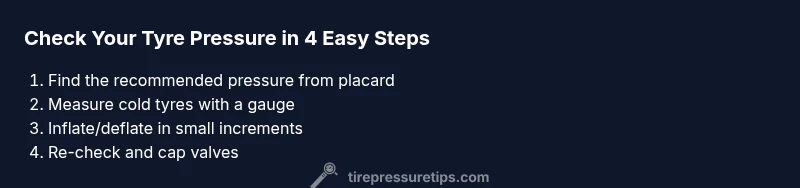
- 1
Find the target pressure
Locate the vehicle’s recommended cold tyre pressure in the door placard or owner's manual. Note the target value and whether it applies per axle or per tyre type.
Tip: Always start with the official target before making any adjustments. - 2
Measure tyres when cold
Park on a level surface, turn the engine off, and wait for tyres to cool before measuring. Heat from driving raises readings and can lead to overinflation if you adjust later.
Tip: If you’ve just driven, wait at least 2–3 hours before measuring. - 3
Attach gauge and read
Remove the valve cap and firmly press the gauge onto the valve stem, ensuring a straight seal for an accurate reading.
Tip: If readings bounce, re-check after a minute to confirm stability. - 4
Inflate or deflate to target
If underinflated, add air in 1–2 psi increments and recheck. If overinflated, release air slowly and recheck until you’re within 1–2 psi of the target.
Tip: Avoid overshooting the target—precision matters for handling. - 5
Check all tyres and the spare
Repeat the measurement process for all four tyres and the spare if you carry one regularly. Ensure uniformity across tyres for balanced handling.
Tip: Spare pressures often differ; consult the manual for specifics. - 6
Re-check and cap
After adjustments, recheck all tyres, then screw valve caps back on securely. Reset any TPMS equivalents if necessary.
Tip: Keep a log of your readings to spot gradual changes.
Frequently Asked Questions
What is the standard tyre pressure for most cars?
Most passenger cars target around 32 psi when cold, but you must verify the exact figure on the door placard or in the owner's manual. Different vehicles and tyres may require different targets.
Most cars use about 32 psi when cold, but always check the placard or manual for your specific vehicle.
Should I check tyre pressure when tyres are cold?
Yes. Measuring cold tyres yields accurate readings because heat from driving raises pressure. If you drive before checking, wait 3 hours or until tyres cool before testing.
Check tyres when cold to get accurate readings; wait a few hours if they’ve warmed up.
How often should I check tyre pressure?
Check tyre pressure at least once a month and before long trips. Also inspect after significant temperature changes or heavy loads.
Aim to check monthly and before long trips.
What happens if I overinflate?
Overinflating reduces the contact patch with the road, leading to a harsher ride and uneven wear. Always adjust by small increments and recheck.
Overinflating can make the ride harsher and wear the centre tread faster.
Can TPMS be wrong?
TPMS can sometimes give false alerts due to sensor issues or temperature changes. Always cross-check with a manual gauge when in doubt.
Yes, TPMS can be false; verify with a gauge.
Is 32 psi suitable for winter tyres?
Winter tire pressures depend on the vehicle and tire type; consult the placard and adjust if needed for cold conditions. Some setups use different targets.
Winter tyres may have different targets; check your manual.
Watch Video
What to Remember
- Check cold tyres against the placard
- Use a reliable gauge for accurate readings
- Adjust in small increments to reach target
- Re-check after 10 minutes to confirm stability
- Maintain balanced pressure for safety and fuel efficiency