How to Reduce Tire Pressure Safely: A Practical Guide
Learn how to reduce tire pressure safely with step-by-step guidance, safety cautions, and best practices for maintaining performance and TPMS awareness.


This guide helps you understand how to reduce tire pressure safely and why it matters. According to Tire Pressure Tips, lowering pressure should be limited to specific scenarios and never fall below the vehicle manufacturer’s minimum. You’ll see a clear, step-by-step approach with safety checks, tools, and cautions to keep you and your tires safe.
Why someone might consider reducing tire pressure
When ride comfort, load handling, and fuel economy are in tension, you may wonder how to reduce tire pressure in a controlled way. The Tire Pressure Tips team emphasizes that deflating tires is not a universal fix; it is situational and must stay within safe limits. Start by understanding your tires, the vehicle’s prescribed range, and how temperature affects air volume inside the tire. If you routinely drive with heavy cargo, or you operate in hot climates, small adjustments can influence grip, tire wear, and rolling resistance. This section explores common reasons people lower pressure and how to evaluate whether it’s appropriate for your vehicle and usage, while outlining trade-offs like reduced traction and altered handling. The goal is to help you make an informed choice rather than guessing.
Safety and Risks of Lowering Tire Pressure
Lowering tire pressure introduces measurable safety trade-offs. Underinflated tires can overheat, wear unevenly, and reduce fuel efficiency due to altered contact with the road. The Tire Pressure Tips analysis shows that many drivers underestimate how quickly heat builds in deflated tires during a mix of city and highway driving. If pressures drop too far, risk of tire failure increases, and TPMS alerts may not fully convey danger. Always stay within the manufacturer’s recommended range and never go below the labeled minimum on the door placard. This section clarifies the practical consequences so you can weigh benefits against safety concerns.
Determining the Right Target Pressure for Your Vehicle
Your vehicle’s correct tire pressure is not a guess. Begin with the door jamb label on the driver’s side and, if available, the owner’s manual. These sources provide the recommended front and rear pressures for various load and speed conditions. Temperature matters: hot tires read higher and settle as they cool. If you’re carrying extra weight or trailers, consult the guidelines for adjusted pressures. Remember that tire sidewall numbers indicate maximum ratings, not targets for daily use. The aim is a pressure within the vehicle’s published range that maintains safe handling and even wear.
Safe Deflation Principles in Practice
When you know you need less pressure, apply a calm, measured approach using accurate tools. Start with a cool tire and a known starting reading. Release air slowly in small increments, using a valve stem tool or gently depressing the valve core. After each increment, recheck with a tire gauge and compare to the target label. If you overshoot, reinflate to the nearest safe value rather than continuing to bleed air. This careful method helps prevent overheating and uneven wear, preserving tire integrity and ride quality.
Monitoring and Verification After Adjustment
After deflating, drive a short distance at moderate speeds to let the tire settle and temperature normalize. Recheck the pressure when the tires are cold, then adjust as needed to stay within the recommended range. Monitor for any signs of slow leaks, unusual wear, or changes in handling. Regular checks help catch issues early and keep braking performance reliable.
When to Seek Professional Help and Alternatives
Not every reason to adjust pressure warrants deflation. If you notice uneven wear, damaged tires, or persistent TPMS warnings, seek professional guidance. The right solution may involve rotation, balancing, or a review of load and tire choice. In some cases, keeping tires at the manufacturer’s recommended pressures is the safest option, while other scenarios may require different maintenance steps. The Tire Pressure Tips team recommends consulting a qualified technician if you’re unsure about the risks or the impact on vehicle safety.
Tools & Materials
- Tire pressure gauge (dial or digital)(Used to measure current pressure and verify targets with accuracy)
- Air compressor or deflation tool(Needed to release air; use in small increments for control)
- Valve core tool or small flat-head screwdriver(To release air from the tire stem safely)
- Door jamb label or owner's manual(Reference target pressures for your vehicle and load)
- Valve caps(Reinstall to protect stems and prevent leaks)
- Notebook and pen(Log pressures before and after adjustments)
Steps
Estimated time: 15-25 minutes
- 1
Check current pressure and locate target
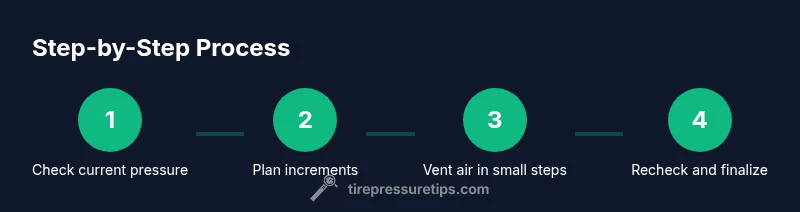
Park on a level, cool surface and remove the valve cap. Use your tire gauge to record the current pressure on all four tires. Locate the target pressures from the door placard or owner manual and note any differences between front and rear tires or axle positions.
Tip: Document the starting psi for future reference. - 2
Prepare tools and environment
Gather your gauge, deflation tool or valve core tool, and a small workspace. Ensure the tires are cool before starting to avoid readings skewed by recent driving. Set a plan to deflate in small increments and verify after each step.
Tip: Work in a shaded area if possible to keep the tires cool during measurement. - 3
Vent air gradually toward the target
Release air in small increments (1–2 psi at a time) by gently depressing the valve core or using a deflation tool. Pause 10–20 seconds between increments to allow the tire to settle and reading to stabilize.
Tip: Measure after each increment to prevent overshooting the target. - 4
Re-check pressure after each increment
After each vent, re-measure all tires with the gauge. Compare readings to the target and make minor adjustments as needed. Do not rush—precision matters for safety and wear patterns.
Tip: If a tire cools significantly, re-check again when cold. - 5
Reinstall caps and inspect
Replace valve caps securely to protect the stems and prevent leaks. Inspect tires for any signs of damage or slow leaks after adjustment. Confirm that all tires are within their target range.
Tip: Keep a small maintenance log for future reference. - 6
Test drive and final verification
Take a short, cautious drive to verify handling and braking feel. Recheck pressure when tires are cold again, and adjust if necessary. This final check helps ensure you didn’t overshoot or create new issues.
Tip: Always follow up with a cold-read to ensure accuracy.
Frequently Asked Questions
Is it safe to reduce tire pressure?
Reducing tire pressure is sometimes appropriate for specific scenarios like optimizing ride comfort or accommodation of certain loads, but it must stay within the vehicle’s recommended range. If in doubt, follow the manufacturer guidance and avoid going below the minimum. Safety should always come first.
Reducing tire pressure is sometimes needed for specific conditions, but you should stay within the manufacturer’s guidelines. When unsure, don’t deflate below the minimum.
How do I know the correct target pressure?
Check the door placard on the driver’s side or the owner’s manual for the recommended front and rear pressures. Do not rely on tire sidewall numbers, which show maximum capacity rather than a daily target. Temperature and load can also influence the required pressure.
Look at the door placard or manual for the right numbers. Don’t use the sidewall max ratings as a daily target.
What are the risks of reducing tire pressure?
Underinflation can lead to overheating, uneven wear, reduced fuel economy, and poorer handling. It can also trigger TPMS warnings more frequently. Always operate within the recommended range to minimize these risks.
Underinflation can overheat tires and wear them unevenly. Stay within the recommended range to stay safe.
Can I adjust pressure for different road conditions?
Some conditions may warrant adjustments, but most vehicles are designed to run within a standard range. If you change pressure for conditions like snow or off-road use, ensure you return to the recommended range as soon as conditions change back.
Some conditions may need adjustments, but return to the recommended range when possible.
How often should I recheck after deflation?
Recheck immediately after deflation, then recheck again after driving 5–10 miles once tires are cool. Temperature changes can affect readings, so cold measurements are more reliable.
Check right after deflation and again after a short drive once cold.
Watch Video
What to Remember
- Follow manufacturer targets for tire pressure.
- Vent air slowly in small increments.
- Recheck with a reliable gauge after each step.
- Document results and recheck after driving.