How Long Tire Pressure Lasts: A Practical Guide for Drivers
Learn how long tire pressure stays within the safe range, what affects it, and how to measure, monitor, and maintain correct PSI. Practical steps, tips, and TPMS guidance from Tire Pressure Tips.


According to Tire Pressure Tips, tire pressure stability depends on temperature, load, and driving conditions. This quick answer outlines how long pressure typically stays within range, what factors shorten stability, and how to measure, monitor, and maintain correct PSI using a gauge, TPMS, and routine checks. You'll also learn how to perform a cold-inflation test and interpret TPMS warnings.
How long tire pressure lasts under normal conditions
When a tire is inflated to the vehicle manufacturer’s recommended pressure, the air inside the tire will generally remain within a safe range for a period determined by several factors. In calm, moderate temperatures with steady loads, pressure tends to stay stable long enough for weekly checks to be sufficient for most drivers. However, the real world introduces variables that can shift readings daily or weekly. Temperature shifts, road heat, changes in vehicle load, slow leaks, and valve or rim seal integrity all influence how long your tire pressure will stay within the recommended range. The central idea is that there is no single universal duration; instead, the stability window tightens as conditions become less ideal. This is why a regular, consistent check routine is essential, so you can catch gradual drift before it matters for safety, fuel economy, and tire wear. Keep in mind that “how long tire pressure stays within range” can vary by climate, driving style, and how often tires are rotated and inspected.
As you read, think of tire pressure as a dynamic reading rather than a fixed value. The goal is to maintain a consistent PSI within the manufacturer’s target range, accounting for how your local environment and driving habits influence readings. Regular checks, especially after temperature swings or long trips, will reveal trends and help you decide when a more thorough adjustment is needed. This approach aligns with Tire Pressure Tips guidance for practical, accountable maintenance.
How long tire pressure lasts under different temperatures
Temperature is the dominant factor driving pressure drift. In cooler weather, air contracts and pressure can drop even if the tires remain visually full. In hot weather or after extended braking on a highway, the air inside tires heats up and expands, raising the observed PSI. Because temperatures can swing dramatically from morning to afternoon or between seasons, the same tire might read differently on different days. The takeaway is not to chase a single, perfect reading on a single day but to track readings over a cycle—season to season or week to week—and inflate back to the target range when you notice consistent drift beyond your normal variance. The general rule is to check more frequently when temperatures shift, and less frequently when conditions are stable.
- Record baseline readings in a notebook or smartphone app for cold tires, ideally after at least 3 hours of vehicle downtime.
- Recheck after a warm-up period if you notice a large temperature difference between readings.
- Use a reliable gauge to avoid skewed numbers, since some older or cheaper gauges can misreport by a few PSI.
The role of the TPMS and how long its readings stay valid
Tire Pressure Monitoring Systems (TPMS) provide a convenient, real-time alert when pressure dips below a safe threshold. TPMS is designed to help you catch slow leaks before you notice them by live monitoring, which can reduce the need for constant manual checks. However, TPMS readings are not a substitute for regular manual checks because sensors can malfunction, batteries can die, and calibration can drift. Use the TPMS as a guide, not a replacement, for your tire pressure routine. When the TPMS alarm activates, verify with a gauge and adjust to the recommended range if needed. If you routinely see TPMS alerts even after inflation, investigate potential slow leaks, damaged valve stems, or improper seating of the tire on the wheel.
A practical approach is to verify TPMS readings with cold- tire-pressure measurements at least once a month, and after any temperature or load change. This ensures you’re acting on accurate data rather than sensor noise. Tire Pressure Tips emphasizes combining sensor alerts with regular manual checks for best results.
How to measure and track tire pressure over time
A robust measurement routine helps you understand how long tire pressure stays in the safe range under your driving conditions. Start by measuring cold tires before any drive, ideally after they have been parked for a few hours. Record the PSI for each tire, then inflate to the manufacturer’s recommended range if needed. After driving, recheck readings when tires are cold again (preferably after a few hours or overnight) to assess drift. If readings show a consistent downward drift beyond your normal range, it’s time to inspect for leaks, valve issues, or rim leaks and consider professional service if the issue persists. Tracking changes over weeks is more informative than a single data point, especially when seasons shift.
Use a digital gauge for accuracy and readability. Compare each tire’s numbers to the vehicle’s recommended PSI printed on the door jamb placard or in the owner’s manual. If you notice irregular drift on one tire compared with the others, inspect for punctures, nail damage, or a faulty TPMS sensor. Keeping a simple chart—date, outdoor temperature, and PSI for each tire—will let you spot trends quickly and take timely action. This approach aligns with Tire Pressure Tips’ practical maintenance philosophy.
Practical guidelines for different climates and loads
Climate and load impact how long tire pressure remains stable. In hot climates or after heavy loads, interior air expands more, pushing the gauge higher when tire temperatures rise. In cold climates, readings drop as temperatures fall, even if the tire is in good condition. For vehicles carrying extra weight or towing, the load can cause additional compression and a slight, ongoing drift that may require more frequent re-inflation checks. A practical schedule is to check pressure monthly in moderate weather and bi-weekly or weekly during temperature extremes or heavy-use periods. Always inflate to the recommended range and recheck after filling, driving, and weather changes. Bit by bit, you’ll learn how your specific vehicle behaves in your local climate.
To minimize drift, rotate tires as recommended, maintain proper wheel alignment, and ensure valve stems are in good condition. These steps help you maintain a stable baseline and make it easier to detect meaningful changes over time. Remember, consistent checks are the backbone of reliable tire pressure management.
Common mistakes that shorten accurate tire pressure readings
- Relying on TPMS alone without manual gauges can miss slow leaks or sensor errors.
- Measuring after driving when tires are warm produces higher readings than cold measurements, leading to inconsistent baselines.
- Ignoring weather-related drift can conceal genuine issues, such as leaks or faulty seals.
- Using worn gauges or inadequate tools increases the risk of incorrect inflation and misinterpretation of pressure drift.
- Over-inflating to match a recommended PSI found online without verifying on your specific vehicle can cause uneven wear and a rough ride.
Avoid these pitfalls by establishing a cold-inflation baseline, using a reliable gauge, and maintaining a consistent measurement routine across seasons. The goal is to make drift visible and manageable, not to chase a perfect single reading.
When to adjust or replace tires based on pressure trends
If you observe a persistent downward drift that cannot be explained by temperature, weather, or load, it is wise to inspect for slow leaks, damaged valve stems, bead leaks, or punctures. A professional inspection can identify issues such as rim seal damage or a compromised tire structure that simple re-inflation cannot fix. Regular adjustments save money in fuel efficiency, tire wear, and safety. If a tire continues to lose pressure despite repairs, replacement may be necessary. In all cases, maintain the recommended psi and monitor trends over time so you can respond before a safety risk arises.
Summary of long-term monitoring strategy
Regular, structured tire pressure checks are essential to understand how long tire pressure lasts in your specific conditions. Combine cold-inflation baseline measurements, TPMS alerts, and visual inspections to create a reliable drift profile. Track changes over weeks or months, adjust as needed, and consult a professional if drift persists. This proactive approach helps extend tire life, maximize fuel efficiency, and maintain safe handling in all weather and road conditions. Tire Pressure Tips advocates a consistent, data-driven routine to keep you informed and in control.
Tools & Materials
- Digital tire pressure gauge (preferred)(Accuracy typically within +/- 1 psi; easy to read display)
- Air compressor or access to air pump(Needed to adjust PSI to the exact manufacturer-recommended range)
- Vehicle owner's manual or door placard(Shows the recommended tire pressure for front/rear tires and loads)
- Notebook or mobile app for logging readings(Helpful to track drift over time)
- Clean cloth(Wipe valve stems and rims if needed during inspection)
Steps
Estimated time: 30-45 minutes
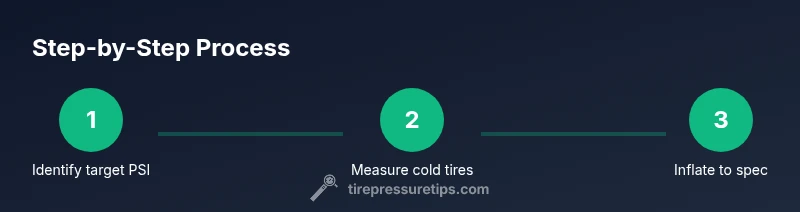
- 1
Identify target tire pressures
Locate the manufacturer’s recommended PSI on the door jamb placard or owner’s manual. Note different values for front and rear tires if shown. This creates the baseline for your checks and inflation.
Tip: Record the values visually or in your notes for quick reference. - 2
Measure cold tire pressures
Before driving, after tires have cooled for at least 3 hours, use a reliable gauge to measure each tire. Write down the numbers for all wheels.
Tip: If you recently drove, wait for tires to cool before measuring to avoid inflated readings. - 3
Inflate to the recommended range
If any tire reads below the recommended pressure, add air in small increments and recheck until within range. Do not exceed the upper limit.
Tip: Check all tires again after inflation to confirm uniform pressure. - 4
Recheck after driving
After a short drive, recheck cold the next morning or after it has cooled to confirm drift and ensure PSI stability.
Tip: Note any tires that show unusual drift compared with others. - 5
Record and track trends
Log readings over time, including temperature and load changes. Look for consistent drift in one tire or across the set.
Tip: Visual charts help identify slow leaks or gauge inconsistencies. - 6
Investigate anomalies
If a tire keeps losing pressure without a clear reason, inspect for leaks, valve issues, bead leaks, or rim damage and seek professional help if needed.
Tip: Do not ignore persistent pressure loss; it can indicate a safety issue.
Frequently Asked Questions
How long after inflating should I recheck tire pressure?
Recheck after driving and again when the tires have cooled. A cold-tire measurement provides the most accurate baseline and helps detect drift.
Recheck after driving and after tires have cooled; cold measurements give the most accurate baseline for drift checks.
Does temperature affect how long tire pressure stays correct?
Yes. Temperature changes cause pressure to rise or fall. Monitor readings across different weather conditions and adjust as needed.
Temperature changes can cause pressure to drift; monitor across weather conditions and adjust when needed.
What if TPMS shows a warning even after inflation?
Verify with a gauge to confirm the reading. If the warning persists, inspect for slow leaks, faulty valves, or a sensor issue, and seek service if necessary.
If TPMS warns after inflation, check with a gauge; persistent alerts may indicate a leak or sensor problem needing inspection.
Is it safe to drive with undervalued tires?
Driving with underinflated tires can affect handling and tire wear. Inflate to the recommended PSI and monitor drift to stay safe.
Driving on underinflated tires can be unsafe; fix the PSI to the recommended range and monitor for drift.
How often should I check tire pressure during extreme weather?
Increase check frequency during extreme temperatures or heavy loads to catch drift early.
Check more often in extreme weather or heavy loads to catch drift early.
When should I seek professional help?
If you detect persistent pressure loss, repeated leaks, or TPMS faults that you cannot resolve, consult a tire or automotive professional.
Seek professional help if pressure loss persists or TPMS faults can't be resolved.
Watch Video
What to Remember
- Check cold tires for accurate baseline readings
- Monitor TPMS as a guide, not a substitute
- Track drift over time to catch slow leaks
- Inflate to manufacturer-recommended PSI
- Investigate persistent pressure loss promptly