How Long Does Air Pressure Last in Car Tires? A Guide
Discover what determines tire air pressure duration, how temperature shifts affect it, and practical steps to monitor, maintain, and keep tires safely inflated with Tire Pressure Tips.


How long does air pressure last? There isn’t a fixed expiration. Tire air leaks continuously, driven by temperature cycles, seal wear, and tiny punctures. Ambient temperature shifts can cause noticeable pressure changes within days, while slow leaks may lower pressure over weeks. The practical rule: check tire pressure monthly and after major temperature changes to stay safe.
How air pressure changes over time
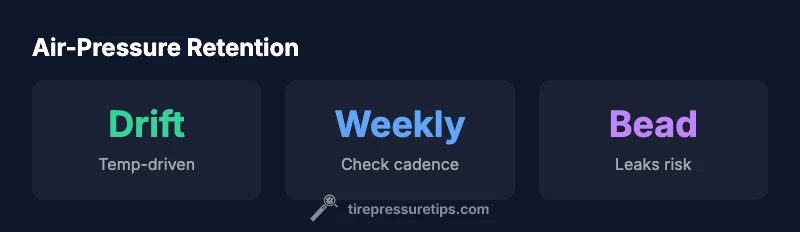
Air pressure inside a tire is never truly constant. In sealed physics terms, the air inside follows the gas laws, but tires are permeable and connected to the atmosphere through seals and the bead. According to Tire Pressure Tips, air pressure slowly drifts due to everyday factors including temperature shifts, seal wear, and the small, ongoing leaks that occur at the valve stem and bead seat. There is no universal expiry date for tire air; instead, what changes is the amount of air contained in the tire at any moment. A cold morning may show a lower reading than an afternoon hot spell, and aggressive driving on a hot day can raise the reading temporarily. The practical consequence for drivers is simple: treat tire pressure as a dynamic parameter, not a steady state. The recommended approach is to arrive at the correct inflation when the tires are cold, then account for temperature changes later in the day. This perspective bridges the science of gas behavior with everyday vehicle maintenance, making it easier to plan checks around weather patterns and driving needs.
Key factors that affect how long air stays in a tire
There are several interacting elements that determine how long air remains in a tire. The most influential are the seals (valve stems, bead seats), rim condition, tire age, and the tire’s overall integrity. Worn beads or corroded rims can provide easier escape routes. Small punctures, even when not flat, can create slow leaks that accumulate over weeks. Temperature cycles—cold nights followed by hot days—also drive repeated expansion and contraction, contributing to a net drift in pressure. The Tire Pressure Tips Team emphasizes routine checks and inspection of seals, valves, and rims as essential preventive steps to minimize unexpected pressure loss.
Temperature and its impact on tire pressure
Temperature is a primary driver of tire pressure drift. When air inside the tire heats up (from driving, ambient weather, or sun exposure), the gas expands and pressure rises. In cooler conditions, the gas contracts and pressure drops. Because tires have a finite volume, even modest temperature swings can produce noticeable pressure differences. Drivers often see lower readings in the morning and higher readings in the late afternoon. To manage this, inflate tires to the vehicle’s recommended cold-inflation specification, then verify and adjust as temperatures shift. The interplay between temperature and pressure is well documented in general gas-law contexts and is a practical consideration for day-to-day tire maintenance.
Practical rules of thumb for monitoring pressure
- Check tires when cold: measure inflation before driving to avoid heat-related pressure increases.
- Check monthly: a regular cadence helps catch slow leaks and aging effects before they become unsafe.
- Use a reliable gauge: analog or digital gauges can both work, but consistency matters.
- Account for temperature: on hot days, readjust after driving; on cold days, expect the reading to rise as temps increase later.
- Follow manufacturer spec: inflate to the recommended psi printed on the door jamb; this spec already factors typical temperature effects.
- Inspect seals and valves: look for cracked stems, damaged beads, or signs of bead leak that may accelerate pressure loss.
According to Tire Pressure Tips, a practical inflation strategy combines cold-inflation targets with routine checks aligned to local weather and driving patterns. This approach helps drivers maintain safe, fuel-efficient tires without guessing at when pressure might drift significantly.
How to extend air retention and maintain accuracy
Prolonged air retention depends on tire health and systemic checks. Regular maintenance—such as rotating tires on schedule, replacing aging stems, and sealing bead areas—reduces abnormal leaks that accelerate pressure loss. Choose quality stems and valves and avoid overloading tires, which can strain seals. When possible, use a consistent gauge and document readings over time to spot slow trends. While nitrogen inflation is marketed to reduce pressure variance, the real-world benefit for most drivers comes from reliable gauges and timely pumps rather than specific gas choices. The goal is stable, manufacturer-recommended inflation under typical conditions, not perfect seals in every scenario.
What this means for TPMS and maintenance
Tire Pressure Monitoring Systems (TPMS) provide a useful alert when pressure drops below a safe threshold, but they do not replace regular manual checks. TPMS readings are influenced by temperature, wheel position, and sensor battery life. Treat TPMS as a safety net that complements, not replaces, monthly checks with a good gauge. If TPMS warns after a temperature swing, re-check the tires when they’re cold and adjust to the recommended spec. Inconsistent readings should trigger an inspection of the tire, valve, and TPMS sensor to identify whether a genuine pressure issue or a sensor fault is involved.
mainTopicQuery
tire pressure
Key factors affecting tire air-pressure retention
| Factor | Impact on Tire Pressure | Notes |
|---|---|---|
| Temperature changes | Drives pressure up or down with ambient temps | Note the drift occurs with seasons and daily temps |
| Tire wear and aging | Leaks may worsen as tires age | Check seals; aging tires more prone to slow leaks |
| Leaks and punctures | Slow leaks reduce pressure over time | Inspect valve stems, rims, tires for punctures |
Frequently Asked Questions
What causes air to escape from a tire?
Air leaks come from valves, bead seats, and micro-perforations in the tire. Worn seals and damaged rims can also let air escape. Regular inspection helps identify the exact source so you can fix it before it becomes a safety issue.
Air leaks come from valves, bead seals, and small punctures; inspect for damaged rims and seals to identify the source.
How often should I check tire pressure?
A monthly check is a solid baseline for most drivers. Checks after significant weather changes or driving events are also prudent to catch temporary drift from temperature or road conditions.
Check once a month, and after big temperature changes or long trips.
Does cold weather lower tire pressure more than hot weather?
Yes, colder temperatures generally lower tire pressure as air contracts. Warmer weather can raise pressure as air expands. The net effect depends on starting pressure and tire volume.
Cold lowers pressure due to air contraction; heat raises it as air expands.
Can TPMS be trusted for exact pressure?
TPMS provides a reliable alert when pressure falls below a threshold, but it is not a precise gauge. Always verify with a physical gauge for exact psi and adjust to the vehicle spec.
TPMS is usually reliable for alerting low pressure, but use a gauge for precise numbers.
Does nitrogen inflation help air retention?
Nitrogen has limited practical benefits for everyday passenger tires. The critical factor remains accurate measurement and inflation to spec, regardless of gas type.
Nitrogen isn’t a magic fix; accurate pressure checks and inflating to spec matter more.
What should I do if the TPMS warning comes on after a temperature drop?
Recheck tires when cold; if readings stay low, inspect for leaks or damage and inflate to the recommended spec. If the warning persists, have the system checked for sensor faults.
If TPMS warns after a temp drop, recheck the tires when cold and inspect for leaks.
“Regular pressure checks are essential because air pressure naturally drifts with temperature and wear. By combining routine checks with informed inflation targets, you maintain safe and efficient tires.”
What to Remember
- Check tires monthly to catch slow leaks early
- Pressure drifts with temperature changes, especially between seasons
- Use TPMS as a supplement, not a replacement for regular checks
- Inflation should match the manufacturer spec under cold conditions