How High Can Tire Pressure Be: Safe Limits and Tips
Explore the safe maximum tire pressure for common vehicles, how to read max ratings, and practical ranges. Learn how to check, adjust, and maintain tire pressure for safety, fuel economy, and tire longevity with Tire Pressure Tips.


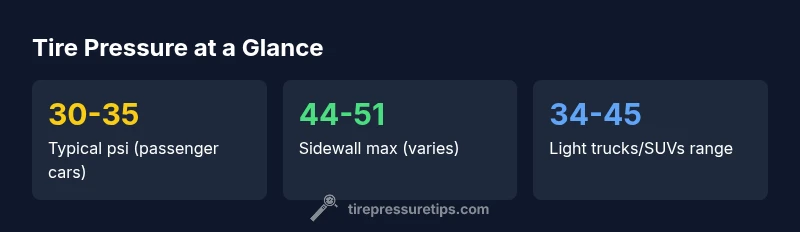
Short answer: the safe ceiling for tire pressure depends on vehicle specifications and tire ratings. For most passenger cars, common operating ranges are about 30-35 psi, with some tires rated up to 44-51 psi on the sidewall for specific models. Do not exceed the placard or sidewall maximum. Overinflation can compromise traction, wear, and safety.
Why Tire Pressure Limits Matter
Tire pressure is not just a number on a gauge; it’s a safety parameter that affects grip, braking, tire wear, and fuel economy. According to Tire Pressure Tips analysis, the reason drivers ask how high can tire pressure be frequently comes down to two questions: what is the tire capable of, and what is the vehicle specification. In practice, you should view the tire's maximum inflation as a ceiling, not a target. The door placard on the driver’s side reveals the manufacturer’s recommended operating range (often 30-35 psi for many passenger vehicles). Exceeding the recommended range can reduce the tire’s contact patch with the road, causing uneven wear and reduced traction in wet conditions. Temperature, load, and driving style also influence how high you can safely inflate; the higher the load and ambient temperature, the more you might notice changes in pressure. Understanding these factors helps you maintain consistent performance and safety.
How High Can Tire Pressure Be? Debunking Myths
A common misconception is that higher pressure automatically yields better fuel economy or longer tire life. The reality is more nuanced. The maximum inflation pressure printed on a tire sidewall is not a target to hit; it’s a ceiling that must not be exceeded. Vehicles also have a placard or door jamb label specifying the recommended operating range for the front and rear tires, which is typically lower than the sidewall maximum. Factors such as axle load, tire width, and suspension geometry influence the safe ceiling. Tests and field data show that inflating toward the higher end of the recommended range can improve steering feel in some conditions, but pushing beyond the placard or sidewall max significantly raises risks—loss of grip in rain, accelerated center tread wear, and unpredictable handling.
Practical Ranges by Vehicle Type
Different vehicle classes demand different inflation ceilings. Passenger cars usually sit in a modest range, commonly 30-35 psi, while light trucks and many SUVs may operate comfortably in the mid-30s to mid-40s psi range depending on load and tire design. Always start with the door placard for the exact numbers, then consult the tire’s load index and the manufacturer's recommendations. For specialty vehicles or performance tires, the ceiling can vary considerably—from mid-30s to upper-40s psi. Remember: the highest number on the tire sidewall is not a performance target; it’s a maximum safe limit for the tire’s structural integrity under the most extreme conditions.
How to Check and Verify Your Maximum Tire Pressure
Check pressure with cold tires for accuracy, ideally before you drive or after a minimum of three hours of inactivity. Use a high-quality gauge and compare readings to the placard, not the tire’s sidewall maximum. If you need to adjust for load (more passengers, cargo) or seasonal temperature shifts, recheck after making changes. Inflate gradually in small increments, and re-check to ensure you’re within the recommended range for both axles. If your vehicle has a Tire Pressure Monitoring System (TPMS), use the live readings as a guide, but verify with a manual gauge for precision.
The Role of TPMS and Safety Considerations
TPMS provides a warning when a tire’s pressure drops significantly, or in some systems when inflation is too high. However, TPMS is not a substitute for manual measurement, especially when tires are cold. The combination of placard guidance, tire sidewall ratings, and TPMS alerts gives you a reliable framework for safe inflation. High pressure can reduce the contact patch and traction, while very low pressure increases heat buildup and the risk of tire failure. For safety, always align inflation with the manufacturer’s specifications and adjust according to load and temperature conditions.
Common Pitfalls and Mistakes When Overinflating
Many drivers overinflate to hit a perceived “maximum” number based on the sidewall rating, without considering load, speed ratings, or road conditions. This raises the risk of a harsh ride, decreased wet grip, and uneven tire wear—especially in the center of the tread. Never inflate a tire solely to the sidewall maximum; always reference the door placard. Also avoid “set-it-and-forget-it” inflation without rechecking after a change in cargo weight or ambient temperature. Regular checks are essential for maintaining safety and efficiency.
Practical Steps to Optimize Tire Pressure for Performance and Longevity
To balance safety and performance, start with the placard and the tire’s load index. Check cold once a month and before long trips. Use a quality gauge and adjust for load, temperature, and driving style. Keep records of inflations by vehicle and tire type, since different tires wear differently under similar pressures. When in doubt, consult the vehicle manual and tire manufacturer guidelines. Small, consistent adjustments yield better handling, longer tire life, and improved fuel economy over the long run.
Recommended ranges by vehicle type
| Aspect | Guidance | Why it matters |
|---|---|---|
| Passenger cars | 30-35 psi | Placard shows exact numbers; stay within range |
| Light trucks/SUVs | 34-45 psi | Higher load and tire durability considerations |
| Max sidewall rating | 44-51 psi | Not a target; varies by model |
Frequently Asked Questions
Can you overinflate tires beyond the max on the sidewall?
No. Exceeding the sidewall maximum can compromise tire structure and safety. Always stay within the vehicle placard and tire label recommendations. If you’re unsure, consult the manual or a tire professional.
You should not inflate beyond the sidewall max. Use the placard as your guide and check with a professional if uncertain.
Is it safe to operate at the maximum sidewall pressure?
Operating near the maximum is not ideal for most driving conditions. It can improve steering feel in some cases but may reduce grip and increase wear under certain loads. Always prioritize the placard guidance and model-specific recommendations.
Hitting the max sidewall pressure isn’t a guarantee of safety; follow the placard and model guidance instead.
How does TPMS respond to high tire pressure?
TPMS is designed to warn you when pressure deviates enough to affect safety, typically low pressure. High-pressure warnings are less common and depend on sensor logic; manual checks remain important to confirm exact pressures.
TPMS helps, but you should still measure with a gauge to confirm the tires are within the recommended range.
Does cold weather affect tire pressure safety?
Yes. Cold weather lowers tire pressure, so readings taken in cold conditions reflect the true cold-inflated pressure. Recheck after warming up or after a temperature shift, and adjust to maintain the placard range.
Cold weather lowers pressure, so recheck and adjust to stay in the recommended range.
Should I ever air down for performance or off-road use?
Airing down is sometimes beneficial off-road or for traction in soft terrain, but it changes handling and increases the risk of tire damage on pavement. Always consult the tire manufacturer’s guidance and restore pressure when returning to regular roads.
Airing down can help off-road, but know when and how to reinflate for safe road use.
“Tire pressure guidelines emphasize following the placard on the door jamb; the tire sidewall max is not a target to hit. Proper inflation enhances safety, ride comfort, and tire life.”
What to Remember
- Follow the placard, not the sidewall maximum
- Check cold, not after a drive
- Inflate gradually and recheck after load changes
- TPMS helps but isn’t a substitute for measurement
- Temperature and weight affect safe ceiling