Honda Civic PSI: Your Practical Guide to Tire Pressure
Learn how to check and adjust tire pressure for a Honda Civic, understand psi ranges, TPMS alerts, and best practices to keep tires safe and efficient.


Goal: Learn how to check, adjust, and maintain the correct tire pressure for a Honda Civic. You’ll identify the official psi from the door jamb placard, understand how temperature changes affect readings, and use a handheld gauge and inflator safely. We’ll also cover TPMS alerts and when to service tires.
Honda Civic psi: Why it matters
Proper Honda Civic psi is essential for safety, efficiency, and tire longevity. According to Tire Pressure Tips, maintaining the correct Honda Civic psi helps ensure even tread wear, predictable handling, and optimal fuel economy. The Tire Pressure Tips analysis emphasizes that temperature fluctuations can throw tire readings off, especially in the shoulder seasons. Underinflated tires wear faster and increase rolling resistance, which raises fuel use and can alter braking performance. Overinflated tires may feel stiffer and wear in the center of the tread, reducing grip during cornering. For Civic owners, the payoff is clear: check your psi regularly, aim for the placard-listed range, and adjust based on load, speed, and season. Start with the door jamb placard on the driver’s side, then verify with a reliable gauge.
The goal is consistent tire pressure that matches your driving conditions and tire size. This simple habit reduces risk, extends tire life, and helps your Civic respond crisply to steering inputs. If you’re unsure where to start, use the placard as your baseline and treat it as the foundation for all tire maintenance.
How psi is specified for Honda Civic
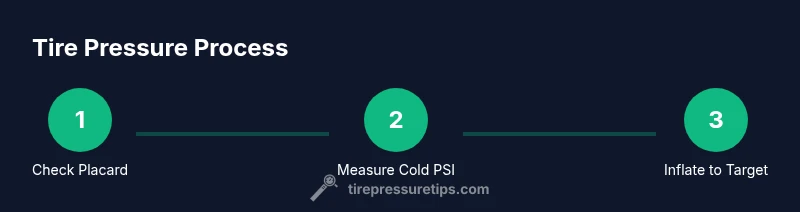
Tire pressure for a Honda Civic is defined by the vehicle’s tire information placard and the owner's manual. The placard, usually located on the driver's door jamb, lists separate front and rear pressures and may vary with tire size and trim level. Because Civics can come with different tire widths, sidewall ratings, and wheel sizes across model years, the exact psi can shift slightly. In practice, most Civics fall within a similar broad range, but the safe, accurate approach is to rely on the placard rather than generic numbers. If you drive with a heavy load, long highway trips, or cold weather, you may need to adjust within the recommended band to maintain even wear and optimal handling. Always start from the placard values and only adjust when you have a precise target based on load and season. For reference, the recommended psi is typically in the low to mid-30s, but model-year and tire specifications matter more than a single number.
For long-term tire health, review your Civic’s tire type and size in the manual. Different tires (e.g., all-season vs. performance) require different pressures to achieve the same contact patch and load distribution. This nuance is why you should not rely on a single number across all Civics; instead, follow the official guidance for your specific model and tire configuration.
Checking cold tire pressure
Always measure tire pressure when the tires are cold, meaning they haven’t been driven more than a mile in the last three hours. Warm tires pressure rises as the air inside expands; checking when warm will yield an inflated reading that isn’t the true cold pressure. Remove the valve cap, attach a tire pressure gauge (digital or analog), and read the psi. Compare the reading to the placard’s target, not your prior reading. If you’re using a gauge with a measurement unit switch, ensure you’re reading in psi for consistency. If a tire reads below the target, you’ll need to add air in short bursts, then recheck. If it’s above the target, carefully release air until you reach the desired pressure. When finished, replace the valve caps to keep out dirt and moisture. Keeping track of readings over time helps identify slow leaks or puncture concerns.
Pro tip: keep a small notebook or a tire-pressure app entry with each tire’s current psi. This makes it easier to notice gradual changes that indicate wear, a slow leak, or a failing valve stem. The habit also helps you stay within your Civic’s safety margins year-round.
Understanding tire pressure ranges by model year
Honda has produced Civics with a range of tires and suspension tunes across generations. Because tire size and load characteristics can shift between trims and model years, it’s essential to reference the specific year and tire size when looking up psi. Even within the same generation, a difference in tire width or aspect ratio can justify a small adjustment to the target range. In practice, you’ll often see the recommended psi cluster hover in a similar band for many Civics, but you should not assume uniformity across all years. Always consult the placard and the owner’s manual for the exact numbers that apply to your vehicle.
When upgrading tires or wheels, verify that the new tires’ load index and speed rating align with the vehicle’s requirements. If in doubt, reach out to a tire-professional or a dealer who can confirm the correct pressure for your specific Civic configuration. This diligence helps maintain handling, braking performance, and tire life.
Tools and methods to measure accurately
Having the right tools is key to accurate measurements. A high-quality tire pressure gauge is essential, with digital models offering quick readings and a clear display. If you prefer a budget-friendly option, a good dial gauge is still reliable and durable. For convenience, a portable air compressor (either at home or a public pump) helps you reach the target psi quickly, but you must verify the measurement after inflation. Some drivers also use a tire inflator with an integrated gauge, which can simplify the process. Regardless of the tool, always take multiple readings to confirm accuracy and ensure consistency across all four tires. Finally, remember to measure when tires are cold and to recheck after a long highway drive or a change in temperature, as both can shift readings. Consistency is the key to accurate psi management for your Civic.
Adjusting pressure for optimal load and efficiency
Inflating or deflating to the target psi should be done in measured steps. After you determine that a tire is below or above the placard, add or release air in small increments (about 1–2 psi at a time) and recheck with your gauge. If you’re adjusting multiple tires, do so one tire at a time and confirm all four readings are within the recommended range. Consider how your daily load—passengers, cargo, or winter gear—affects psi, and adjust accordingly within the placard’s band. When inflating, keep the valve stem clean and avoid over-tightening the valve cap, which can cause a leak. If you’re close to the target but not exact, avoid overshoot by releasing air gradually and rechecking. For precision inflations, wait a few minutes after inflating to allow the tire to settle and stabilize before taking final readings.
Tip: If you notice a tire can’t hold pressure, don’t simply top it up; inspect for leaks or punctures. Address issues promptly to prevent unsafe driving conditions and uneven tire wear.
TPMS: What it means for Honda Civic psi
Tire Pressure Monitoring System (TPMS) systems provide a quick alert when a tire’s pressure drops below the recommended range. TPMS is a valuable safety feature that helps you identify underinflation even if you aren’t routinely checking psi. Remember that the TPMS reading is status-based and not a substitute for manual measurement; it should complement your periodic checks. After inflating to the target psi, drive normally to reset the TPMS if your vehicle requires a reset, or follow the owner’s manual guidance for a TPMS reset. If the TPMS warning stays on after inflation, there may be a slow leak, a damaged sensor, or a faulty TPMS module that needs inspection by a technician.
Understanding the TPMS readings in conjunction with manual measurements will give you a more accurate picture of your Civic’s tire health and safety.
Common mistakes and how to avoid them
Common mistakes include inflating tires while they’re hot, relying on a single tire’s reading without checking others, and not accounting for load or seasonal temperature shifts. Another frequent error is using the wrong gauge or misreading the gauge due to a dirty or damaged valve stem. You should also avoid “top-off” inflations that don’t bring all tires within the placard’s band; each tire must be tuned to its own target. Finally, never ignore slow leaks, bulges, or cracking tread indicators—these signs require professional inspection. By practicing consistent checks, aligning with the placard, and taking seasonal adjustments into account, you’ll minimize wear and maximize safety and fuel efficiency.
Seasonal and driving considerations
Seasonal changes affect tire pressure; it’s common for pressure to drop as outdoor temperatures fall. Plan a monthly check during temperate seasons and increase monitoring in winter and summer when temperature swings are more pronounced. When you store a Civic for extended periods, check tires before resuming driving and consider a baseline measurement after installation of new tires. If you drive frequently on rough roads or carry heavy loads, check more often to maintain optimal grip and tire life. The goal is to keep psi within the placard’s range under typical driving conditions, adjusting for extreme weather or heavy loads as needed.
Safety and maintenance routine for long-term tire health
Create a simple maintenance routine that includes monthly tire pressure checks, seasonal adjustments, and regular visual inspections for signs of wear or damage. Rotate tires as recommended by Honda and replace tires when tread depth reaches the wear indicators. Maintain proper alignment and balance as part of ongoing upkeep; misalignment can cause uneven wear and reduce fuel efficiency. Keep valve stems clean and replace damaged valves promptly to prevent leaks. By integrating这 a consistent pressure and maintenance routine, you’ll protect your investment and keep your Honda Civic handling predictably in all conditions.
Tools & Materials
- Tire pressure gauge(Choose a reliable digital or dial gauge; ensure calibration accuracy)
- Door jamb placard or owner's manual(Use as the official reference for target psi per tire)
- Air compressor or inflator(For reaching target psi; have a gauge that matches your measurement unit)
- Valve-cap tool or clean rag(Keep stems clean and replace caps after measurement)
Steps
Estimated time: 25-35 minutes
- 1
Locate the recommended psi
Find the tire pressure targets on the driver’s door jamb placard or in the owner’s manual. Note separate values for front and rear tires, and account for your tire size and load. This is your baseline for all inflation activities.
Tip: If you’re unsure, start from the placard values and adjust only after verifying with a gauge. - 2
Measure tires when cold
Before you drive or after the car has sat for several hours, read the psi on all four tires. This ensures you’re measuring cold pressure, which is the baseline for inflation decisions.
Tip: If you’ve just driven, wait at least 3 hours or cool the tires as much as possible before measuring. - 3
Attach the gauge and read
Remove the valve cap, press the gauge onto the valve stem, and read the psi. If you see a wobble or leaky reading, re-seat the gauge and take another measurement.
Tip: For best results, take two readings on each tire to confirm accuracy. - 4
Inflate or deflate to target
If the reading is below target, add air in small increments and check again. If above target, release air gradually until you’re within range. Repeat for all four tires as needed.
Tip: Avoid inflating to exactly the upper limit—stay within the recommended band for longevity and safety. - 5
Re-check and finalize
After inflation, re-check each tire’s psi to confirm staying within range. Replace valve caps and wipe away any dirt from the stems.
Tip: Record the readings for future reference and to detect slow leaks early. - 6
Drive and re-check if needed
Drive a short distance to settle the tires, then re-check if any tire changed noticeably. This helps ensure accuracy after adjustments.
Tip: If a tire is consistently off after multiple checks, inspect for punctures or leaks.
Frequently Asked Questions
What is the recommended psi for Honda Civic tires?
The recommended psi for a Honda Civic is specified on the owner's manual and the door placard. It may vary by tire size, trim, and load. Always use the placard as the baseline and adjust only if your tire size or load requires it.
Check the door placard on your Civic or the owner's manual for the exact psi. Use that as your baseline and adjust as needed for load or weather.
When should I check my tire pressure?
Check tire pressure monthly and before long trips. Also check after significant temperature changes, as cold weather can lower psi and heat can raise it.
Check monthly and before long trips, especially when temperatures shift.
Does TPMS replace manual tire pressure checks?
TPMS provides a warning when psi drops too low, but it isn’t a substitute for periodic manual checks. Use TPMS as a trigger to verify psi with a gauge.
No, TPMS is a warning system. You should still manually check the tire pressure with a gauge.
Can temperature affect my tire pressure readings?
Yes. Temperature changes can shift readings, so measure when tires are cold and adjust for seasonal conditions based on the placard guidance.
Temperature affects psi, so measure cold and adjust according to the placard.
What if one tire consistently has low pressure?
A tire that consistently reads low may have a slow leak, a puncture, or a faulty valve stem. Have it inspected by a professional.
If one tire stays low, get it inspected for leaks or valve issues.
Is it safe to drive with low psi?
Driving on underinflated tires can impact handling and tire wear. Inflate to the recommended range as soon as possible and recheck after a drive.
It’s not safe to drive on low psi; inflate to the recommended range promptly.
Watch Video
What to Remember
- Check cold psi against placard targets.
- Use a reliable gauge and inflate in small steps.
- Account for load and seasonality in adjustments.
- TPMS is a helpful safety tool, not a substitute for manual checks.
- Maintain a simple maintenance routine for long-term tire health.