How to Check Tyre Pressure on Honda Civic
Learn how to check tyre pressure on a Honda Civic with a clear, step-by-step method. Includes cold readings, TPMS awareness, gauges, and how to maintain proper PSI for safety and efficiency.


This guide shows you how to check tyre pressure Honda Civic accurately, using a gauge and the car’s placard. You’ll verify cold psi, reset TPMS if needed, and adjust all four tires to the recommended levels. You’ll need a reliable gauge, the vehicle door placard, and a cold tire for the most accurate reading. Understanding how temperature affects pressure and when to recheck after driving is essential for safe, efficient driving.
Why check tyre pressure honda civic matters
For drivers of the Honda Civic, keeping tyres correctly inflated is essential for safety, performance, and efficiency. The Civic relies on consistent tire pressure to maintain steering response, grip, and even wear across all four tires. Under-inflation can increase rolling resistance and heat, while over-inflation can reduce contact patch and comfort. This is not just about comfort; correct tyre pressure supports safer braking, better fuel economy, and longer tire life. According to Tire Pressure Tips, maintaining correct tyre pressure is a cornerstone of safe driving and efficient operation. When you check tyre pressure on a Honda Civic regularly, you improve predictable handling on wet or snowy roads and reduce the risk of tire failure. In this section, you’ll learn why getting the number right matters, where to find the official specs, and how to read your gauge with confidence. Integrating tyre pressure checks into routine maintenance makes long trips safer and more economical, while also protecting tire warranty considerations.
Finding the correct tyre pressure for the Honda Civic
The Honda Civic has a recommended cold tire pressure that is specific to model year, trim, and wheel size. Always rely on the official source for your car: the door placard on the driver's side jamb and the owner's manual. The placard lists the target PSI for the front and rear tires when cold, and these values can differ between front and rear wheels. If you replace wheels or tires with a different size, recheck the placard and maybe the owner's manual to confirm compatibility. Seasonal changes and load conditions can also affect the ideal pressure, so recheck before long trips or when you frequently carry heavy loads. Never assume a number from a different vehicle; even a sibling Civic model could have different specs. This approach keeps you aligned with vehicle safety standards and maintenance guidelines.
Tools and gauges you can trust for accurate readings
Accurate tyre pressure starts with choosing the right tool and using it correctly. A digital gauge or a traditional dial gauge can work well if you calibrate them periodically. Always measure the pressure when the tyres are cold, ideally after the car has been stationary for several hours. Remove the valve cap, press the gauge onto the valve stem firmly, and note the reading quickly to avoid heat buildup. When you’re done, replace the valve cap to protect the stem from dirt. If readings vary significantly from tire to tire, recheck to confirm accuracy, and consider swapping in a new gauge if your current tool seems inconsistent. A consistent gauge ensures your checks are reliable day after day.
Understanding TPMS and how it relates to manual readings
Tire Pressure Monitoring System (TPMS) provides a warning when tire pressure falls outside the vehicle’s safe range. TPMS is a valuable safety feature, but it should not replace manual checks. The system can give false warnings if sensors are damaged or tires have recently been manipulated, so you should still verify pressures with a gauge. If the TPMS light stays on after you adjust pressures, drive a short distance and recheck. If it remains illuminated, there may be a sensor fault or a leak in a tire that needs inspection by a professional. For ongoing maintenance, combine TPMS alerts with regular manual checks to stay ahead of slow leaks and ensure optimal tire performance.
How weather and driving affect tyre pressure
Weather and recent driving have a notable impact on tyre pressure. Colder temperatures cause a drop in PSI, while hot days or extensive highway driving can increase pressure slightly. Always start with a cold-tire check in the morning or after the vehicle has sat unused for several hours. If you’ve just driven a long distance, wait for the tires to cool before taking readings. Seasonal shifts can necessitate rechecking PSI as part of your routine maintenance. Keeping up with these adjustments helps preserve tire life and maintain consistent handling characteristics.
Practical steps to maintain correct tyre pressure over time
Maintaining correct tyre pressure is an ongoing habit, not a one-off task. Schedule a quick check at least once a month and before long trips. Always reference the Honda Civic door placard for the current target PSI and adjust based on load and tire wear. If you rotate tires, recheck pressures to account for any variations caused by wheel position. Record your readings in a notebook or app so you can track changes over time. Regular checks can catch slow leaks early and prevent uneven tire wear, saving money and improving safety.
Before you drive: quick checks you can do at home
Before any trip, perform a quick five-minute check: listen for hissing sounds around valve stems and tire sidewalls, inspect for visible damage or signs of punctures, and confirm that all caps are tightened securely. A simple gauge check on a cold tire will give you a reliable baseline. If a tire appears visibly underinflated, avoid driving long distances and seek service. This routine helps you catch issues early and reduces the risk of sudden tire failure on the road.
Tools & Materials
- Tire pressure gauge (digital or analog)(Choose a gauge that is easy to read and calibrate; keep a backup in your glove box.)
- Owner's manual and door placard(Use for the official cold PSI targets for your specific Civic model.)
- Valve core caps(Replace caps after each measurement to keep dirt out of the valve stem.)
- Access to a calm, shaded area with a flat surface(Improves reading accuracy and comfort during measurement.)
Steps
Estimated time: 30-45 minutes
- 1
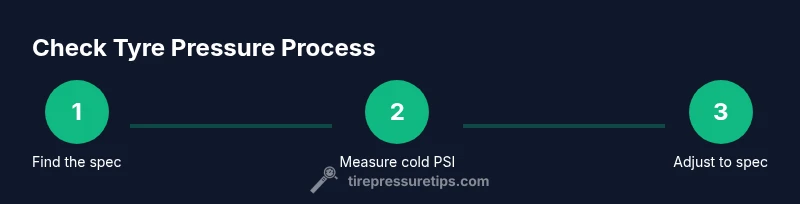
Find the official tire pressure spec
Consult the driver door placard and the owner's manual for the official cold PSI target for each tire. Note any differences between front and rear tires. This value is the baseline for all measurements.
Tip: If you recently replaced tires or wheels, verify that the placard matches the new setup. - 2
Ensure tires are cold
Park the Civic in a cool, shaded spot and wait at least 3 hours if possible. Warm tires will give higher readings and skew results.
Tip: Avoid checking after a short drive or after leaving the highway. - 3
Remove valve caps and prepare the gauge
Take off the valve cap and keep it in your pocket. Clear the valve stem of any debris before attaching the gauge.
Tip: Inspect valve stems for cracks or damage while you have the cap off. - 4
Attach gauge and read psi
Firmly place the gauge on the valve stem and note the reading quickly to avoid air loss. Record the numbers for all four tires.
Tip: If you hear hissing, reseat and recheck to ensure a clean seal. - 5
Inflate or deflate to target PSI
If any tire is below or above the target PSI, adjust using a compressor or a manual pump until the reading matches the placard.
Tip: Do not exceed the tire’s maximum sidewall pressure listed on the tire itself. - 6
Recheck and verify all tires
After inflation, recheck all four tires to confirm consistency. Reinstall valve caps and monitor TPMS behavior if needed.
Tip: Take a quick drive and recheck once tires have cooled to confirm stability. - 7
Record results and plan next check
Document readings and the date of the check; set reminders for monthly checks or before long trips.
Tip: Keep a small log with dates, PSI readings, and any notes about load or weather.
Frequently Asked Questions
How often should I check tyre pressure on a Honda Civic?
Check tyre pressure at least once a month and before long trips. Also inspect tires for any noticeable changes or leaks between checks.
Check your tyres monthly and before long trips, and inspect for leaks between checks.
What tools do I need to check tyre pressure?
A reliable tyre pressure gauge, access to the door placard or owner's manual, and a safe, flat space to work.
You need a good gauge, the placard or manual, and a flat working area.
Can TPMS give an accurate reading?
TPMS provides a warning when pressures are outside safe ranges but should be used in addition to manual gauge readings.
TPMS is helpful but not a substitute for measuring pressure with a gauge.
Why is tire pressure different on front vs rear tires?
The Civic's front and rear tires may have different target pressures due to weight distribution and handling characteristics; always use the official spec for your exact model.
Front and rear can have different targets; use your official spec.
What should I do if readings are inconsistent between tires?
Recheck with a calibrated gauge, inspect valve stems for damage, and consider having tires inspected if inconsistency persists.
If readings vary, recheck with a good gauge and inspect for valve issues.
Should I check tyre pressure in winter?
Yes. Temperature changes can affect PSI; check more often during cold weather to maintain safe pressures.
Yes, check more often in cold weather to stay safe.
Watch Video
What to Remember
- Check cold PSI against the Civic placard.
- Use a reliable gauge for accurate readings.
- TPMS complements, but does not replace, manual checks.
- Recheck after adjustments and before long trips.
- Document readings for ongoing maintenance.