Honda Civic 2019 Tire Pressure: A Practical Guide
Learn how to check, inflate, and maintain tire pressure for the Honda Civic 2019. Step-by-step guidance, TPMS tips, and a practical maintenance plan from Tire Pressure Tips.


By following this guide, you will accurately verify and adjust the tire pressures on a Honda Civic 2019 using the door placard and TPMS as your reference. Gather a reliable tire gauge and a suitable air source, then check each tire and the spare, inflate toward the recommended values, and recheck all pressures. This step-by-step method supports safer handling, improved fuel economy, and longer tire life, per Tire Pressure Tips.
The importance of correct tire pressure on the Honda Civic 2019
Maintaining the correct tire pressure for your Honda Civic 2019 isn't just about avoiding a flat; it's about predictable handling, even tire wear, and efficient fuel use. When tires run underinflated, they flex more at the tread, generating heat, reducing grip, and increasing rolling resistance. Overinflation can reduce the contact patch, causing a harsher ride and uneven wear. The Tire Pressure Tips team notes that changes in temperature, load, and speed can alter the actual pressure inside the tire; a tire that reads one day may read differently after a quick drive. For Civics with TPMS, the system helps alert you to improper pressure, but it doesn't replace regular manual checks; sensors can malfunction or lag, and external leaks still require attention. To maximize safety, start by locating the exact pressures from your door placard or owner's manual. Front and rear tires on the Civic may have different targets depending on trim and tire size. Regular checks, especially before winter or long road trips, keep performance consistent.
How to locate the correct pressure for your Civic 2019
Finding the right air pressure for each tire on a Honda Civic 2019 begins with the door jamb placard on the driver's side. This placard lists the recommended pressures for front and rear tires, and it often differs by tire size and trim. If you can't see the placard, consult the owner's manual or the tire information label located in the glove box or fuel-filler door. Remember: the tire sidewall shows the maximum pressure the tire can safely handle, not the recommended operating pressure for your vehicle. Always use the placard values for daily use and for seasonal adjustments. Temperature, load, and driving conditions can shift the ideal pressure, so recheck after long drives or changes in weather.
Tools and prep before you start
Before you begin, collect a few essential tools and prepare the car. You will need a reliable tire gauge (digital or analog) and a portable air source or access to an air pump at a service station. Have the vehicle's door placard and/or owner's manual handy to confirm target pressures. Ensure the tires are cold for the most accurate readings—inflating while hot will give artificially high numbers. A flashlight or headlamp helps when checking in dim mornings or garages. Optional items include a tire soap solution to detect leaks and a notebook to log your readings over time.
Step-by-step overview
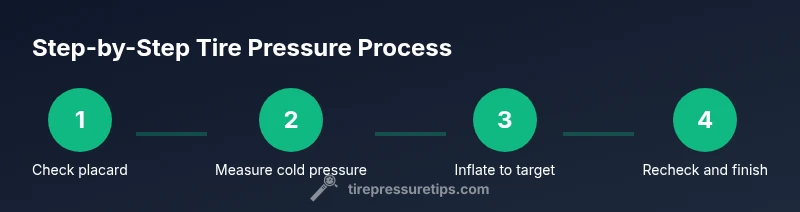
This section provides a high-level overview of the process to set up and perform a tire pressure check for the Civic 2019. The actual step-by-step actions are detailed in the dedicated STEP-BY-STEP block, but here you get the workflow at a glance: locate the correct targets, assemble your tools, measure current pressures, compare against targets, inflate as needed, recheck all tires, and finally verify the TPMS status and drive comfort. Throughout, verify readings in a consistent order (left front, right front, left rear, right rear). This approach minimizes confusion and ensures you don’t miss a tire.
Tip: If you drive a lot with heavy loads or on hot days, schedule more frequent checks to maintain stable pressures and tire wear.
Common mistakes and how to avoid them
A few routine mistakes can undermine tire pressure results. Underinflating increases heat buildup and can wear the outer edges of the tread; overinflating reduces the contact patch and can produce a stiff ride. Checking pressure only when the tires are hot yields higher numbers and misleads you about the actual cold pressure. Using different gauges can produce inconsistent readings, so stick to one trusted gauge. Neglecting TPMS alerts or assuming the system is flawless is another common error; use manual readings to corroborate TPMS readings, especially after a long road trip or a sudden temperature drop. Finally, neglecting the spare tire’s pressure is a silent risk—include it in your routine checks.
Seasonal considerations: temperature, load, and tire wear
Temperature has a direct effect on tire pressure. In cooler months, air contracts and pressure can drop; in heat, it expands and pressure rises. For Civics driven with heavy loads or during winter conditions, pressures can drift more quickly, so perform checks more frequently and consider adjusting for seasonal changes. Tire wear patterns also shift with pressure: underinflated tires wear more on the inner and outer edges, while overinflated tires wear in the center. By maintaining proper pressure, you help preserve even tread wear and prolong tire life.
Maintenance plan and long-term checks
Make tire pressure monitoring a regular habit rather than a quarterly task. Set a monthly reminder to check cold pressures and log any deviations. After seasonal changes or long trips, recheck the pressures to confirm they’re still within spec. If you notice persistent pressure loss, inspect tires for leaks, ensure valve stems are secure, and consider TPMS sensor diagnostics. Keeping a simple maintenance routine not only improves safety but also helps your Civic deliver consistent fuel efficiency and predictable handling.
Quick-check printable checklist
Print this quick checklist and keep it in your glove box or garage:
- Find the door placard for correct front/rear pressures
- Check all four tires and the spare when cold
- Use one reliable gauge and a stable air source
- Inflate only to the recommended target; avoid max-sidewall pressures
- Recheck after inflation and confirm TPMS readings
- Note any leaks or abnormal wear and address promptly
],
toolsMaterials":{"items":[{
name":"tire pressure gauge","required":true,"note":"Digital preferred for quick, accurate readings"},{
name":"portable air compressor or service-station air pump","required":true,"note":"Ensure it can reach the target PSI on your tires"},{
name":"door placard or owner's manual","required":true,"note":"Source of the Civic 2019's correct pressures"},{
name":"tire soap solution (optional)","required":false,"note":"Detect slow leaks at valves or bead"},{
name":"notebook or app to log readings (optional)","required":false,"note":"Track pressure changes over time"}]},"stepByStep":{"steps":[{"number":1,"title":"Locate the correct tire pressures","description":"Identify the exact pressures for the Civic 2019 from the door placard and, if needed, the owner's manual. If different tire sizes are installed, ensure you use the matching values for your setup.","tip":"Always start with cold tires for the most accurate reading."},{"number":2,"title":"Gather your tools and prepare the car","description":"Assemble a reliable gauge, air source, and a clean, flat surface. Park on level ground and engage the parking brake before you begin.","tip":"Having all tools within reach reduces interruptions during the check."},{"number":3,"title":"Check current tire pressures with the gauge","description":"Remove valve caps and place the gauge on the valve stem. Read the pressure and record each tire. Do this for all four tires and the spare if you carry one.","tip":"Use the same gauge for consistent readings."},{"number":4,"title":"Inflate or deflate toward the target","description":"If a tire reads low, add air in small increments and recheck. If overinflated, release air gradually and recheck. Repeat until all tires match the placard values.","tip":"Avoid inflating to the tire’s max rating; target the recommended pressure instead."},{"number":5,"title":"Re-check all tires after adjustments","description":"After inflation, re-measure each tire to confirm accuracy. Take note of any readings that differ more than a few PSI over time.","tip":"Check both cold readings and after a brief drive to understand stability."},{"number":6,"title":"Inspect TPMS status and look for leaks","description":"Turn on the ignition to verify TPMS warnings and ensure there are no persistent alerts. Inspect valve stems and rims for damage or leaks using soapy water if needed.","tip":"Don’t ignore TPMS warnings; they may indicate a slow leak or sensor issue."},{"number":7,"title":"Document results and set a maintenance reminder","description":"Record the final pressures and schedule the next check. A monthly cadence works well for most Civics, with extra checks during temperature shifts.","tip":"Consistency makes it easier to notice gradual pressure drift."},{"number":8,"title":"Perform a safe test drive and final check","description":"Take a short drive to confirm the vehicle handles normally and recheck pressures after the tires have cooled. If readings change significantly, reassess.","tip":"Safety first; if anything feels off, stop and re-evaluate."}],"estimatedTime":"25-40 minutes"},
tipsList":{"tips":[{
type":"pro_tip","text":"Check while tires are cold for accurate readings and avoid reading after a long drive or high-speed trip."},{
type":"warning","text":"Never inflate beyond the tire's maximum pressure printed on the sidewall; always follow the placard."},{
type":"note","text":"If TPMS shows a warning after inflation, recheck all tires and verify sensors are functioning."},{
type":"pro_tip","text":"Use the same gauge every time to reduce variance between measurements."}]},"keyTakeaways":["Check the Civic’s placard first","Use one reliable gauge consistently","Inflate to the recommended target, not max","Recheck after inflation and drive","Maintain a regular monthly check"] ,"videoEmbed":{"videoQuery":"Honda Civic 2019 tire pressure check tutorial"},"faqSection":{"items":[{"question":"Where is the tire pressure placard on the Honda Civic 2019?","questionShort":"Placard location","answer":"The placard is usually on the driver’s door jamb or inside the fuel door. It lists the recommended front and rear tire pressures for your exact tire size and trim.","voiceAnswer":"Check the driver’s door jamb for the placard to find the recommended pressures.","priority":"high"},{"question":"Can I rely on the tire sidewall numbers for daily pressure targets?","questionShort":"Use placard not sidewall","answer":"No. The sidewall shows the maximum safe pressure, not the recommended operating pressure. Use the placard values or the owner’s manual for daily use.","voiceAnswer":"Always use the placard values for daily driving.","priority":"high"},{"question":"How often should I check tire pressure on a Civic 2019?","questionShort":"Check frequency","answer":"Check at least once a month and before long trips, especially when the weather shifts. Temperature changes can affect tire pressure noticeably.","voiceAnswer":"Monthly checks, plus before trips and after temperature changes.","priority":"high"},{"question":"What could cause TPMS alerts if tires look fine?","questionShort":"TPMS alerts","answer":"TPMS can warn of slow leaks, sensor battery issues, or changes in temperature. Always verify with manual readings and inspect valves." ,"voiceAnswer":"TPMS may warn due to leaks or sensor issues; verify with manual checks.","priority":"medium"},{"question":"Does temperature affect tire pressure?",
questionShort":"Temp effects","answer":"Yes. Colder temperatures typically reduce tire pressure; warmer temperatures can increase it. Plan checks with seasonal changes.","voiceAnswer":"Yes, temperature changes affect pressure; recheck after weather shifts.","priority":"medium"},{"question":"Is it safe to inflate to the max pressure on the tire?","questionShort":"Max pressure","answer":"No. Always target the recommended pressure from the placard. Overinflating can reduce traction and cause uneven wear.","voiceAnswer":"Avoid max pressure; follow the placard targets.","priority":"low"}]},"mainTopicQuery":"Civic tire pressure"},"mediaPipeline":{"heroTask":{"stockQuery":"Honda Civic 2019 tires on driveway","overlayTitle":"Civic Tire Check","badgeText":"2026 Guide","overlayTheme":"dark"},"infographicTask":{"type":"process","htmlContent":"<div class="w-[800px] p-6 bg-slate-900 text-white"><h3 class="text-2xl font-bold mb-4">Tire Pressure Process</h3><div class="flex items-center justify-between"><div class="flex flex-col items-center"><div class="w-12 h-12 rounded-full bg-emerald-500 flex items-center justify-center text-xl font-bold">1</div><div class="mt-2 text-center text-sm">Check placard</div></div><div class="flex-1 h-1 bg-emerald-500/30 mx-2"></div><div class="flex flex-col items-center"><div class="w-12 h-12 rounded-full bg-emerald-500 flex items-center justify-center text-xl font-bold">2</div><div class="mt-2 text-center text-sm">Measure cold pressure</div></div><div class="flex-1 h-1 bg-emerald-500/30 mx-2"></div><div class="flex flex-col items-center"><div class="w-12 h-12 rounded-full bg-emerald-500 flex items-center justify-center text-xl font-bold">3</div><div class="mt-2 text-center text-sm">Inflate to target</div></div><div class="flex-1 h-1 bg-emerald-500/30 mx-2"></div><div class="flex flex-col items-center"><div class="w-12 h-12 rounded-full bg-emerald-500 flex items-center justify-center text-xl font-bold">4</div><div class="mt-2 text-center text-sm">Recheck and finish</div></div></div></div>","altText":"Process infographic showing 4 steps for checking and inflating Honda Civic 2019 tires","caption":null}}},"taxonomy":{"categorySlug":"tire-pressure-basics","tagSlugs":["front-tire-pressure","tire-pressure","check-tire-pressure","tpms","honda-civic-tire-pressure"]}}} }} ,{
Tools & Materials
- tire pressure gauge(Digital preferred for quick, accurate readings)
- portable air compressor or service-station air pump(Ensure it can reach the target PSI on your tires)
- door placard or owner's manual(Source of the Civic 2019's correct pressures)
- tire soap solution (optional)(Detect slow leaks at valves or bead)
- notebook or app to log readings (optional)(Track pressure changes over time)
Steps
Estimated time: 25-40 minutes
- 1
Locate the correct tire pressures
Identify the exact pressures for the Civic 2019 from the door placard and, if needed, the owner's manual. If different tire sizes are installed, ensure you use the matching values for your setup.
Tip: Always start with cold tires for the most accurate reading. - 2
Gather your tools and prepare the car
Assemble a reliable gauge, air source, and a clean, flat surface. Park on level ground and engage the parking brake before you begin.
Tip: Having all tools within reach reduces interruptions during the check. - 3
Check current tire pressures with the gauge
Remove valve caps and place the gauge on the valve stem. Read the pressure and record each tire. Do this for all four tires and the spare if you carry one.
Tip: Use the same gauge for consistent readings. - 4
Inflate or deflate toward the target
If a tire reads low, add air in small increments and recheck. If overinflated, release air gradually and recheck. Repeat until all tires match the placard values.
Tip: Avoid inflating to the tire’s max rating; target the recommended pressure instead. - 5
Re-check all tires after adjustments
After inflation, re-measure each tire to confirm accuracy. Take note of any readings that differ more than a few PSI over time.
Tip: Double-check after a few minutes of rest to ensure stability. - 6
Inspect TPMS status and look for leaks
Turn on the ignition to verify TPMS warnings and ensure there are no persistent alerts. Inspect valve stems and rims for damage or leaks using soapy water if needed.
Tip: Don’t ignore TPMS warnings; they may indicate a slow leak or sensor issue. - 7
Document results and set a maintenance reminder
Record the final pressures and schedule the next check. A monthly cadence works well for most Civics, with extra checks during temperature shifts.
Tip: Consistency makes it easier to notice gradual pressure drift. - 8
Perform a safe test drive and final check
Take a short drive to confirm the vehicle handles normally and recheck pressures after the tires have cooled. If readings change significantly, reassess.
Tip: Safety first; if anything feels off, stop and re-evaluate.
Frequently Asked Questions
Where is the tire pressure placard on the Honda Civic 2019?
The placard is usually on the driver’s door jamb or inside the fuel door. It lists the recommended pressures for front and rear tires for your exact tire size and trim.
Check the driver’s door jamb for the placard to find the recommended pressures.
Can I rely on the tire sidewall numbers for daily pressure targets?
No. The sidewall shows the maximum safe pressure, not the recommended operating pressure. Use the placard values or the owner’s manual for daily use.
Always use the placard values for daily driving.
How often should I check tire pressure on a Civic 2019?
Check at least once a month and before long trips, especially when the weather shifts. Temperature changes can affect tire pressure noticeably.
Monthly checks, plus before trips and after temperature changes.
What could cause TPMS alerts if tires look fine?
TPMS can warn of slow leaks, sensor battery issues, or changes in temperature. Always verify with manual readings and inspect valves.
TPMS may warn due to leaks or sensor issues; verify with manual checks.
Does temperature affect tire pressure?
Yes. Colder temperatures typically reduce tire pressure; warmer temperatures can increase it. Plan checks with seasonal changes.
Yes, temperature changes affect pressure; recheck after weather shifts.
Is it safe to inflate to the max pressure on the tire?
No. Always target the recommended pressure from the placard. Overinflating can reduce traction and cause uneven wear.
Avoid max pressure; follow the placard targets.
Watch Video
What to Remember
- Check the Civic’s placard first
- Use one reliable gauge consistently
- Inflate to the recommended target, not max
- Recheck after inflation and drive
- Maintain a regular monthly check