Difference in Tire Pressure: What Changes It and Why It Matters
A comprehensive guide to the difference in tire pressure, how it affects safety, efficiency, and tire life, and practical steps to measure and adjust pressure accurately across temperatures and loads.


The difference in tire pressure refers to how pressure shifts from the cold-standby target to in-use readings, and how temperature, load, and driving style influence those numbers. The key is to inflate to the vehicle manufacturer's cold PSI, verify with a gauge, and adjust for load and seasonal temperature changes. Always use TPMS as a guide, not a sole measurement.
What the difference in tire pressure means
According to Tire Pressure Tips, the difference in tire pressure is not a single number. It describes how the pressure you read on a gauge changes between a cold, vehicle-manufacturer target and the pressure you observe after driving, heating the tire. The term encompasses several variables: the tire's temperature, the load the vehicle carries, the road temperature, and how quickly you drive. In practice, it means that the number you see on a tire gauge can vary depending on whether the tire is cold or has warmed up, and whether you measure it immediately after inflation or after a long drive. This variation is normal, but the goal is to maintain the tire's average pressure close to the vehicle's recommended cold PSI. The difference is especially relevant for safety, handling, and efficiency. By understanding the difference, drivers can avoid under-inflation or over-inflation conditions that degrade grip, increase wear, and waste fuel. The tires perform best when kept within the manufacturer's specification and monitored regularly.
Measurement basics and why cold tire pressure matters
The foundation of accurate tire pressure management is measuring when the tire is cold. A cold tire reflects the pressure specified by the vehicle manufacturer and is least influenced by recent driving heat. Inflate to this cold PSI, then check again after a drive to understand how heat changes the reading. If you measure hot, the number will usually appear higher; you need to know that a hot reading is not the target. Use a reliable gauge, ideally the same one each time, and calibrate it occasionally to prevent drift. Also consider the tire's position; front and rear tires can wear differently and may require slight adjustments based on vehicle load or equipment. The goal is consistency: stay within the manufacturer's range and maintain roughly equal pressure across all tires unless the vehicle's manual specifies variations for axle weight or load distribution. By keeping a steady method—cold measurement first, then a controlled check after driving—you minimize surprises and enhance safety, handling, and fuel efficiency. In this approach, the Tire Pressure Tips guidance emphasizes methodical checks and avoiding willy-nilly inflation decisions.
Temperature effects and seasonal changes
Air behaves like a flexible cushion inside a tire and responds to ambient temperature. In cold weather, air contracts, leading to a lower pressure reading; in heat, air expands, increasing the pressure reading. Shifts from morning cool to afternoon heat can change readings enough to cross the threshold of the vehicle's recommended range without you inflating or deflating the tires. This is why many drivers notice lower pressures in winter and higher pressures in summer, even with the same tire. The practical implication is simple: you should check pressures more often during seasonal transitions and after long drives or highway trips where tires have heated up. The Tire Pressure Tips recommendations are to align inflation with the cold-spec guidelines, then adjust if load or driving conditions demand it. Seasonality matters, but consistent measurement and alignment with the cold PSI target reduces wear on the tread, preserves grip, and helps maintaining even wear across tires.
Manufacturer specs vs general guidelines
Manufacturer specifications differ from generic guidelines because they account for axle load, vehicle weight distribution, and intended use. The door jamb sticker or the owner's manual typically lists a cold PSI target per axle, sometimes with different values for front and rear tires. In contrast, common online guidance or generic advice may suggest a single number for all tires. The difference in tire pressure becomes clear when you consider load scenarios: a lightly loaded sedan can tolerate a slightly different balance than a fully loaded SUV. Always start with the exact cold PSI specified by the manufacturer and adjust only within allowed ranges for the given conditions. If you cannot locate the exact spec, consult the manual or contact the vehicle manufacturer for clarification. This approach helps prevent uneven wear and improves handling and braking performance.
TPMS: how it helps and limitations
Tire Pressure Monitoring Systems (TPMS) provide a real-time alert when a tire drops below a threshold, which is valuable for catching a dangerous drop in pressure before it becomes unsafe. However, TPMS does not replace manual pressure checks. The system can miss gradual leaks or misrepresent actual pressure when the tires are not aligned with the cold PSI target. Always verify TPMS readings with a hand-held gauge and inflate to the manufacturer’s cold specification. Remember that TPMS readings reflect live conditions, not the historical baseline; use them as a safety net rather than a replacement for regular checks. As the Tire Pressure Tips team notes, combining TPMS with periodic manual checks yields the most reliable pressure maintenance.
Scenarios: daily driving vs heavy loads
Everyday driving typically benefits from staying close to the factory cold PSI, ensuring consistent tire contact with the road and predictable handling. When carrying heavy loads or towing, manufacturers often require slight adjustments within safe limits to maintain stability and tire life. The difference in tire pressure becomes most noticeable under these conditions: under-inflation increases heat buildup and tread wear, while over-inflation reduces the contact patch and ride comfort. The goal is to adjust pressure within the recommended ranges for the specific axle load and driving scenario, rather than applying a one-size-fits-all figure. Regular checks before trips and after changes in cargo help keep performance consistent across seasons and road conditions.
How to measure and adjust pressure correctly
To measure accurately, begin with cold tires and use a high-quality gauge. Remove the cap, place the gauge, and take a reading from each tire. Compare to the manufacturer’s cold PSI specification. If below target, inflate in small increments, checking again after a short drive to ensure readings stay within the acceptable range. If above target, slowly release air until you hit the recommended level. Repeat for all tires, ensuring equalization between front and rear where applicable. After inflation, recheck with the gauge and replace valve caps. Document any deviations or changes in load so you can adjust in future checks. This methodical routine supports consistent handling, safer braking, and improved fuel efficiency.
Common mistakes and myths
Myth: Higher tire pressure always equals better fuel economy. Reality: Excessive inflation can reduce grip and cause uneven wear. Myth: You can rely solely on TPMS to know your true pressure. Reality: TPMS warns about low pressure, but does not gauge exact PSI. Common mistake: Checking pressure only when tires look visibly flat. Truth: Subtle under-inflation can be invisible but harmful. By debunking these myths and sticking to cold-PSI targets verified with a gauge, you keep tires safe and performing well.
Tools and maintenance routines
Regular maintenance requires a reliable gauge, a portable inflator, and a stopwatch or timer to remind you to check periodically. Keep gauge calibration and battery power in check; replace if you notice inconsistent readings. A dedicated maintenance routine includes: check cold PSI weekly or monthly, inspect tires for punctures or puncture indicators, rotate tires as per the manual, and adjust pressures after seasonal transitions or changes in load. The goal is consistency: a repeatable measurement process that aligns with the manufacturer’s recommendations and reflects real-world conditions. Tire Pressure Tips emphasizes applying a disciplined routine to reduce risk and extend tire life.
When to seek professional help
If you notice persistent pressure changes without obvious cause, if a tire shows unusual wear, or if TPMS is frequently alerting for no evident reason, consult a professional. A technician can inspect for slow leaks, damaged valves, or wheel issues that affect pressure readings. In situations involving tire replacements, sidewall damage, or unusual tire performance, seek professional guidance promptly to ensure safety and avoid further damage.
Quick-start tire pressure checklist
- Confirm the vehicle manufacturer’s cold PSI for all tires.
- Check tires when cold using a trusted gauge.
- Inflate or deflate to match the cold PSI per axle requirements.
- Recheck after a short drive to understand heat effects, if needed.
- Inspect tires for wear, damage, and proper tread depth.
- Recheck TPMS alerts with a manual gauge to validate readings.
- Schedule regular checks, especially during seasonal changes or heavy loads.
AUTHORITY SOURCES
- https://www.nhtsa.gov/equipment/tires
- https://nap.edu
- https://www.fueleconomy.gov/feg/maintain.jsp
Comparison
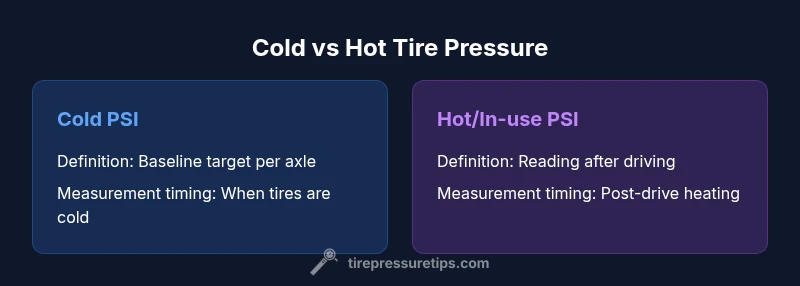
| Feature | Cold tire pressure | In-use (hot) tire pressure |
|---|---|---|
| Definition | Tire pressure when tires are cold and have not been driven | Pressure read after tires have heated from driving |
| Measurement Timing | Before driving, at ambient temperature | Immediately after driving or while warm |
| Impact on Readings | Represents the target spec from the manufacturer | Typically higher due to heat buildup in the tire |
| Best For | Baseline safety checks and axle-specific targets | Understanding current state for adjustments during trips or loads |
| Notes on Safety | Inflate to cold PSI; adjust with caution for load | Hot readings can mislead; always compare to cold spec |
Strengths
- Encourages adherence to manufacturer specs for safety
- Helps maintain even tire wear and fuel efficiency
- Supports safer handling across seasons and loads
- Reduces risk of pothole damage and blowouts by preventing under-inflation
Drawbacks
- Requires regular checks and dedicated time
- TPMS cannot replace manual gauge for exact PSI
- Cold vs hot readings can be confusing without a consistent method
Follow cold-PSI targets with periodic warm-up checks
Maintaining cold PSI per manufacturer specs is the most reliable approach. TPMS is a safety net, not a primary measurement. Use a gauge for accuracy and keep a regular check routine to ensure safe, efficient driving.
Frequently Asked Questions
Should I inflate to cold PSI or hot PSI?
Inflate to the manufacturer’s cold PSI specification and verify when the tires are cold. If you inflate after driving, use the cold PSI as your reference point and re-check when cold again to ensure you’re within spec.
Always start with the cold PSI, then recheck after driving to understand heat effects.
How often should I check tire pressure?
Check tire pressure at least monthly and before long trips. Inspect when you notice changes in ride feel, handling, or if seasons change, since temperature affects readings.
Check regularly, especially with seasonal changes and before trips.
Can TPMS replace manual pressure checks?
No. TPMS provides warning when pressure is low, but it does not show the exact PSI. Always verify with a manual gauge to ensure you’re within the recommended range.
TPMS helps, but you still need a gauge for exact numbers.
What effects does temperature have on tire pressure?
Temperature changes cause air to contract or expand, lowering pressure in cold weather and raising it in heat. This is why seasonal checks are recommended and why cold-PSI targets matter.
Temperature shifts matter—check regularly and use cold PSI as a baseline.
Is under-inflation or over-inflation more dangerous?
Both are risky. Under-inflation increases heat and wear, risking blowouts; over-inflation reduces the contact patch, affecting grip and comfort. Aim for the manufacturer’s spec to balance safety and performance.
Both extremes are unsafe; stay within the recommended range.
How should you adjust pressure for heavy loads?
Adjust within the manufacturer’s recommended range for heavy loads. Avoid over-inflation, which can reduce ride comfort and tire contact. If unsure, seek guidance from the manual or a technician.
Adjust within recommended ranges and confirm with a gauge.
What to Remember
- Check tires cold for baseline accuracy
- Use TPMS as a safety alert, not a measurement substitute
- Adjust for load and season with manufacturer guidance
- Maintain a regular pressure-check routine
- Avoid relying on hot readings alone to gauge safety