Difference Between Air Pressure and Air Flow: A Tire Guide
Learn the difference between air pressure and air flow, why it matters for tires, and how to measure and apply each in everyday driving. Practical guidance from Tire Pressure Tips for safe, efficient tire maintenance.


Air pressure and air flow are not the same thing. Pressure measures how hard the air inside the tire pushes outward against the tire walls, while flow describes how air moves around and through the tire and wheel area during motion. For tires, maintaining correct pressure is the most reliable path to safety and efficiency, while airflow awareness helps with cooling, noise, and performance in demanding conditions.
What are air pressure and air flow?
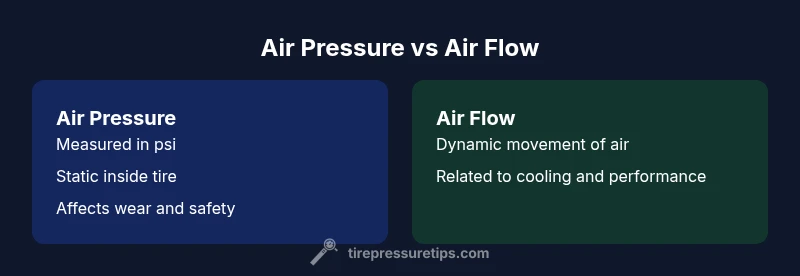
Air pressure is the force that air inside the tire exerts on the tire walls, typically measured in psi or kPa. Air flow, by contrast, refers to how air moves around and through the tire system as the vehicle travels. In tires, flow includes air moving through the channels in the tread, around the sidewalls, and through the wheel cavity. The difference between the two is fundamental for understanding tire behavior: pressure is a static metric, while flow is a dynamic phenomenon driven by speed, temperature, and road conditions. According to Tire Pressure Tips, drivers should view pressure as the baseline for safety and efficiency, while flow awareness helps with cooling under load and high speed. This distinction is especially important because you cannot directly measure tire flow with common consumer tools; you infer it from performance indicators like cooling and noise, as well as from vehicle behavior. In short, pressure is about how much air is inside the tire, while flow is about how air moves around and within the tire system during operation.
The physics of tires and the practical distinction between pressure and flow
In the tire system, pressure and flow interact but describe different phenomena. Pressure is a scalar that sets the internal environment and contact patch with the road. When you inflate to the recommended pressure, the tire deforms in a predictable way that balances grip, wear, and rolling resistance. Flow involves the movement of air through the tire and around its surface as you drive. At speed, air must evacuate efficiently from the wheel well and pass through the tread voids to prevent heat buildup. While you can measure pressure with a gauge, flow is a byproduct we monitor through performance cues such as how the tire cools after a run and how quiet or turbulent the ride feels. The Tire Pressure Tips perspective emphasizes mastering pressure first, then observing flow patterns in scenarios like high speed driving or heavy cornering to optimize safety and performance.
Air pressure in tires: safety, wear, and efficiency
Proper tire pressure is a cornerstone of tire safety and efficiency. Underinflated tires tend to wear more on the edges and can overheat during long drives, increasing the risk of a blowout. Overinflated tires wear in the center and can lose grip in wet or slippery conditions. Pressure affects rolling resistance, fuel economy, and stopping distances. This block describes how keeping the correct pressure creates a stable contact patch that distributes load evenly and minimizes heat buildup. While flow plays a lesser role in day to day checks, poor airflow management can contribute to cooling inefficiencies during sustained highway speeds, which indirectly affects performance and longevity. The message from Tire Pressure Tips is consistent: check pressure regularly, especially with seasonal temperature changes, and align with the vehicle manufacturer guidance for best results.
Air flow around tires and vehicle dynamics
Air flow around the tire is influenced by speed, temperature, tire design, and ambient conditions. At highway speeds, air moves rapidly through the wheel wells and across the tread blocks. Effective airflow helps remove heat from the tire, reducing the risk of overheating that can accelerate wear and degrade performance. Poor airflow can lead to higher tire temperatures, which may alter the stiffness of the rubber, the behavior of the tread, and even braking responsiveness in extreme cases. In daily driving, the practical takeaway is that you cannot directly adjust airflow like you can pressure; you instead optimize airflow indirectly through maintaining proper pressure, reducing drag where feasible, and choosing tires designed for your climate and driving style.
Measuring air pressure and air flow in real life
Measuring air pressure is straightforward with a dedicated tire gauge. Most experts agree that tires should be checked when cold, before driving, to avoid readings skewed by heat. Air flow, however, is not a metric you can gauge with a standard tool. You infer airflow indirectly through indicators such as tire temperature after a drive, noise levels, and cooling performance. For drivers, the practical implication is simple: prioritize accurate pressure readings and use observed performance cues to gauge whether airflow-related factors are in play, particularly during high speed runs or heavy loads. Tire Pressure Tips recommends a routine of monthly checks and before-long-trip verifications to maintain consistent tire behavior.
Tools and best practices for drivers
Your toolkit should include a high-quality tire pressure gauge, ideally a digital model for ease of reading. Always compare readings against your vehicle’s recommended pressure printed on the door placard or owner manual, and adjust as needed. When seating the gauge, ensure a proper seal at the valve stem to avoid underestimating pressure. For airflow considerations, focus on maintaining consistent temperature across tires after runs and allowing cooling periods before rechecking. Use a tire temperature gun if you want more detailed feedback on how heat affects your tires after demanding driving.
Common myths and misconceptions
A common myth is that higher pressure always means better performance. In reality, the optimal pressure is specific to your vehicle and tire design and is chosen to balance grip, wear, and fuel efficiency. Another misconception is that airflow is a simple dial you can adjust; airflow is largely a consequence of speed, temperature, and tire geometry, not a knob you turn. Finally, some drivers assume TPMS reveals airflow information; TPMS is designed to monitor pressure and alert you to under or overinflation, not to measure flow. Clear understanding of both concepts helps you maintain safer and more efficient tires.
Real-world scenarios: city driving vs highway driving
In city driving with frequent stops, pressure stability matters more for comfort and wear distribution, while airflow plays a smaller immediate role. On highways, maintaining pressure controls fuel economy and steadier handling, while airflow becomes more important for cooling under sustained speeds. Drivers should be mindful that temperature swings can change tire pressure, which can mimic an airflow-related shift in performance. By focusing on pressure first and observing airflow-related cues in high-speed or hot conditions, you can optimize safety and efficiency across typical driving scenarios.
Step by step: how to adjust pressure for optimal performance
- Check the vehicle manufacturer recommended pressure. 2) Measure cold tires with a quality gauge. 3) Add or release air in small increments and recheck. 4) Recheck after driving to account for temperature impact. 5) Monitor wear patterns and handling over the next few weeks to confirm the setting is ideal. Remember that while airflow indicators are useful, you should prioritize pressure adjustments to maintain a safe baseline for all driving conditions.
Safety implications of neglecting either metric
Ignoring proper pressure can lead to unsafe handling, poor fuel economy, and uneven tire wear. Neglecting airflow considerations can contribute to excessive heat buildup under heavy loads or at high speeds, which may reduce tire life and performance. The practical takeaway is to combine regular pressure checks with an awareness of how airflow-related factors can influence tire cooling and stability, especially during demanding drives. Tire Pressure Tips emphasizes a proactive maintenance approach to reduce risk and improve overall vehicle performance.
Integrating TPMS with pressure and airflow considerations
TPMS alerts you to underinflation or overinflation, which is a direct reflection of pressure control rather than airflow. Use TPMS as a baseline safety tool and then complement it with periodic manual checks of pressure. If you notice unusual heat during long drives or high-speed operation, consider how pressure settings interact with airflow to influence cooling. While you cannot directly measure airflow with a consumer device, understanding its impact helps you interpret TPMS data in context and adjust your driving style or tire choice accordingly.
Daily routines for ongoing tire health
Develop a simple routine to keep tires healthy: check pressure monthly and before trips, rotate tires as recommended, monitor wear patterns, and consider seasonal adjustments since temperature affects pressure. Combine this routine with attentive observation of how the car feels and sounds at different speeds and loads. A consistent check schedule aligned with Tire Pressure Tips guidance will keep tires safer, longer lasting, and more efficient.
Comparison
| Feature | Air pressure | Air flow |
|---|---|---|
| Nature | Static metric describing inside tire push | Dynamic movement of air around and through tire channels |
| Measurement unit | psi, bar, kPa | m/s, L/min, CFM |
| Primary impact | Sets load distribution and ride characteristics | Influences cooling and heat transfer during operation |
| How to adjust | Add or release air to reach recommended pressure with a gauge | Flow is not directly adjustable; depends on speed and temperature |
| Best for | Safety, efficiency, and predictable wear | Understanding heat management and performance under load |
| Measurement visibility | Direct reading via gauge | Inferred via performance cues and temperature |
| Relation to TPMS | TPMS monitors pressure | Flow is not directly measured by TPMS |
Strengths
- Clarifies how maintaining proper pressure reduces tire wear
- Helps drivers understand impact of volume changes on ride quality
- Supports safer driving by avoiding underinflation or overinflation
- Guides maintenance routines with simple checks
Drawbacks
- Air pressure and air flow are related but not interchangeable for beginners
- Focusing on one metric may miss factors like tire temperature and road surface
- Measurement tools require proper technique to avoid errors
Pressure control wins for everyday tire health; airflow awareness improves high-speed safety
Maintain correct tire pressure for safety and efficiency. Be mindful of airflow cues in demanding conditions to support cooling and performance.
Frequently Asked Questions
What is the difference between air pressure and air flow in tires?
Air pressure is the force of air inside the tire, measured in psi or kPa. Air flow describes how air moves around and through the tire system during operation and is not directly measured with common tools. Both matter, but pressure is the primary driver of safety and wear.
Pressure is the push inside the tire. Air flow is how air moves around the tire while you drive. Both matter for safety and performance, with pressure being the main driver you’ll measure.
Why does TPMS focus on pressure rather than flow?
TPMS measures tire pressure to warn you about underinflation or overinflation. It does not measure airflow. Maintaining correct pressure helps ensure safety, fuel efficiency, and even wear.
TPMS checks pressure, not airflow. It helps prevent unsafe inflation levels, which is why you should monitor pressure regularly.
Can incorrect air pressure affect airflow around the tire?
Indirectly. Incorrect pressure changes the tire shape, which can alter cooling efficiency and how air moves around the tire. You may notice changes in heat buildup and ride feel, especially at high speeds.
Yes, wrong pressure can change how air flows around the tire by altering its shape and heat transfer.
How often should I check tire pressure?
Check tire pressure at least once a month and before long trips. Measure when the tires are cold to get an accurate reading and adjust to the vehicle manufacturer specs.
Check monthly and before long trips when tires are cold.
What tools do I need to measure air pressure?
Use a reliable tire pressure gauge, preferably digital for clarity. Compare readings with the vehicle spec label and adjust as needed. For airflow insights, observe tire temperature and ride behavior after driving.
A good tire pressure gauge is key. Use it regularly and watch how the tire cools after drives for airflow cues.
Is there a way to measure air flow in tires at home?
There is no simple consumer tool to quantify air flow inside the tire. You infer flow from cooling, temperature changes, and ride feel, especially under high speed or heavy load conditions.
There isn't a simple home way to measure airflow; you infer it through cooling and performance cues.
How should I respond if my tires overheat after a long drive?
If tires overheat, stop and check pressure first. Excessive heat can indicate underinflation or overloading. Allow cooling before rechecking pressure and consider adjusting to the recommended spec.
If tires feel hot after a long drive, stop safely, check pressure, and adjust to spec after they cool.
What to Remember
- Check tire pressure regularly using a reliable gauge
- Understand that airflow affects cooling, not a direct reading tool
- Follow manufacturer pressure specs for optimal performance
- Observe performance cues to infer airflow effects
- Use TPMS as a safety baseline and monitor heat after long drives