Air Pressure vs Tire Pressure: A Practical Guide for Drivers
Learn the difference between air pressure and tire pressure, how TPMS affects readings, and practical steps to check, inflate, and maintain safe tire inflation for optimum safety and efficiency.


The difference between air pressure and tire pressure matters for safety, fuel efficiency, and tire wear. In short, air pressure is the force per unit area inside the tire, while tire pressure is the measurable value read with a gauge or TPMS. This comparison explains why they diverge and how to manage both.
The Core Concepts: Air Pressure vs Tire Pressure
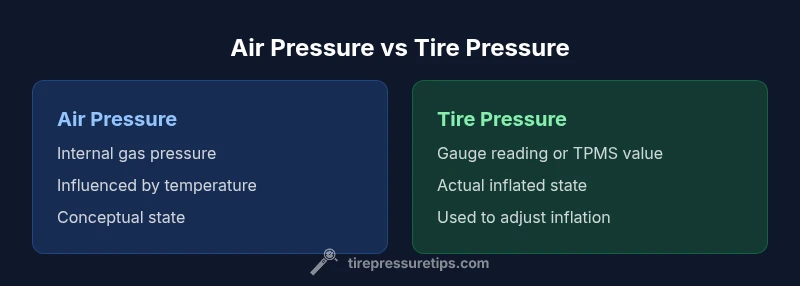
To understand the difference between air pressure and tire pressure, you first need to separate the concepts. Air pressure refers to the force exerted by the air molecules inside the tire cavity. It is a property of the gas and depends on volume, temperature, and quantity of air. Tire pressure, on the other hand, is the measurable value you read when you check the inflation state of the tire, typically with a gauge or a TPMS sensor. In everyday usage, people treat tire pressure as the gauge reading that corresponds to the recommended PSI on the placard. This distinction matters because the same environment can produce different results for the internal air pressure, while the external reading tells you whether your tires are at the intended level. Understanding this difference helps you diagnose issues, such as why two tires with similar air content might behave differently, or why a tire appears underinflated when it’s actually within spec after a warm drive. The practical upshot is simple: you want the tire pressure reading to match the manufacturer's specification, and you want stable air pressure inside the tire across temperature swings.
Why It Matters: Safety, Efficiency, and Longevity
Maintaining proper tire inflation is a foundational aspect of vehicle safety. Underinflated tires reduce steering precision, increase stopping distances, and raise the risk of a tire blowout under heavy load or at highway speeds. Overinflation, meanwhile, can shorten tread life and degrade traction by causing the contact patch to shrink and become too stiff. The nuanced difference between air pressure and tire pressure matters here because ambient conditions change the air inside a tire while your gauge reading tells you whether you’re within the recommended range. According to Tire Pressure Tips, consistent, manufacturer-recommended tire pressure improves handling, reduces rolling resistance, and minimizes unnecessary wear. Seasonal shifts, cargo weight, and driving style all influence the ideal figure, so drivers should treat the placard value as a target, not a guess. In practice, regular checks translate into tangible benefits: safer cornering, more even tread wear, and real fuel savings over the life of the tire.
Measuring and Reading Pressure: Tools and Techniques
Accurate measurement is foundational to managing tire pressure. Start with a cold tire check—preferably after the vehicle has been stationary for at least three hours. Use a reliable gauge, either a digital gauge or an analog one with a clear scale, and compare the reading to the vehicle’s placard value. If readings differ by more than a small margin, adjust by adding air in small increments and recheck. Remember that temperature can affect readings: hot tires will show higher numbers even if the tire has not gained air. TPMS can provide automatic alerts, but it’s essential to verify with a physical gauge. This is because TPMS readings may drift over time or fail to reflect rapid temperature changes. The difference between air pressure and tire pressure becomes evident when you observe a gauge reading that contradicts the dashboard warning. Always air to the recommended level when cold, and recheck after driving. The plain truth is that accurate measurement requires intention, proper tools, and consistent methodology.
The Role of TPMS and Seasonal Variations
Tire Pressure Monitoring Systems (TPMS) are designed to alert you when a tire’s pressure deviates too far from the target. They’re invaluable for catching slow leaks and sudden losses that might not be obvious during a visual check. However, TPMS is not a substitute for regular gauge-based checks. Seasonal changes—especially temperature fluctuations—have a pronounced effect on tire pressure. Cold mornings can drop PSI noticeably, while warm days raise it. The difference between air pressure and tire pressure becomes most pronounced under these shifts: the air inside expands and contracts, while the gauge reading reflects the actual inflation state you can adjust. Tire Pressure Tips emphasizes verifying readings with a manual gauge during extreme weather transitions to maintain safety and extend tire life. Regular calibration of the TPMS sensor, awareness of aging sensor batteries, and attention to warm-up effects all help you stay within the desired band.
How to Normalize Pressure Across Tires: Steps and Best Practices
Achieving balanced tire pressure across axles improves stability and reduces uneven wear. Step-by-step guidance:
- Check tires when cold and record the vehicle placard pressure.
- Use a trusted gauge to measure each tire, noting any deviations.
- Inflate or deflate in small increments based on the measurements.
- Recheck after driving a short distance to account for heat buildup.
- Inspect for leaks, damaged valves, or sensor issues that might skew readings.
- Keep a maintenance log to track changes over time.
- Consider seasonal adjustments for winter tires versus all-season tires, as the target PSI can differ by tire type and wind chill effects. Following these steps helps ensure the difference between air pressure and tire pressure remains aligned with the manufacturer’s recommendations, giving you consistent handling and safer operation.
Common Misconceptions and Pitfalls
Many drivers assume that “air pressure” and “tire pressure” are interchangeable terms, or that TPMS alone guarantees accurate inflation. In reality, air inside the tire is influenced by temperature and loading, while the gauge reading reflects the actual inflation state at the moment of measurement. Another pitfall is inflating to a single measured number across all tires regardless of their wear or load distribution. Different tires and positions may require slightly different readings for optimal performance. Always cross-check readings against the placard and vehicle owner manual, and avoid waiting for a dashboard alert to take action. Proper technique includes cold checks, regular gauge calibration, and awareness of how seasonal changes affect inflation.
When to Inflate, Deflate, or Seek Help
If a tire shows underinflation during a cold check, add air in small increments and recheck. If you notice rapid drops in pressure, investigate for leaks, punctures, or valve stem issues. If you cannot achieve the recommended PSI or if the TPMS warns persistently, consult a professional. A tire professional can inspect wheel rims, valves, and the TPMS sensor itself to determine if a fault exists. Also, when carrying heavy loads or driving long distances in hot weather, recheck inflation to avoid gradual overinflation. Knowing how to respond to these signals—combined with the understanding of the difference between air pressure and tire pressure—helps ensure safety and performance across scenarios.
Comparison
| Feature | Air Pressure (inside tire) | Tire Pressure (read value) |
|---|---|---|
| Definition | Force per unit area inside the tire cavity | The gauge/TPMS reading used by drivers |
| Measurement Reference | Internal gas pressure affected by temperature | Displayed reading (psi/kPa) on gauge or TPMS |
| Units | psi, kPa, bar (conceptual) | psi, kPa, bar (readout) |
| Impact on Handling | Directly influences grip and stability as internal force | Directly correlates with contact patch via reading accuracy |
| Fuel Efficiency | Higher internal pressure can improve rolling resistance when within spec | Maintained readings prevent under/overinflation that harms economy |
| Temperature Sensitivity | Air pressure rises with warming and falls with cooling inside the tire | Gauge reading reflects the current inflation state, including temp effects |
| Measurement Method | Internal concept; inferred via calibration and load | Measured with handheld gauge or TPMS alert |
| Best For | Conceptual understanding of tire physics | Practical maintenance and daily checks |
Strengths
- Clarifies why gauge readings matter for safety
- Encourages regular checks and accurate inflation
- Supports better fuel economy through correct inflation
- Helps interpret TPMS alerts with a practical approach
Drawbacks
- Requires ongoing discipline and proper tools
- Temperature and load can complicate readings
- TPMS may drift or fail, necessitating manual checks
Maintain proper tire pressure using gauge readings backed by TPMS alerts
The difference between air pressure and tire pressure matters for safety and efficiency. Use cold checks, a reliable gauge, and TPMS as a safety net. Regular maintenance reduces wear and improves handling, cost, and overall vehicle performance.
Frequently Asked Questions
What is the difference between air pressure and tire pressure?
Air pressure is the internal gas pressure within the tire cavity, while tire pressure refers to the gauge reading you use to determine if inflation matches the recommended level. The two concepts relate, but one represents the physical state and the other the measurable value you monitor.
Air pressure is the internal gas pressure, and tire pressure is the reading you check; both matter for safe driving.
How does TPMS relate to tire pressure readings?
TPMS provides warnings when a tire’s pressure deviates from the target. It complements physical gauges by signaling potential leaks or slow losses, but it is not a perfect substitute for manual checks.
TPMS warns you when a tire is off, but you should still verify with a gauge.
What is the recommended tire pressure for my vehicle?
Refer to the vehicle placard on the door jamb or the owner’s manual. The recommended PSI varies by vehicle and tire size, and may differ between front and rear tires or between seasons.
Check the placard for the exact numbers; they vary by vehicle and tire.
How often should I check tire pressure?
Check tire pressure at least monthly and before long trips. More frequent checks are wise during temperature swings or when tires carry heavy loads.
Check at least monthly, especially if it’s cold or hot outside.
Does temperature affect tire pressure?
Yes. Temperature changes cause tire air to expand or contract, affecting the PSI reading. Check and adjust when tires are cold for the most accurate numbers.
Temperature changes can move the numbers—check when cold for accuracy.
What happens if tire pressure is too high or too low?
Underinflation reduces grip and increases wear; overinflation can stiffen the ride and reduce traction. Both conditions raise the risk of tire failure and reduce fuel efficiency.
Too low or too high is unsafe—keep within the recommended range for safety and efficiency.
What to Remember
- Check cold tire pressure regularly
- Inflate to manufacturer PSI on placard
- Use TPMS as a backup, not a sole source
- Account for seasonal temperature changes
- Inspect for leaks and sensor faults