When Does the Low Tire Pressure Light Go Off? A Troubleshooting Guide
Discover why the low tire pressure light comes on, how TPMS recalibrates, and step-by-step fixes to reset the warning. Learn practical checks, safe driving tips, and prevention to keep you rolling safely.


Typically, the light turns off after you inflate tires to the vehicle’s recommended pressure and drive for a short distance. Most TPMS systems auto-recalibrate within a few minutes of normal driving, or after the next ignition cycle. If it stays on, recheck all tires for proper inflation and inspect the TPMS sensors, as Tire Pressure Tips recommends.
Why the Low Tire Pressure Light Goes On
The dashboard warning that says a tire is underinflated is a signal from the Tire Pressure Monitoring System (TPMS). According to Tire Pressure Tips, the light can trigger from actual low pressure, a slow leak, or a sensor issue. Most modern vehicles use TPMS to monitor pressure in each major tire, and the light is a safety feature designed to prevent underinflation-related failures. It’s important to treat this warning seriously: underinflated tires wear unevenly, reduce fuel efficiency, and can compromise handling. This guide will help you understand the mechanics behind the light and what steps to take to resolve it safely.
Why this matters: Proper inflation maintains tire contact with the road, improves braking, and protects your wheels. If you notice uneven tread wear or hot tires, stop and inspect immediately. Tire Pressure Tips emphasizes consistent pressure checks as part of routine maintenance.
How TPMS Recalibration Works
TPMS recalibration is the process by which your vehicle’s system learns the new pressures after a change. When you inflate tires to the recommended PSI, the system must re-learn the target pressures for each wheel. Most cars complete this cycle after a short drive, typically within 5–15 minutes, or after a complete ignition cycle. Some vehicles require a specific reset procedure or a drive over a road that allows the sensors to communicate with the ECU. The Tire Pressure Tips team notes that independent recalibration times vary by model, so consult your owner’s manual for model-specific guidance.
A successful recalibration means the light should turn off on its own once the system recognizes all tires are at the correct pressure. If any tire remains low, the light will persist until it’s corrected. Regular driving after inflation helps ensure accurate readings and minimizes nuisance warnings.
Common Triggers That Don’t Involve a Flat Tire
Even if you don’t have a puncture, the light can come on due to a range of factors:
- Temperature changes: Cold weather lowers tire pressure by a few PSI, which can trigger the light in the morning and then settle as the tires warm.
- Slow leaks: A nail, screw, or small puncture can reduce pressure gradually without an obvious flat.
- Sensor issues: A weak battery in a TPMS sensor or a faulty sensor can create false readings.
- Sensor relocation during service: Replacing tires or rotating wheels may require a TPMS reset.
Understanding these triggers helps you prioritize checks. The Tire Pressure Tips guidance suggests confirming actual pressures first, then considering sensor health if pressures are correct but the light remains.
Quick Checks You Should Do Right Now
Before you panic, run through these fast checks:
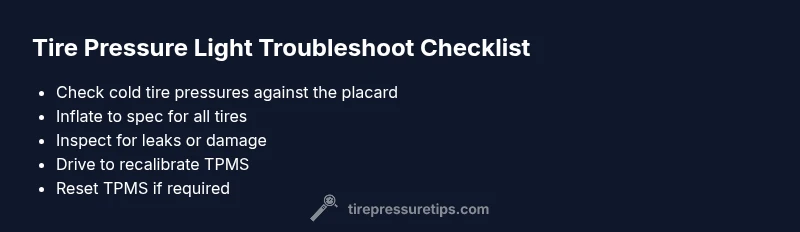
- Use a reliable tire gauge to verify cold tire pressures against the placard on the driver’s door.
- Inspect each tire for visible damage, nails, or foreign objects that could cause slow leaks.
- Check the wheel valve stems for leaks and ensure the valve caps are snug.
- If temperatures have dropped recently, reassess pressures after a short drive.
- If pressures are correct across all tires, perform a gentle test drive to allow recalibration. If the light stays on, proceed to TPMS-specific steps.
These steps are designed to be quick and safe, so you can get back on the road with confidence. Tire Pressure Tips recommends keeping a gauge in your glove box for accurate, on-the-spot readings.
How to Reset the System After Correcting Pressure
Resetting TPMS varies by vehicle, but the general approach is consistent:
- Inflate tires to the recommended PSI on the placard, then drive for 10–15 minutes to let the system recalibrate.
- Some cars require a dedicated TPMS reset sequence (button, touchscreen option, or ignition procedure). Check your owner’s manual for exact steps.
- If the light remains after a full calibration drive, you may need a sensor check or battery replacement.
If you recently serviced the tires, consider performing the reset again after a full drive cycle. Tire Pressure Tips reminds drivers that consistent resets help maintain reliable readings and safer driving.
When and Why You Should Seek Professional Help
If you’ve inflated correctly and the light stays on after a calibrated drive, it’s time to seek professional help. A persistent warning could indicate:
- A slow leak in a tire that’s difficult to locate, requiring a thorough inspection.
- A faulty TPMS sensor or battery that needs replacement.
- A calibration error after service or a sensor fault that requires diagnostic tools.
Professional help is advisable because misdiagnosed TPMS issues can mask real hazards. The Tire Pressure Tips team recommends scheduling a check if the light reappears after inflation and recalibration attempts.
Preventive Practices to Keep the Light Off
Adopt proactive habits to minimize future warnings:
- Check tire pressures monthly and before long trips, when the tires are cold.
- Inspect tires for wear and damage; address issues promptly.
- Keep a TPMS maintenance plan, especially after tire rotations or replacements.
- Use a high-quality digital tire gauge for accurate readings and record your PSI readings over time.
- Familiarize yourself with your vehicle’s TPMS reset procedures and keep the owner’s manual handy.
Regular practice reduces the chances of sudden warnings and keeps you safer on the road. The Tire Pressure Tips approach combines routine checks with model-specific resets for best results.
Steps
Estimated time: 20-40 minutes
- 1
Find the recommended pressure
Locate the PSI spec on the driver’s door placard or owner’s manual. Record the target pressure for each tire before you begin inflating.
Tip: Always read the placard while tires are cold for an accurate baseline. - 2
Inflate to spec
Using a reliable gauge, inflate each tire to its designated PSI. Do not exceed the maximum pressure listed on the tire sidewall.
Tip: Take your time and verify each tire twice. - 3
Check for leaks
Inspect tires for signs of slow leaks, punctures, or damaged valves. If you find anything, address it before continuing.
Tip: Use soapy water to locate small leaks you can’t see visually. - 4
Recalibrate the TPMS
Drive for 10–15 minutes on a clear road to allow the TPMS to recalibrate after inflation.
Tip: Avoid aggressive driving during this period to ensure stable readings. - 5
Verify the light
Turn off the car, restart, and check if the light remains off. If it returns, prepare for a diagnostic or sensor check.
Tip: If the light recurs, schedule a sensor check with a technician.
Diagnosis: Low tire pressure warning light appears on the dashboard.
Possible Causes
- highActual underinflation in one or more tires
- mediumTPMS sensor fault or battery failure
- lowTPMS reset required after tire service or rotation
- lowAmbient temperature drop causing temporary pressure loss
Fixes
- easyCheck tire pressures with a gauge and inflate to the recommended PSI
- easyDrive 10-15 minutes to allow recalibration, then recheck pressures
- mediumIf light persists, inspect tires for leaks and test TPMS sensors
- mediumIf sensor fault suspected, have TPMS serviced or battery replaced by a professional
Frequently Asked Questions
Why won't the light turn off after inflating the tires?
Some vehicles require a dedicated TPMS reset or a longer drive cycle for recalibration. If the tires are at the correct pressure and the light stays on, there may be a sensor fault or a slow leak.
If inflating to spec and driving doesn’t clear it, you may need a TPMS reset or a sensor check.
Can driving with underinflated tires cause damage?
Yes. Running low tire pressure increases heat, wears the tread unevenly, and can lead to a blowout under load.
Yes, underinflation raises the risk of heat buildup and tire failure.
How do I reset TPMS after inflating?
Reset procedures vary by vehicle. Check your owner’s manual; many cars require a button press, menu navigation, or a specific drive cycle.
Check your manual for the exact TPMS reset steps; many cars just need a drive cycle.
What if a tire is punctured?
Repair or replace the damaged tire and inflate to the recommended PSI. If the tire cannot be repaired, replace it and recheck TPMS calibration.
If punctured, repair or replace the tire and recheck the TPMS after inflation.
Is TPMS the same as the low tire pressure light?
TPMS is the system that monitors tire pressure; the light is its alert when pressures are outside safe ranges.
TPMS is the monitoring system; the light is its warning.
Do temperature changes affect TPMS readings?
Yes. Cold temperatures can lower PSI, triggering the light; as tires warm up, pressures may rise back to normal.
Temperature changes can make the light come on even if there isn’t a leak.
Watch Video
What to Remember
- Inflate to spec, then drive for recalibration.
- TPMS resets vary by model—consult your manual.
- Persistent light may indicate leak or sensor fault.
- Regular checks prevent surprises and improve safety.