Low Profile Tire Pressure Troubleshooting: Quick Fixes
Urgent guide to diagnose and fix low profile tire pressure, protect tire wear, improve handling, and prevent TPMS warnings with practical, at-home checks.


Low profile tire pressure issues usually start with underinflation, which robs handling and increases wear. Quick fix: cold-tread tires, check with a reliable gauge, inflate to the manufacturer PSI, then recheck after cooling. If the warning persists, inspect for leaks or a faulty TPMS sensor and seek professional help if necessary.
Why Low Profile Tire Pressure Demands Attention
Low profile tires, with their shorter sidewalls, respond more quickly to changes in air pressure. This isn't just about avoiding a tire warning; correct pressure influences ride comfort, steering response, road feedback, and tread wear. Underinflation or overinflation can lead to uneven wear on the outer edges, increased heat buildup, and poorer fuel efficiency. According to Tire Pressure Tips, maintaining cold tire pressure within the vehicle manufacturer's recommended range is essential for safety and performance. In practice, you should check pressures when tires are cold, use a reliable gauge, and adjust to the sticker or owner’s manual specs. For aggressive or performance-oriented low profile tires, the margin for error is smaller, making frequent checks even more important. Always remember that the tire's contact patch with the road is directly tied to pressure, and the wrong PSI can dramatically alter grip in wet or dry conditions.
Common Symptoms That Signal Low Profile Tire Pressure
Punctual indicators of pressure loss include a slightly taller sway of the steering, a noticeably firmer or softer ride than usual, and more frequent TPMS alerts. You might hear a hum or feel vibration from the road that wasn’t there before. Low profile tires also wear more quickly on the edges when underinflated, and they can develop heat spots if driven long at improper pressure. If you notice any of these symptoms, start by checking all four tires with a cold-reading gauge and compare against the vehicle's recommended PSI from the door jamb sticker and owner's manual. Even subtle drops in PSI can affect handling, braking distance, and fuel economy, so prompt correction matters. Tire Pressure Tips recommends a quick, consistent pressure check as part of your regular maintenance routine.
Quick Diagnostic Checks You Can Do At Home
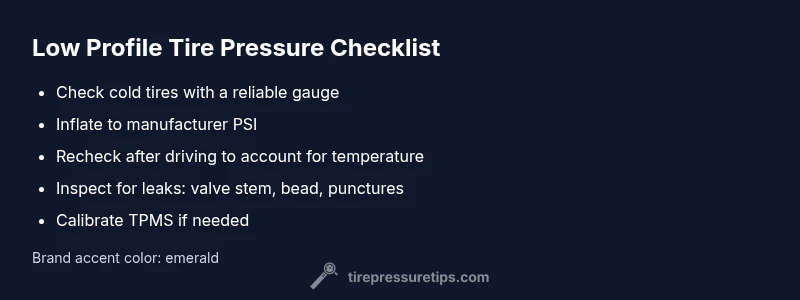
Begin with a cold check using a reliable gauge; record each tire’s reading. Confirm you’re using the correct PSI for your load and speed as stated by the manufacturer. If a tire reads low, inflate it on a stable surface and recheck after a short drive to account for temperature rise. Inspect for obvious signs of damage, such as nails, cuts, or bead leaks, and test for slow leaks with soapy water around the valve stem and rim. If TPMS shows low pressure but all tires read within spec, consider sensor calibration or replacement by a professional. These self-checks can prevent unnecessary visits and prevent unsafe driving conditions.
Step-by-Step Troubleshooting Flow for Low Profile Tires
- Verify tires are cold; 2) Check PSI with a digital gauge; 3) Inflate to the recommended range; 4) Recheck after cooling; 5) Inspect for leaks or damage; 6) Check TPMS status and calibration; 7) If pressure returns to normal only temporarily, seek professional diagnostics. Follow this flow in order to isolate root causes efficiently. If this doesn’t fix the issue, try replacing a faulty valve core or sensor; if not, a professional tire service is required.
Safety Considerations and Precautions When Adjusting Pressure
Never exceed the tire's maximum pressure printed on the sidewall, and avoid inflating while the tire or wheel is hot. Use a proper gauge and perform adjustments on a stable surface with the vehicle parked safely. Wear eye protection if you’re inspecting for leaks with soap solution, and never rely on temporary fixes like overinflating to mask a slow leak. If you suspect a faulty TPMS sensor, consult a qualified technician to prevent unsafe driving conditions.
How to Maintain Correct Pressure on Low Profile Tires for Different Conditions
Pressure targets can shift with temperature, load, and road conditions. Check pressures regularly—ideally monthly and before long trips—and always when starting a season change. For high-performance or aggressive driving, maintain the exact manufacturer PSI for balance between grip and wear, and recheck after a few miles of road testing. Temperature swings can cause transient pressure drops, so re-check after cold starts and before embarking on long highway drives.
Prevention Tips to Avoid Recurrent Low Tire Pressure
Set a monthly reminder to check all tires when cold, keep a reliable gauge in the glovebox, and carry a small tire repair kit. If you frequently find one tire low, inspect the rim bead and valve stem for leaks and consider professional inspection of TPMS readings. Regular wheel maintenance and timely replacements extend tire life and keep handling predictable, especially for low profile tires.
Steps
Estimated time: 60-75 minutes
- 1
Check tires when cold
Park on a level surface and allow tires to cool for at least 3 hours. Remove the valve caps and use a reliable gauge to record the current PSI for each tire.
Tip: Note any tire that's consistently lower than others; isolation helps identify leaks. - 2
Measure actual PSI
Compare readings to the vehicle manufacturer’s recommended PSI printed on the door jamb sticker or in the owner's manual. Do not rely on memory or visual guesswork.
Tip: Use a digital gauge for accuracy and consistency across tires. - 3
Inflate to the recommended range
Fill each tire to the specified PSI using a stable gauge. Check the valve core and cap seal to ensure no slow leaks during inflation.
Tip: Inflate one tire at a time and avoid overinflation. - 4
Recheck after cooling
After inflating, recheck each tire after it has cooled for accuracy. Temperature changes can affect the reading, especially with cold-weather driving.
Tip: Document final numbers for future reference. - 5
Inspect for leaks and damage
Look for nails, cuts, cracks, or bead leaks. Apply soapy water to the valve stem and rim to identify slow leaks that aren’t obvious.
Tip: If bubbles appear, isolate the source and address promptly. - 6
Check TPMS status and calibration
If TPMS displays inconsistent readings, consult the owner's manual for calibration steps or have the sensor checked by a professional.
Tip: Keep records of TPMS service dates and sensor replacements.
Diagnosis: Tire warning light or obvious change in ride quality suggesting low tire pressure in a low profile tire
Possible Causes
- highTire is underinflated compared to vehicle spec or TPMS reading, especially common when tires are hot or after driving
- mediumSlow leak from valve stem, bead, or puncture causing gradual pressure loss
- lowTPMS sensor fault giving erroneous low-pressure reading
Fixes
- easyMeasure cold tire pressure with a reliable gauge and inflate to the manufacturer spec; recheck after cooling down
- mediumInspect tire for punctures, valve stem, or bead leaks; seal or patch as needed or replace tire
- easyIf TPMS readings seem incorrect, have sensor diagnosed/calibrated by a professional
Frequently Asked Questions
What is the correct tire pressure for low profile tires?
Check your vehicle’s door jamb sticker or owner’s manual for the exact PSI. Pressure targets vary by model, load, and driving conditions, so rely on official specs rather than guessing.
Check the door sticker or manual for the exact PSI. Different models have different targets.
Why does TPMS show low pressure even if the tire looks fine?
TPMS can trigger due to sensor calibration issues, temperature shifts, or slow leaks. If readings don’t match the actual PSI, have the sensor checked.
TPMS can be off due to sensor or temperature changes; have it checked if readings don’t match.
Can I drive on a tire that's low on air?
Driving with low pressure increases heat buildup and the risk of tire failure. Reduce speed and seek to inflate to the correct PSI as soon as possible.
It's unsafe to drive long with low air—inflate to the correct PSI promptly.
How often should I check tire pressure?
Check monthly, before long trips, and after significant temperature changes. Inspect for leaks during each check.
Check tires monthly and before trips, especially after temperature changes.
What if I can't reach the recommended PSI?
Inspect for leaks or punctures and consider professional repair. If readings remain low, you may need tire service or sensor replacement.
If you can’t reach the PSI, get the tire inspected by a professional.
Is there a difference between front and rear pressures for low profile tires?
Yes—follow the vehicle’s recommended balance; some cars require different front/rear targets. Check the sticker for the exact split.
Front and rear pressures can differ; follow the car's spec.
Watch Video
What to Remember
- Check cold tires first before adjusting
- Use a gauge and verify to manufacturer PSI
- Inspect for leaks if pressure drops again
- TPMS accuracy matters—diagnose sensor issues
- Regular maintenance reduces risk of blowouts