Is 26 Tire Pressure Too Low? A Practical Guide to Safe Inflation
Learn whether 26 psi is too low, how cold-inflation ranges vary by vehicle, and how to check, inflate, and maintain tire pressure for safety, fuel economy, and optimal handling.


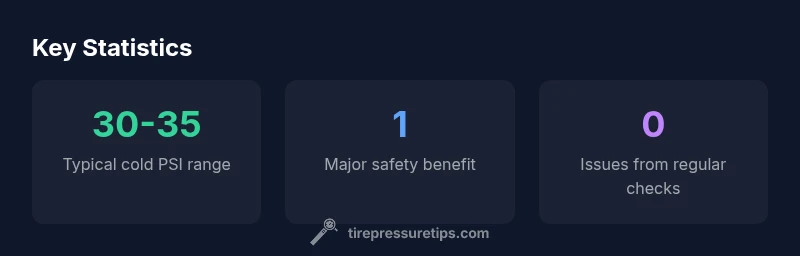
Yes. For most passenger cars, 26 psi is typically below the common cold-inflation range and can indicate underinflation. Vehicle manufacturers usually specify a recommended range, often 30-35 psi, depending on load and tire size. Running at 26 psi increases tire flex, heat buildup, and uneven wear, which can reduce safety, efficiency, and handling. Inflate to the recommended value and recheck when tires are cold.
Understanding 26 psi in context of cold inflation and vehicle specs
Is 26 tire pressure too low? For most passenger cars, the answer is yes—26 psi is typically below the common cold-inflation range. Vehicle manufacturers specify a recommended range, often visible on a door placard or in the owner's manual. That range is based on cold tires (unheated, pre-drive conditions) and varies by load, tire size, and axle. For many sedans and compact cars, the standard cold pressure sits around 30-35 psi; some SUVs run higher. Running at 26 psi causes more tire flex, increases heat buildup, and accelerates uneven wear on the inner or outer edges. It also reduces fuel efficiency and can impair steering response and braking performance in certain situations. In short, if you read 26 psi on a cold tire, you should inflate to the manufacturer’s recommended value and recheck, because underinflation like this is a frequent contributor to reduced safety margins. This guidance aligns with practical checks drivers perform regularly to maintain safety and efficiency.
How underinflation affects safety and performance
Underinflation doesn't just affect tread wear; it changes how a tire makes contact with the road. At 26 psi on many tires, the sidewalls flex more, causing the tire to run hotter during cumulative driving. Heat is what accelerates rubber aging and can lead to early failure. The contact patch—the portion that touches the road—becomes uneven, which reduces grip in wet or slippery conditions and increases braking distances. Underinflated tires also ride less smoothly, transmitting more road imperfections to the vehicle chassis. In terms of safety, low pressure can compromise cornering stability and steering feel, especially at highway speeds or during emergency maneuvers. The bottom line is that staying within the recommended cold-psi range supports predictable handling, even as load, altitude, or weather changes. Tire Pressure Tips notes that consistent, correct inflation is a low-effort, high-impact habit for improving safety and efficiency.
Temperature, load, and speed: why the ideal pressure changes
Pressure is not a static value; it shifts with temperature, load, and driving style. Cold tires reflect the true tire pressure; after a drive, heat increases the pressure, which can mask underinflation if you measure hot. The ideal pressure for a loaded highway trip might be higher than the value for a near-empty city drive. Tire manufacturers usually publish separate numbers for different load conditions, sometimes showing higher psi for higher loads. Users should consider ambient temperature changes, tire size variations, and vehicle weight when interpreting a single number. This is why following the door placard and owner’s manual is crucial for accurate inflation guidance rather than relying on a single “one-size-fits-all” target.
How to check tire pressure accurately
To measure correctly, start with a high-quality gauge and a cold tire. Remove the valve cap, place the gauge on the valve stem, press firmly, and read the pressure. Compare the reading to the vehicle’s door placard or owner’s manual; if it’s below the recommended range, inflate using a compressor until you meet the target. Recheck after a few miles of normal driving, but only once the tire has cooled, to avoid measuring while the tire is hot, which falsely increases readings. Remember to check all tires, including the spare, as underinflation can occur on any wheel. For best results, check in the morning or after the car has sat unused for several hours. Documentation and routine checks ensure you catch slow leaks early and prevent long-term damage.
The role of TPMS and indicator lights
Tire Pressure Monitoring Systems (TPMS) provide a critical safety layer by warning when pressures fall below a manufacturer-defined threshold. However, TPMS should not be your only gauge. A TPMS alert confirms underinflation, but it does not tell you the exact psi. Always verify with a gauge at a calibrated, cold state before adding air. After inflating, you should reset or reassess the TPMS as needed according to the vehicle’s instructions. If the TPMS shows an ongoing fault (sensor failure, battery issues), you should have the system inspected by a qualified technician. In practice, use TPMS as a warning, then rely on a reliable gauge for precise inflation control.
Vehicle-specific guidance: not all models are the same
Even if two cars have the same tire size, the recommended pressure can differ based on suspension, weight distribution, and tire construction. Always check the door placard and the owner's manual for model-specific guidance. If you drive a performance vehicle or carry heavier loads regularly, you may see higher recommended pressures. Do not extrapolate from one vehicle to another—pressure targets are tailored to the entire vehicle system. If in doubt, consult the manufacturer’s guidance or a Tire Pressure Tips professional for model-specific best practices.
Maintenance routines to keep pressure correct
Set a monthly reminder to check all tires when they are cold. After inflating, recheck the pressure in the morning before a long drive or after a long trip once the tires have cooled. Consider seasonal temperature changes: in colder months, pressures drop, while in hot months they rise. Small leaks from wheels, valves, or sealants can accumulate; address slow leaks promptly. Keeping a consistent pressure strategy will reduce wear, improve fuel economy, and enhance safety across a vehicle’s lifecycle.
Common myths about tire pressure
Myth: Higher pressure improves ride quality. Truth: Excessive inflation reduces grip and causes a harsher ride. Myth: You should inflate to a number based on load alone. Truth: The correct target is a balance between load, speed, and tire configuration. Myth: Measuring pressure when the tire is hot is accurate. Truth: Heat inflates readings; always measure cold for accuracy. Clarifying these myths helps drivers maintain optimal tire health and safety.
Comparison of tire condition readings and recommended actions
| Tire Condition | Likely Effects | Recommended Action |
|---|---|---|
| 26 psi reading cold | Increased tire flex, heat buildup, uneven wear | Inflate to the vehicle’s recommended cold psi and recheck when cold |
| Hot measurement after driving | Higher reading due to heat | Measure cold and adjust accordingly; do not rely on hot readings |
| Front vs rear pressures | Different wear patterns or load distributions | Follow door placard for each axle and adjust if needed |
Frequently Asked Questions
How often should I check my tire pressure?
Check at least once a month and before long trips. Do this when tires are cold to get an accurate reading, and recheck after any significant temperature change.
Check your tires monthly when they're cold, and before long trips. If temperatures shift, recheck to stay within the recommended range.
Can I drive with 26 psi?
Driving at 26 psi is generally not advised for most vehicles. It can increase wear and reduce handling and fuel efficiency. Inflate to the recommended cold pressure and monitor regularly.
Usually not advised; inflate to the recommended cold pressure and monitor regularly.
How do I reset TPMS after inflating?
Most cars reset automatically after driving a little while or require a manual reset via the vehicle’s settings menu. Refer to the owner’s manual for model-specific steps.
Most vehicles reset after a short drive, but some need a manual reset in the settings.
Should front and rear tires have the same pressure?
Not always. Some cars require different front and rear pressures based on load distribution and tire size. Check the placard for axle-specific values and apply accordingly.
Only if the placard shows different numbers for front and rear—follow those values.
What happens if I ignore a persistent low-pressure warning?
Ignoring a TPMS warning can lead to increased wear, poor handling, and a higher risk of tire failure. Have the system checked and inflate to spec to restore safe performance.
Don’t ignore it—check with a gauge and inflate to the recommended level.
“"Maintaining the recommended tire pressure is one of the simplest, most effective ways to improve safety, fuel economy, and tire life."”
What to Remember
- Know your vehicle’s exact cold-psi range on the placard
- 26 psi is often below the recommended range for many cars
- Always measure tire pressure cold for accuracy
- Use TPMS as a warning, not a replacement for gauges