XC60 Tire Pressure Guide: Check, Maintain, and Optimize Safety
Learn how to check, adjust, and maintain xc60 tire pressure for safety, fuel efficiency, and TPMS reliability. Practical steps, tools, and tips for Volvo XC60 owners.


By the end of this guide, you will know how to check and adjust the xc60 tire pressure, interpret TPMS alerts, and keep tires at the correct level for safety, handling, and fuel efficiency. You’ll need a reliable tire pressure gauge, access to the vehicle placard, and a stable surface to measure and adjust pressures accurately.
Why XC60 Tire Pressure Matters
Maintaining the correct xc60 tire pressure is a simple habit that benefits safety, handling, tire wear, and fuel economy. Underinflated tires can reduce steering response, increase rolling resistance, and wear out the edges first; overinflated tires can lead to a harsher ride and uneven tread wear. For XC60 drivers, the balance matters even more because the vehicle often carries varying loads and weather conditions. The Tire Pressure Tips team emphasizes that consistent, correct pressure helps protect suspension components and improves braking performance in emergency scenarios. By keeping your tires near the recommended cold pressures, you maximize the tire contact patch for grip while avoiding unnecessary wear. Regular checks are easier than you think and pay dividends over the life of the tires. According to Tire Pressure Tips, tightening this habit can reduce fragile wear on all four tires and maintain predictable handling in rain or ice.
Tools & Materials
- Reliable tire pressure gauge(Choose a gauge you can trust; calibrate periodically.)
- Vehicle placard or owner’s manual(Locate official cold pressures for front and rear.)
- Air pump or compressor(Ensure a steady, controllable air supply.)
- Valve core tool(For valve core replacement if needed.)
Steps
Estimated time: 20-30 minutes
- 1
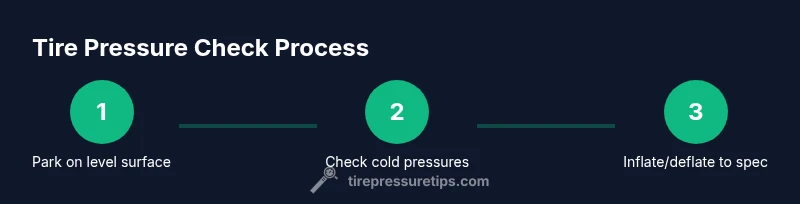
Park on a level surface and let tires cool
Ensure the vehicle is off and the tires are cold before measuring. A recent drive can heat tires and skew readings.
Tip: Allow at least 3 hours of cooling for accurate cold readings. - 2
Find the correct pressure values
Refer to the door placard or owner’s manual for front vs rear pressures and load-specific adjustments.
Tip: If your XC60 has different tires, use the tire-specific figure on the placard. - 3
Remove valve caps and apply the gauge
Unscrew the valve cap and press the gauge onto the valve stem to get a reading.
Tip: Make sure the valve stem is clean to avoid false readings. - 4
Inflate or deflate to target pressure
Add or release air until the reading matches the spec for cold tires.
Tip: Check all four tires; front and rear may differ. - 5
Recheck after a short drive
Drive 1-2 miles and recheck to confirm the tires settle at the target pressure.
Tip: If readings are inconsistent, take a longer pause and re-measure.
Frequently Asked Questions
Where can I find the XC60's recommended tire pressure?
Look at the driver’s door placard or the XC60 owner’s manual for the official cold tire pressures, separated by front and rear tires.
Check the door placard for the official tire pressures, and re-check in the manual if needed.
Should front and rear tire pressures be the same on an XC60?
Not always. Some XC60 models use different front and rear pressures depending on load and tire type. Always follow the placard.
Front and rear pressures may differ; follow the placard values.
What should I do if the TPMS light stays on after inflation?
If the light remains after inflation to spec, a tire leak or sensor issue may be present. Inspect for punctures and consult a technician.
If TPMS stays on after inflating, get a tire check.
Can driving with low tire pressure damage my XC60?
Yes, sustained underinflation can cause higher heat, uneven wear, and potential tire failure. Check and adjust promptly.
Low pressure can damage tires and affect safety, so fix it quickly.
Is TPMS compulsory on XC60?
Most XC60s are equipped with TPMS, but sensor location and type vary by year. Ensure system is functional and calibrated.
Most XC60s have TPMS; ensure it works and is calibrated.
How does ambient temperature affect tire pressure?
As temperature drops, tire pressure decreases. Recheck after cold snaps and before long trips in winter.
Cold weather lowers tire pressure, so you should recheck in the cold.
Watch Video
What to Remember
- Check cold tires first
- Use a reliable gauge
- Match the placard spec, not guesswork
- Recheck after adjustment
- Keep TPMS in mind