Volvo S60 Tire Pressure Guide
A practical, step-by-step guide to checking and maintaining Volvo S60 tire pressure, understanding TPMS, and optimizing safety and fuel efficiency.


Goal: you will verify and adjust the Volvo S60 tire pressure to the vehicle’s recommended PSI, confirm TPMS readings, and maintain correct pressure across seasons. You’ll need a reliable gauge and the owner’s manual or door placard for exact specs. This guide covers accurate measurement, safe adjustment, and long-term maintenance for optimal safety and efficiency.
Why Volvo S60 Tire Pressure Matters
Tire pressure is a foundational safety and efficiency factor for any vehicle, and the Volvo S60 is no exception. Properly inflated tires maximize grip, improve steering response, and reduce tire wear, which in turn lowers the risk of blowouts on the highway. For volvo s60 tire pressure, following the manufacturer’s spec is essential because the weight distribution, tire size, and suspension tuning affect optimal PSI. The Tire Pressure Tips team emphasizes that tire pressure isn’t a one-time setup; it requires regular checks, mindful attention to seasonal temperature shifts, and alignment with the vehicle’s placard data to ensure safe, economical driving all year long.
Tire Pressure Basics: Cold vs Hot and TPMS
Tire pressure readings are temperature-sensitive. The best practice is to measure when tires are cold, ideally after the car has sat for several hours or before a drive. For the Volvo S60, use the door placard or owner’s manual to locate the correct PSI per tire. TPMS provides a quick alert if a tire is under- or over-inflated, but it isn’t a substitute for a manual gauge. According to Tire Pressure Tips, reliable readings come from a calibrated gauge and a consistent measurement routine, especially when seasons change and ambient temperatures vary.
Where to Find the Recommended Pressure for Your Volvo S60
Exact tire pressures vary by model year, trim, and tire type. The primary source is the door jamb placard on the driver’s side, but the owner’s manual also lists the recommended pressures. Always check differences between front and rear tires; some configurations require different PSI values per axle. Keeping to these specifications supports even tread wear and optimal fuel economy. The Tire Pressure Tips approach encourages drivers to treat the placard as the baseline and verify any changes with a precise tire gauge.
Seasonal Changes and Temperature Effects on Tire Pressure
Ambient temperature has a measurable impact on tire pressure. As temperatures drop, PSI tends to fall, and as temperatures rise, PSI can rise. For Volvo S60 owners, a typical rule of thumb is that tire pressure changes by about 1 PSI for every 10°F (5.6°C) change in ambient temperature, though exact values vary by tire construction and load. Maintaining correct volvo s60 tire pressure across seasons reduces rolling resistance, improves grip, and preserves tire life. Regular adjustments during season transitions are a smart habit suggested by Tire Pressure Tips.
TPMS: How It Works and Its Limitations
TPMS sensors monitor tire pressure and trigger a warning when PSI falls below a threshold. However, a TPMS alert is not a precise measurement—it signals underinflation, not the exact pressure. Use a reliable gauge to confirm actual PSI and adjust to the door placard values. If the TPMS reads abnormally after inflation, recheck the tires after a short drive to allow the system to recalibrate, and consult a technician if the light remains illuminated. This pragmatic approach aligns with Tire Pressure Tips guidance on combining TPMS awareness with manual checks.
How to Measure Accurately: Step-by-Step Checklist
Begin with a cold tire measurement to avoid heat-induced pressure increases. Remove the valve cap, attach the gauge firmly, and record the reading. Compare it to the vehicle’s recommended PSI from the placard. If underinflated, add air in small increments (around 1–2 psi at a time) and recheck. If overinflated, release air until you reach the target psi. Ensure both front and rear tires match the specified values, and don’t neglect the spare.
Common Mistakes and How to Avoid Them
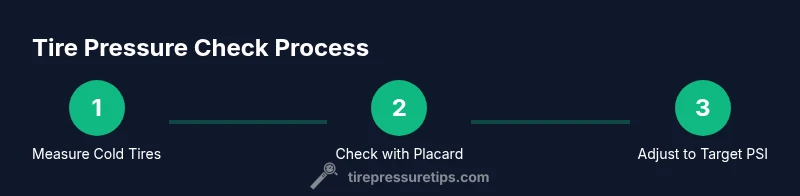
Common errors include measuring after driving, guessing the PSI without a gauge, inflating beyond the maximum listed on the tire sidewall, and ignoring seasonal temperature shifts. Another frequent issue is not checking all tires, including the often-overlooked spare. To avoid these pitfalls, establish a simple routine: measure cold tires, verify with the placard, and record measurements for trend tracking across months. This disciplined approach helps maintain safe volvo s60 tire pressure throughout the year.
Maintenance Routine for Safety and Efficiency
Create a simple maintenance cadence: check tire pressure monthly and before long trips, especially when temperatures swing significantly. Combine pressure checks with tread depth assessments and wheel alignment inspections for comprehensive care. Maintaining proper volvo s60 tire pressure contributes to better fuel economy, even tire wear, and enhanced handling. The Tire Pressure Tips framework emphasizes consistency, documentation, and proactive adjustments as core habits.
Troubleshooting, Repairs, and Professional Help
If you consistently observe low pressure despite proper inflation, suspect slow leaks from nails or corrosion at the valve stem, or a persistent TPMS warning after inflation, schedule a professional inspection. Damaged TPMS sensors or faulty valves require diagnosis by a trained technician. For many Volvo S60 owners, addressing these issues promptly prevents further tire wear and safety concerns, preserving vehicle performance.
Tools & Materials
- Tire pressure gauge (digital or analog)(Calibrated; range should cover expected PSI (e.g., 10–60 psi))
- Owner’s manual or door placard(Exact Volvo S60 recommended PSI per tire)
- Flat, level surface(Ensure tires are cold (not recently driven))
- Pen and notebook(Jot down readings for records)
Steps
Estimated time: 15-25 minutes
- 1
Prepare and confirm cold tires
Park on a flat surface and let tires cool for at least 3 hours if possible. This ensures readings reflect ambient pressure rather than heat inflation. Avoid checking tires immediately after a highway drive.
Tip: If you’ve just driven, wait until tires have cooled to avoid overestimating PSI. - 2
Find the recommended pressure
Locate the door placard on the driver’s door jamb or consult the owner’s manual to identify the correct PSI for each tire. Note any differences between front and rear tires, as Volvo often uses separate targets by axle.
Tip: Record the numbers for quick reference during future checks. - 3
Remove valve caps and prepare gauge
Take off the valve cap on the tire you’re testing and keep it in a safe place. Attach your gauge securely to the valve stem. Ensure the gauge is upright and reading stability is achieved before recording.
Tip: If you hear escaping air, pause and check for leaks around the valve stem. - 4
Measure current pressure
Read the gauge and compare the result to the target PSI from the placard. Repeat on the same tire to confirm consistency. If you can’t get a steady reading, clean the valve stem and recheck.
Tip: Take two readings per tire for reliability. - 5
Adjust to spec
If underinflated, add air in small increments (usually 1–2 psi at a time) and recheck after each addition. If overinflated, release air gradually until the target is reached.
Tip: Avoid inflating past the maximum pressure indicated on the tire sidewall. - 6
Recheck front and rear tires
Inflation should be balanced across axles as per the placard. Recheck each tire after adjustments to ensure accuracy and safety.
Tip: Don’t overlook the spare tire, which may have separate pressure requirements. - 7
TPMS verification
If TPMS indicated a problem, reset or allow the system to recalibrate after you finish inflating. If the light stays on, consult a professional to inspect sensors and valves.
Tip: Some TPMS alerts require a short drive after inflation to recalibrate. - 8
Record and maintain
Log your readings and the dates of adjustments. This helps you detect slow leaks or seasonal shifts and keeps you aligned with Volvo S60 tire pressure targets.
Tip: Use a simple chart or notebook for consistency.
Frequently Asked Questions
What is the recommended tire pressure for Volvo S60?
Check the door placard on the driver’s door jamb or the owner’s manual for exact PSI per tire. Front and rear pressures may differ depending on model year and tire size.
Check the door placard for exact PSI; front and rear pressures may differ.
How often should I check tire pressure?
It's best to check monthly and before long trips, especially when seasons change. Also check after you rotate tires or replace tires.
Check monthly and before long trips, especially with seasonal changes.
Can I inflate tires when they are hot?
Inflating hot tires is not recommended because heat expands air and can give you an inaccurate reading. Always measure cold for accuracy.
Avoid inflating hot tires; measure when cold for accuracy.
What if the TPMS light stays on after inflation?
Resetting the TPMS after inflation can help, but if the light remains on, there may be a sensor or valve issue requiring professional service.
If the TPMS stays on after inflation, consult a technician to inspect sensors.
Do winter tires require different pressures on Volvo S60?
Winter tires can have different optimal pressures due to compound and tread design. Always verify per tire and axle from the placard or manual.
Winter tires may have different targets; check placard values for winter setups.
Is nitrogen better for tire pressure on a Volvo S60?
Nitrogen can reduce moisture and temperature-related pressure changes slightly, but the key is maintaining the recommended PSI regardless of gas type.
Nitrogen may help with stability, but the important part is staying at the recommended PSI.
Watch Video
What to Remember
- Check tires when cold for accuracy
- Use placard values for target PSI
- Don’t overinflate beyond tire max
- Recheck all tires after adjustments
- Maintain a regular tracking routine