Volvo XC90 Tire Pressure Reset: Step-by-Step Guide
Learn how to reset tire pressure on the Volvo XC90, re-learn TPMS, and maintain optimal PSI with a complete, step-by-step guide and practical tips.


Goal: reset the Volvo XC90 tire pressure properly and ensure the TPMS relearn takes effect. Start by verifying all tires are inflated to the vehicle’s recommended PSI, then use the in-car TPMS reset or relearn option as described in your owner’s manual. After a brief drive cycle, the warning light should go out. Keep a reliable tire gauge handy.
Why accurate tire pressure matters for Volvo XC90
Maintaining correct tire pressure is essential for safety, handling, fuel efficiency, and tire wear on the Volvo XC90. The Tire Pressure Tips team notes that a small deviation from the recommended PSI can change ride quality and braking response. Before you perform any tire-pressure reset, verify that all four tires—plus the spare if you check it—are inflated to the manufacturer’s spec using a reliable gauge. This baseline is your starting point for a successful TPMS relearn.
When you follow the Volvo XC90 tire pressure reset procedure, you protect yourself and other road users. Accurate pressures improve steering feel, cornering stability, and even tire longevity. By adopting a deliberate process, you can avoid false TPMS alarms and unnecessary downtime on the road. According to Tire Pressure Tips, staying within spec is the single most important step in any tire-pressure task, and it sets up the rest of the procedure for success.
TPMS basics and XC90 relearn concepts
Tire Pressure Monitoring Systems (TPMS) are designed to warn you when tire pressure drops below a safe threshold. For the XC90, the relearn process links the sensors in each wheel to the vehicle computer so that the system can correctly interpret future readings. Many model years require a deliberate relearn after inflating tires to spec or after mounting new tires. If the light remains on or flashes, consult the manual and perform the relearn again; patience often pays off. The Tire Pressure Tips team emphasizes that a successful relearn reduces false warnings and helps you maintain optimal contact with the road.
How weather and temperature affect tire pressure in the XC90
Ambient temperature has a direct impact on tire pressure. As outdoor temperatures fall, tire pressure decreases; as it climbs, pressure rises. A 10-degree Fahrenheit drop can cause a noticeable pressure loss in many passenger tires. In the XC90, this means that daily pressure readings can drift by several psi as seasons change. If you park outside every day, you may need to check pressure more often and adjust accordingly. The Tire Pressure Tips analysis notes that seasonal changes are a common reason drivers end up needing a reset sooner than expected.
Preparing to reset: safety and prerequisites
Before you touch valves or the TPMS menu, take safety steps: park on a flat surface, apply the parking brake, chock the wheels, and turn off the engine. If your vehicle is equipped with a tire-inflation system or an air pump from a gas station, ensure you follow all safety instructions. Use a proper tire gauge and avoid overworking the compressor. Do not attempt to reset while the tires are hot or immediately after a long drive, as heat can skew readings.
Identify the recommended PSI for your XC90
Your Volvo XC90’s recommended tire pressure is printed on the door jamb placard and in the owner's manual. The placard shows separate values for the front and rear tires and for different load conditions. For example, a typical family SUV might use 32 psi for front tires and 34 psi for rear tires, but your exact numbers depend on model year and tire size. Always begin by confirming the spec for your vehicle before inflating.
Tools you’ll need to perform a reset
- Digital tire pressure gauge: required true; note: 'Choose a gauge with a clear LCD display and both psi and kPa readings for accuracy.'
- Air compressor or access to a gas-station pump: required true; note: 'Make sure it can reach the maximum psi on your tires and shut off automatically.'
- Owner's manual or door placard: required true; note: 'Keep it handy for exact PSI values and any model-year variations.'
- Wheel chocks: required true; note: 'Use to secure the vehicle while inflating tires.'
- Pen and notebook: required false; note: 'Optional for recording readings and steps.'
Step-by-step overview of the reset process
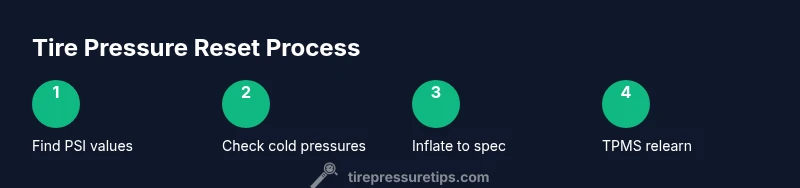
The Volvo XC90 tire pressure reset is a straightforward sequence when you follow the proper order. First, verify that you know the exact PSI values for your tires from the placard or manual. Then inflate as needed, initiate the TPMS relearn through the vehicle’s settings, and finally drive the car to complete the relearn. This overview prepares you for the detailed steps that follow in the next sections; it also helps set realistic time expectations.
Step 1: Find the XC90’s recommended tire pressure
Locate the official PSI values for your Volvo XC90 by checking the door placard on the driver's side door frame and consulting the owner's manual. The placard shows separate values for the front and rear tires and for different load conditions. Write down these numbers and keep them within reach during inflation and TPMS relearn. Knowing the exact spec prevents over-inflating and under-inflating during the reset.
Step 2: Check tires when cold
Before inflating, measure the tire pressures when the tires are cold, meaning the car hasn’t been driven for at least three hours. A hot tire reads higher than cold tires, which can cause an inaccurate baseline. Use the digital gauge to compare each tire to the spec, and note any significant deviations.
Step 3: Inflate tires to the recommended PSI
Using your gauge and air source, bring each tire up to the spec. Recheck after inflation to ensure accuracy. If the reading is inconsistent across tires, you may have a defective gauge or a slow leak. In that case, inspect the tire for punctures, valve stem issues, or rim leaks.
Step 4: Initiate TPMS relearn via vehicle menu and drive
Access the TPMS relearn option in the XC90’s settings or follow the manual’s on-screen prompts. If your model supports a manual relearn, select the Relearn option and confirm. After initiating relearn, take a short drive on level roads at a steady speed to allow the sensors to re-learn; avoid aggressive acceleration during this phase.
Step 5: Verify the reset and maintain pressures
As soon as you complete the relearn, verify that the TPMS light turns off and does not return within a short drive. Recheck all tire pressures to ensure they remain at spec. If the light persists, re-run the relearn, check for leaks, or schedule service for the TPMS sensors.
Common mistakes and safety warnings
Common errors include inflating hot tires, skipping the relearn step, or using a faulty gauge. Always confirm cold readings before inflating and never exceed the tire’s maximum pressure, which is printed on the sidewall. If a tire shows persistent loss of pressure after a reset, address leaks or sensor problems rather than repeatedly attempting resets.
Maintenance and proactive care after a TPMS reset
Keep a regular schedule for tire-pressure checks, especially during temperature swings or after road trips. Use the door placard as your baseline each season and record any deviations. A proactive approach, plus a reliable gauge, helps you prevent TPMS false alarms and maintains optimal contact with the road.
Authoritative sources and further reading
For deeper guidance on tire pressure and TPMS, consult authoritative sources such as the National Highway Traffic Safety Administration and major automotive publications. These resources provide context on how TPMS works and best practices for maintaining correct tire pressure.
Resources for further reading
- https://www.nhtsa.gov/road-safety/tires
- https://www.nhtsa.gov/road-safety/tires-and-TPMS
- https://www.consumerreports.org/cars/how-to-check-tire-pressure-and-TPMS/
Tools & Materials
- Digital tire pressure gauge(Choose a gauge with a clear LCD display and readings in psi and kPa.)
- Air compressor or gas-station pump(Must reach the tire’s maximum PSI and shut off automatically.)
- Owner's manual or door placard(Keep handy for exact PSI values and model-year variations.)
- Wheel chocks(Use on level ground to prevent vehicle movement during inflation.)
- Notebook and pen(Optional for recording readings and steps.)
Steps
Estimated time: 15-25 minutes
- 1
Find the recommended PSI
Identify the exact front and rear PSI values for your XC90 from the door placard or owner's manual. Write them down and keep them handy during inflation and the relearn process.
Tip: Double-check differences by axle and load; use the higher-normal value when carrying heavy loads. - 2
Check tires when cold
Measure all four tires when they are cold, after the car has been parked for a few hours. Cold readings reflect true pressure and prevent over- or under-inflation during the reset.
Tip: If a tire reads low, do not inflate to a higher reading than the placard specifies. - 3
Inflate to spec and verify
Inflate each tire to the recommended PSI and recheck with your gauge. Confirm there are no leaks and that the tire bead seats properly.
Tip: If you hear hissing or see bright bubbles at the valve, pause and inspect for leaks. - 4
Initiate TPMS relearn
Enter the TPMS relearn option in the XC90’s settings or follow the on-screen prompts in your manual. Confirm the relearn to begin sensor memory update.
Tip: If your model requires a manual sequence, follow the exact steps in the owner's manual; otherwise proceed to the drive step. - 5
Drive for relearn
Take a short, steady drive on level roads to allow the TPMS sensors to relearn. Avoid harsh acceleration or abrupt braking during this phase.
Tip: A 5–15 minute drive is typical; if your model specifies a different duration, follow the manual. - 6
Verify and finalize
Once the relearn completes, verify the TPMS light is off and recheck all tire pressures to ensure they stay within spec.
Tip: If the light returns, re-run the relearn or inspect tires for leaks or sensor issues.
Frequently Asked Questions
What does resetting the TPMS do for Volvo XC90?
Resetting the TPMS re-learns sensor data after tire inflation or replacement, ensuring warnings reflect current tire pressures. It helps prevent false alarms and improves safety.
Resetting TPMS re-learns the sensor data after changes to tires, helping the system warn accurately.
Can I reset TPMS if a tire is leaking?
No. Fix the leak and ensure the tire is holding pressure to the spec before attempting a reset.
If there’s a leak, fix it first and then reset TPMS.
Do I need to reset TPMS after tire rotation?
Many XC90 models don’t require a full relearn after rotation, but some may benefit from one. Check the manual for your year.
Some XC90s don’t need a relearn after rotation, but confirm with your manual.
Is TPMS reset the same for all XC90 years?
Process can vary by year and trim. Always follow the specific steps in your model’s manual for best results.
It can vary by year; follow your manual’s steps.
What if the TPMS light stays on after reset?
Check for leaks and sensor issues, re-run the relearn, and if needed, have the TPMS sensors inspected by a technician.
If it stays on, re-run relearn or have sensors checked.
Watch Video
What to Remember
- Check cold tire pressures before inflating.
- Inflate to the exact PSI from the placard.
- Use the TPMS relearn feature and drive as directed.
- Verify the TPMS light is off after reset.
- Regularly monitor tire pressures to maintain safety.