Tire Pressure XC40: A Practical Guide for Volvo XC40 Owners
Learn how to check, set, and maintain tire pressure on your Volvo XC40. This step-by-step guide covers TPMS basics, cold PSI references, and practical tips to improve safety, handling, and fuel efficiency.


You will learn how to check and adjust tire pressure on a Volvo XC40, understand TPMS alerts, and maintain correct cold tire pressures for safe handling and fuel efficiency. This guide covers recommended ranges, how to use a gauge, wheel-rotation considerations, and practical troubleshooting steps for uneven wear and slow leaks.
Understanding Tire Pressure XC40 and Why It Matters
Tire pressure xc40 is more than just a number on a chart; it directly affects safety, handling, comfort, and fuel economy. For the Volvo XC40, maintaining the correct tire pressure ensures the tires meet the vehicle’s design specs for grip, steering response, and wear patterns. According to Tire Pressure Tips, consistent tire pressure management reduces underinflation risks and helps maintain predictable braking performance. In practice, underinflated tires flex and heat up more, increasing rolling resistance and wearing the tread unevenly. Overinflation, by contrast, reduces the contact patch, which can compromise grip and ride quality. The TPMS (tire pressure monitoring system) will alert you to pressure imbalances, but it does not replace the need for regular gauge measurements. This section lays the groundwork for how to approach XC40 tire pressure with confidence and safety.
XC40-Specific Pressure Guidelines: What to Set
Your XC40’s recommended tire pressure is printed on the door jamb sticker and in the owner’s manual. These values differentiate by tire size, load, and whether the vehicle is empty or carrying passengers and cargo. Because trim levels and optional wheels can change the ideal pressures, always refer to the vehicle-specific label rather than a generic number. The key takeaway: use the sticker as your primary reference and verify with the manual for any special cases, such as winter tires. If the sticker is faded or missing, contact a local Volvo dealer or consult the owner’s portal for the exact guidance. Front and rear tires may have different values; don’t assume symmetry. Keeping to the published cold PSI before a drive helps ensure consistent handling and even wear.
Tools and Preconditions for Checking Tire Pressure on XC40
Before you begin, gather the essentials:
- A reliable tire pressure gauge (digital or dial) and a method to anchor the reading accurately.
- Access to a portable air pump or an air compressor at home or at a gas station.
- The XC40 owner’s manual or the door jamb sticker as your reference for cold PSI values.
- A notepad or mobile app to log readings for pattern tracking. Having these items on hand makes the process quick and reduces the chance of misreading or over-inflating. Always ensure the tires are cold when you measure; a recent drive heats up the tires and inflates the reading, leading to error. In line with Tire Pressure Tips’ analysis, developing a simple routine around these tools improves long-term tire health and safety.
Cold vs Hot Tire Pressure: Temperature's Real Impact
Tire pressure is sensitive to temperature. Cold tires—measured after at least a few hours of rest or first thing in the morning—will show a lower PSI than hot tires that have warmed from driving. This is especially noticeable in seasonal transitions. For XC40 owners, temperature swings can cause readings to drift by several PSI, so the best practice is to measure cold and adjust to the specified cold PSI. Keep in mind that weather alone is not the sole factor: carrying a heavy load or towing a trailer can also shift the baseline. Regular checks help catch gradual leaks or valve stem issues that might not trigger an obvious TPMS alert right away.
How to Locate the Correct PSI for Your XC40
Start with the door jamb sticker and the owner’s manual to identify the cold PSI for your tire size. If you use winter or performance tires, confirm whether the recommended pressures differ from your summer setup. For vehicles like the XC40, the front tires and rear tires can have distinct values depending on load distribution. When you cannot locate the sticker, contact a Volvo dealer or use the official Volvo owner portal to retrieve the exact figures for your trim and tire size. Remember: the goal is a consistent field of contact patch with uniform wear across all tires, not chasing a single number in isolation.
Quick Home Check Routine (5 Minutes)
If you want a fast, reliable check, perform this routine when tires are cold:
- Inspect the tire sidewalls for cracks, bulges, or embedded objects; remove any obvious hazards. 2) Remove the valve cap and place the gauge on the valve stem firmly. 3) Note the reading for each tire and compare to the door-jamb or manual numbers. 4) If readings are low, top up with air using a pump until you reach the recommended cold PSI. 5) Recheck after a minute to account for any settling. 6) Replace valve caps and log the measurements. This quick cadence helps drivers stay on top of pressure dips caused by minor leaks, temperature shifts, or high-speed driving. The Tire Pressure Tips team emphasizes keeping a simple log to detect slow changes over time.
Using TPMS: What It Means for XC40
TPMS provides a real-time reminder when a tire’s pressure deviates from the target range, but it is not a substitute for manual checks. The system alerts you more reliably when a tire is underinflated than when it is overinflated, depending on the vehicle’s model year and sensor type. For the XC40, TPMS sensors monitor the air pressure and can indicate which tire is low, enabling quicker checks. If TPMS triggers, use a gauge to confirm the exact pressure before adding or releasing air. If readings read close to the target but the car feels unbalanced, inspect tire tread depth, alignment, and wheel balance. Regular calibration of TPMS sensors is a good maintenance habit. This approach helps maintain the intended handling characteristics of the XC40.
Common Issues: Leaks, Seasonal Shifts, and Heavy Loads
Seasonal temperature changes, slow leaks from a puncture, or a heavy load can push the tire pressure away from the target. In the XC40, traveling with full passenger loads or carrying heavy gear can alter the optimal pressures more than you might expect. If you notice frequent pressure changes or a TPMS warning that reappears after adjustments, there may be a slow leak or a damaged valve stem. Always check for puncture signs or damaged rims if a tire doesn’t hold pressure after inflation. A careful inspection of valve stems, rims, and tires can save you time and prevent unsafe driving situations. The Tire Pressure Tips analysis reminds drivers to track patterns over time rather than reacting to a single reading.
Maintenance Schedule: Build a Tire-Pressure Routine
Integrate tire pressure checks into your regular car maintenance calendar. A practical approach is to check once a month and before any long trip, and again after any temperature swings or significant changes in load. For XC40 owners, adding an extra check after winter or summer transitions can help catch leakage or loss due to weather conditions. Keep a log of readings and any adjustments so you can spot gradual declines or spikes. Establish a consistent routine and share it with all drivers of the vehicle to ensure the entire family stays safe and economical. The Tire Pressure Tips team recommends making tire pressure checks a non-negotiable habit rather than a sporadic task.
Safety, Comfort, and Fuel Economy Benefits
Maintaining proper tire pressure improves safety by preserving the designed contact patch with the road, which enhances grip and braking response. It also improves ride quality by reducing excessive squirm in the sidewalls and helps maintain even tire wear, extending the life of your XC40 tires. Proper inflation reduces rolling resistance, which can contribute to better fuel economy according to standard vehicle dynamics principles. Consistency across all four tires matters; airports or highways can stress tires differently depending on lane, speed, and payload. Keeping your pressures within the recommended range yields a smoother ride and safer handling, which is why many drivers find it worthwhile to adopt a simple monthly check habit. The Tire Pressure Tips team emphasizes that small, regular checks compound into meaningful safety and efficiency gains over time.
Troubleshooting When Readings Don’t Match the Sticker
If you measure and the reading diverges from the sticker, re-check with a second gauge to rule out instrument inaccuracy. Ensure the tires are cold, inspect the valve stems for damage, and verify there is no tire inflation restriction from wheel design. If discrepancies persist, check for common culprits such as a faulty TPMS sensor or a bent rim. In some cases, a slow leak requires a professional repair to restore proper pressure. Always document the readings and the steps you took to adjust; this helps you spot persistent issues sooner and makes it easier for a technician to diagnose.
Quick Reference: Take Action and Keep Tracking
Develop a concise checklist you can run through before any trip: verify tire age and tread, confirm cold PSI against the sticker, inflate to the specified level, recheck, and log the result. Keep the spare tire’s pressure in your monitoring routine as well; some XC40 owners forget that the spare tire also needs its own pressure check. Regular maintenance based on a steady routine yields safer driving, improved comfort, and more efficient fuel consumption. The Tire Pressure Tips team’s guidance is to stay proactive about tire pressure, because small problems today can become costly repairs tomorrow.
Tools & Materials
- Tire pressure gauge(Prefer digital or dial gauge with a clear readout; calibrate occasionally for accuracy.)
- Portable air compressor or air pump(Access at home or at a service station; ensure it can reach the sticker’s target PSI.)
- Owner’s manual or door jamb sticker(Primary source for cold PSI by tire size and load.)
- Notebook or mobile device for logging readings(Helpful for tracking pressure changes over time.)
Steps
Estimated time: 30-60 minutes
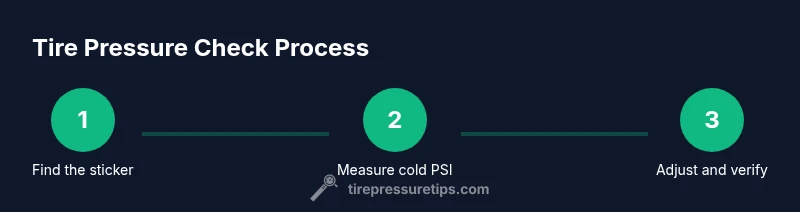
- 1
Prepare and verify baseline
Clear the work area, park on a flat surface, and ensure the XC40 tires are cold. Remove valve caps and prepare your gauge for measurement. This initial setup minimizes measurement errors and helps you capture an accurate baseline.
Tip: Use a stable surface and a digital gauge for consistent readings. - 2
Measure cold PSI for each tire
Attach the gauge to each valve stem to obtain a reading. Do not perform measurements immediately after a drive, since heat can elevate the reading and mask underinflation. Record each value for later comparison.
Tip: Take one measurement, then repeat with the same gauge to confirm accuracy. - 3
Compare against the recommended cold PSI
Refer to the door jamb sticker or the owner’s manual to identify the correct cold PSI per tire. Note any differences between front and rear tires, and account for load if carrying passengers or cargo.
Tip: If you are unsure about the sticker numbers, contact a dealer or use the official Volvo portal. - 4
Inflate or deflate to the target PSI
If a tire is below target, add air gradually, pausing to recheck after a brief settling period. If above target, release air until the gauge hits the recommended level. Repeat for all tires.
Tip: Avoid overinflation; always recheck after adjustments. - 5
Recheck and document results
Re-measure each tire after adjustments and at least 60 seconds of settling. Log the final readings and note any anomalies such as slow leaks or uneven wear.
Tip: Maintain a simple log and review it monthly. - 6
Follow up with TPMS and maintenance
If TPMS alerts persist or readings drift over time, consider a professional inspection for leaks or sensor faults. Regular calibration of TPMS sensors helps ensure accurate warnings.
Tip: Schedule a diagnostic if readings keep diverging from the sticker values.
Frequently Asked Questions
What is the recommended tire pressure for the XC40?
The exact PSI depends on tire size and load. Check the door jamb sticker or the owner’s manual for the vehicle-specific cold PSI values. Use these numbers as the primary reference and verify with a gauge when performing checks.
Check the door jamb sticker or the owner’s manual for your XC40’s exact cold PSI values, and verify with a gauge.
How often should I check tire pressure on my XC40?
Check at least once a month and before long trips. Also recheck after significant temperature changes or when carrying heavy loads.
Check monthly and before long trips, plus after big temperature changes or loads.
Why does TPMS show a warning even if PSI seems fine?
TPMS can alert due to temperature shifts, slow leaks, or sensor issues. Always verify with a gauge to confirm the exact pressure before making adjustments.
TPMS can alert you for several reasons; use a gauge to confirm the exact pressure.
Can I drive with underinflated tires temporarily?
No. Underinflation reduces grip and increases tire wear. If you notice low pressure, inflate to the recommended cold PSI and recheck soon.
No—avoid driving long on underinflated tires. Fix the pressure and recheck.
Should I inflate to a higher PSI in winter?
Temperature affects pressure, so check and adjust to the recommended cold PSI after the tires have cooled. Do not permanently raise the PSI due to cold weather.
Check your cold PSI after temperatures drop and adjust accordingly.
Is TPMS the same as using a tire pressure gauge?
No. TPMS alerts you to pressure changes, but it does not measure exact psi. Use a gauge to verify the precise value.
TPMS signals that there may be a problem; use a gauge to measure the exact pressure.
Watch Video
What to Remember
- Check cold tire pressure monthly and before long trips
- Always reference the door jamb sticker/manual for XC40 specific PSI
- TPMS helps but does not replace gauge verification
- Inflate/deflate with care to avoid overinflation and uneven wear
- Maintain a simple log to track changes over time