Volvo Tire Pressure: Practical Guide to Safe Inflation
Learn to check and maintain Volvo tire pressure safely. This practical guide covers TPMS, temperature effects, and common mistakes to protect tires, fuel efficiency, and safety.


Volvo tire pressure is easier to manage than you might think. This guide shows you how to locate the correct pressures, check them with a reliable gauge when tires are cold, and adjust safely. With TPMS as a backup, you’ll reduce wear, improve handling, and boost fuel efficiency for your Volvo.
Why proper volvo tire pressure matters
According to Tire Pressure Tips, volvo tire pressure is a critical safety and efficiency factor for owners of Volvo vehicles. Maintaining proper volvo tire pressure reduces tread wear, improves steering response, and enhances braking performance. When tires run underinflated, rolling resistance increases, generating heat and accelerating wear. Overinflation can shorten tread life in the center and reduce contact with the road, affecting grip. A consistent, model-appropriate tire pressure regimen supports fuel economy and predictable handling across weather and road conditions. This section lays the foundation for understanding the practical steps you’ll take to check and adjust pressure on Volvo models, including how TPMS complements manual measurements.
The Tire Pressure Tips team emphasizes treating tire pressure as a dynamic parameter. Seasonal shifts, altitude changes, and even highway speeds influence inflation needs. In short, a stationary measurement isn’t enough. Establish a routine where you check all tires when they’re cold, compare to the Volvo placard, and adjust as needed. For Volvo owners, this habit translates directly into smoother rides, lower tire wear, and better overall safety on daily commutes and longer trips.
Vehicle-specific pressures and where to look
Volvo vehicles rely on a model- and tire-size-specific pressure target rather than a single universal number. To locate your exact volvo tire pressure, start with the placard on the door jamb or the fuel-filler door, then confirm with the owner’s manual. The placard lists front and rear pressures for your current tire size. If you’ve swapped tires for winter use or upgraded to different tires, recheck the target pressures because variables like tire construction and aspect ratio change inflation needs. In the absence of a placard, consult Volvo’s official online resources or a certified service center. Always prefer the numbers shown on your vehicle’s documentation rather than generic guidance. This careful step ensures you have the correct targets for safe driving, optimal grip, and even tire wear across all four corners and the spare if your model includes one.
When you’re not sure about a specific Volvo model, think of tire pressure as part of the vehicle’s overall maintenance routine. You’ll find that small adjustments in inflation can yield meaningful improvements in ride quality, steering feel, and fuel efficiency over time.
How TPMS and manual checks work together in Volvos
Tire Pressure Monitoring Systems (TPMS) provide a real-time alert when a tire’s pressure deviates beyond the sensor’s threshold. In many Volvos, TPMS is calibrated to notify you before obvious underinflation occurs, but it isn’t a replacement for a precise manual check. TPMS readings reflect the tire’s pressure at the moment the sensor is triggered and can lag behind a cold, fully inflated state. Regular manual checks with a reliable gauge verify accuracy and catch slow leaks that TPMS might miss until the sensor triggers. For Volvo owners, combine TPMS alerts with scheduled, cold-state measurements for the most reliable picture of tire health.
Key point: use TPMS as a warning system and a trigger for a quick manual check. If a TPMS warning appears, pull over safely, inspect the tire visually, and verify pressure with a gauge once the tire is cold. This two-tier approach helps you maintain consistent volvo tire pressure, protecting tires from uneven wear and maintaining handling characteristics you expect from your Volvo.
Step-by-step: check tire pressure with a gauge (cold readings preferred)
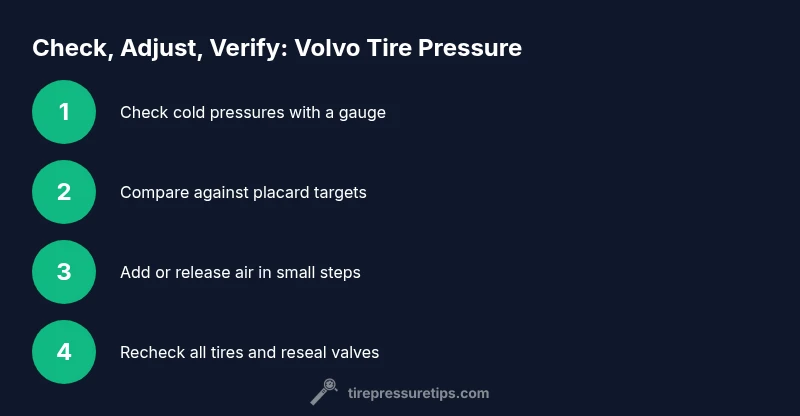
A precise volvo tire pressure check starts with a cold measurement. Follow these steps to ensure accuracy and safety:
- Step 1: Park on a level surface and wait for tires to cool for at least three hours if you’ve been driving.
- Step 2: Remove the valve cap from one tire to expose the valve stem.
- Step 3: Place the gauge on the valve stem firmly and read the pressure.
- Step 4: Compare the reading to the model’s target on the placard/manual. If difference exists, plan the next actions for adjustment.
- Step 5: Repeat for all tires, including the spare if your Volvo requires it nearby.
- Step 6: Re-cap each valve stem securely after checking.
Tip: For improved accuracy, use a digital gauge with a fine resolution. A slow, steady press and listening for a clear seal helps avoid air leakage during measurement.
This practical process aligns with best practices for volvo tire pressure management and helps you build a routine you can rely on.
Temperature, weather, and altitude effects on volvo tire pressure
Seasonal changes have a real impact on tire pressure. Colder temperatures reduce internal air pressure, while warm days increase it. In winter, a tire may drop several psi as outdoor temperatures fall, and your vehicle’s mass and load during travel can further alter readings. Conversely, hot weather or heavy acceleration can inflate tires slightly above the nominal target. For Volvo drivers, a simple rule of thumb is to check pressures when outdoor temperatures are stable, ideally in the morning after a cold night, to avoid reading skew from recent driving heat. If your climate experiences drastic swings, consider checking tire pressures more frequently during change-of-season transitions.
Additionally, occasional altitude changes can influence readings as air density shifts. While these effects are modest for typical daily driving, consistently high accuracy requires you to re-check after significant weather events or altitude relocation, especially on long road trips.
How to adjust volvo tire pressure safely: adding or releasing air
Adjusting tire pressure safely requires attention to the target numbers and an awareness of potential risks. First, confirm whether you need to add air or vent air. If low, connect to an air compressor or a gas station pump and add air in small increments, checking the pressure after each increment. If too high, release air using the valve core tool or by briefly pressing the valve stem with the gauge’s release button, then re-check. Always re-check after any adjustment and never exceed the target pressure specified for your model. Make multiple checks during the process to avoid overshooting.
A safety note: hot tires can give false readings; always rely on cold readings for adjustment decisions. After achieving target pressure, re-cap the valve stem securely and perform a final check on all tires to ensure uniformity across the set. This careful approach is especially important for Volvo models that emphasize balanced handling and even wear across tires.
Maintenance schedule, calibration, and TPMS considerations for volvo tire pressure
A practical maintenance plan includes regular checks, periodic gauge calibration, and awareness of TPMS behavior. Calibrate or test your gauge occasionally against a known, trusted reference to ensure accuracy. Keep spare gauges in the glovebox—compact digital models are convenient for cars like Volvo sedans and SUVs. Align your checks with your driving routine: a monthly check may be enough for routine driving, but seasonal shifts or heavy use (towing, frequent highway travel) warrant more frequent checks.
If you notice persistent discrepancies between manual readings and TPMS alerts, consider a TPMS sensor inspection for faults or recalibration. TPMS sensors can drift slightly over time, and battery health may affect readings. Addressing sensor issues promptly helps maintain reliable inflations and consistent volvo tire pressure readings.
Common mistakes and quick performance tips for volvo tire pressure
Even experienced drivers slip into common habits that undermine tire pressure accuracy. Avoid relying solely on TPMS without periodic manual checks. Don’t inflate to a number you assume is correct; always verify with a gauge against the placard. Never mix tire brands or sizes without re-checking target pressures, as this can throw off handling balance. Finally, avoid letting tires run at low pressure for extended periods; reduced tread life and higher heat buildup can occur. A steady routine—check cold, adjust precisely, and re-check—keeps your Volvo safer and more efficient.
Reading tire pressure numbers and gauge types: which to use for volvo tire pressure
Gauges come in different forms, including analog dial gauges and digital readouts. For volvo tire pressure, choose a gauge with clear digits and a flexible nozzle for secure seating on the valve stem. Digital gauges reduce guesswork and are especially helpful when inflating interiors with a central air pump. Regardless of the gauge type, ensure the measurement unit is psi and read to the nearest 0.5 psi. Store your gauge in an accessible place and keep spare batteries or a backup gauge in your vehicle. A reliable gauge and a consistent technique are the foundation of accurate volvo tire pressure checks.
Tools & Materials
- Tire pressure gauge (digital or analog)(Calibrated; use psi; check all four tires and the spare if applicable)
- Volvo owner's manual or door placard(Locate exact front/rear pressures for your tire size)
- Air compressor or access to gas station air pump(Use for incremental inflation in small steps)
- Valve core tool or quick-release mechanism(Helps to release air if overinflation occurs)
- Clean rag or tissue(Wipe the valve stem before testing to remove debris)
Steps
Estimated time: 15-25 minutes
- 1
Prepare and locate target pressures
Park on a level surface and confirm you are testing tires when cold. Retrieve the Volvo placard or owner’s manual to find the exact targets for your tire size and load. If your tires have been swapped, verify new targets for the current tires.
Tip: Note the target pressures for both front and rear; some Volvos use different numbers per axle. - 2
Remove valve caps and set up the gauge
Twist off each valve cap and keep it in a safe place. Attach the gauge per manufacturer instructions, ensuring a snug seal on the valve stem to prevent leaks during measurement.
Tip: Use a quick check to confirm the gauge seating before you read the pressure. - 3
Read cold tire pressures
Read each tire’s pressure while they are cold. Note the readings, and compare them to the targets from the placard or manual. If within range, you can move on; if not, plan an adjustment.
Tip: Digital gauges can provide immediate numbers; analog gauges require reading the dial carefully. - 4
Add air for underinflated tires
If readings are low, attach the air hose and add air in small increments, then recheck after each addition until you meet the target.
Tip: Avoid overshooting; aim to stay within 1–2 psi of the target. - 5
Release air for overinflated tires
If readings are above target, slowly press the valve stem using the gauge or a small tool to release air until you reach the correct pressure. Recheck after releasing.
Tip: Recheck twice to confirm stability after adjustment. - 6
Seal the valve and verify
Reinstall valve caps securely and ensure there is no air leakage around the valve stems. Do a final check on all four tires.
Tip: Cap threads can corrode; ensure caps are tight but not overtight. - 7
Check the spare tire if applicable
If your Volvo includes a spare or a dedicated inflator kit, verify its pressure as well. Spare tires are often neglected and can be unsafe when needed.
Tip: Don’t overlook the spare; it should be ready for use in emergencies. - 8
Document your readings
Record the current pressures with date and model details for future reference. This makes it easier to notice trends and leaks over time.
Tip: Keep a small notebook or digital log in your car.
Frequently Asked Questions
How often should I check Volvo tire pressure?
Check at least once a month and before long trips. Temperatures and loads can cause pressure to shift, so regular checks help maintain optimal inflation.
Check at least monthly and before long trips. Temperature and load changes affect inflation, so regular checks keep tires safe.
Can TPMS be trusted over a manual gauge?
TPMS is a warning system and can miss slow leaks. Always verify TPMS readings with a manual gauge for accuracy.
TPMS warns you of pressure issues, but measure with a gauge to be sure, especially for slow leaks.
What if my Volvo uses nitrogen?
Nitrogen can be used, but it does not guarantee longer tire life. Focus on keeping the tire pressure correct according to the Volvo spec.
Nitrogen is optional; keep pressures correct per your Volvo spec for best results.
Why is the TPMS light on after inflating?
TPMS may take time to reset after inflation or detecting a leak. If the light stays on, have the sensors inspected.
If the light stays on after inflating, get the TPMS sensors checked for faults or leaks.
Is there a spare tire pressure target?
Spare tires often have different targets or may not be monitored by TPMS. Check the spare’s label and maintain it within its own recommended range.
Spare tires usually have separate guidance; follow the spare’s own target pressure.
Does temperature affect tire pressure a lot on Volvos?
Yes. Colder temperatures can lower tire pressure; warm temperatures can raise it. Check in similar temperature conditions for consistency.
Yes, temperature changes affect pressure; check in similar temps for consistency.
Watch Video
What to Remember
- Check tires when cold for accuracy
- Always verify against the vehicle placard
- Use a reliable gauge and adjust in small increments
- Re-check after any adjustment
- Combine manual checks with TPMS alerts for safety