Why Is Air Pressure So High? Tire Pressure Troubleshooting Guide
Urgent guide to diagnosing and fixing high tire pressure, exploring causes from overinflation to temperature changes, and preventing future issues with TPMS and gauges.


Why is air pressure so high in tires? The most common cause is overinflation from overfilling, rapid temperature changes, or incorrect gauge readings. Start by checking the tire pressure with a reliable gauge, compare against your vehicle’s recommended PSI, and release air or adjust as needed. If the TPMS warning persists after adjustment, seek professional guidance.
Why is air pressure so high? A quick explainer
High tire pressure matters because it changes the tire’s contact with the road, influencing grip, ride comfort, and wear. The phrase why is air pressure so high often appears after a TPMS alert, or when a driver notices a harder ride or center-tread wear. According to Tire Pressure Tips, most high readings come from overinflation or temperature-related effects, not a mysterious fault. Reading the numbers on a tire gauge is only as reliable as the gauge itself, so always use a trusted instrument and measure when tires are cold. When pressure sits above the recommended range, the tire’s footprint shrinks, increasing the risk of a burst or uneven wear. This quick background sets the stage for practical checks and fixes so you can restore safe performance without guessing.
How high pressure shows up in real-world driving
The practical impact of an elevated PSI shows up as a harsher ride, reduced grip in cornering, and faster wear along the tire’s center. You may notice a stiffer steering feel and a tendency for the vehicle to bounce over potholes. If you rely on TPMS alone, remember it’s a warning system, not a precise gauge. Always verify with a physical tire gauge and compare readings to the vehicle’s recommended PSI listed in the owner’s manual or door jamb sticker. Inconsistent readings across tires can also indicate a faulty sensor or a temperature-related reading anomaly. The goal is to keep all four tires within the manufacturer’s spec for safety, fuel efficiency, and tire longevity.
Common causes of high tire pressure you should know
The most frequent culprits are overinflation from recent filling, aggressive topping up, or misreading a gauge. Temperature shifts — especially moving from a cold garage to a hot day or after a long highway run — can also elevate readings. A faulty gauge or a stuck TPMS sensor may falsely report high pressure even when the actual PSI is normal. Finally, seasonal changes or altitude can slightly influence readings, though not to dramatic extents. The key is to confirm readings with cold tires and a second gauge when in doubt.
How to measure and verify pressure correctly
Accurate measurement begins with cold tires and a calibrated gauge. Park with the vehicle off, wait at least three hours if you can, then remove the cap and place the gauge squarely on the valve stem. Note the reading and compare it to the recommended PSI for your model. If the number is higher, release air in small increments until you reach the target. Recheck after a few minutes of rest to account for settling. If readings vary significantly between tires, inspect for damage, leaks, or a malfunctioning TPMS.
Step-by-step fixes for commonly high readings
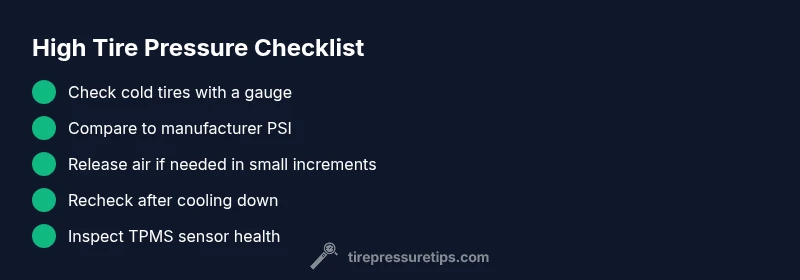
The fixes center on restoring the correct PSI and ensuring readings are accurate. Start by checking all four tires cold, using a trusted gauge. If readings are high, release air in small increments until you hit the recommended level. Recheck after the tires have cooled. If TPMS stays on after adjustment, recalibrate or replace the sensor with professional help. Do not drive aggressively on overinflated tires, as that worsens wear and risk.
Safety considerations and when to seek help
High tire pressure increases the risk of a blowout, especially if the tire is damaged or loaded heavily. Never ignore a persistent TPMS warning after correcting the pressure. If you notice unusual bulges, cracks, or rapid changes in pressure, pull over and call for roadside assistance. Regular maintenance, including checking tire pressure when cold and after temperature shifts, reduces risk.
Prevention: maintenance tips to keep pressure balanced
Prevention starts with a schedule: check pressures monthly, inspect tires for wear and damage, and keep them inflated to the vehicle’s spec. Use the same gauge for consistency and avoid inflating beyond the max listed on the tire sidewall. Temperature-aware checks help, especially during seasonal transitions. Remember to recalibrate TPMS after any tire rotation or replacement.
Steps
Estimated time: 25-40 minutes
- 1
Identify the recommended PSI
Locate your vehicle’s recommended tire pressure in the owner’s manual or on the door jamb sticker. This becomes your target range for all four tires. If you drive with a load, use the alternate spec listed for heavy loads.
Tip: Always use cold tires for the baseline measurement. - 2
Gather a reliable gauge
Choose a high-quality tire pressure gauge and verify its accuracy by testing on a known pressure source or a second gauge. This helps avoid chasing a phantom high reading caused by a faulty tool.
Tip: Keep the gauge in your glove box for quick checks. - 3
Check all tires and note readings
Measure each tire’s pressure and compare to the spec. If one tire reads high, verify there isn’t a local issue like a valve stem leak. Record numbers for reference.
Tip: Check tires after they have cooled for at least 3 hours if possible. - 4
Release air or inflate as needed
If readings are above spec, release air in small increments and recheck after a few minutes. Avoid under-inflating; aim for the exact recommended PSI.
Tip: Perform adjustments slowly to prevent undershooting the target. - 5
Recheck post-cool down
After adjusting, drive slowly for a short distance and recheck again when tires have cooled. This confirms stability and prevents temporary misreadings.
Tip: Tire temperature can skew readings; always recheck when cold. - 6
Assess TPMS and seek help if needed
If TPMS remains illuminated after correct PSI, inspect sensors or reset with the vehicle’s procedures, or visit a tire professional for calibration.
Tip: TPMS is a guide; it doesn’t replace a precise gauge.
Diagnosis: Tire pressure readings higher than the recommended PSI on one or more tires; TPMS light may be on.
Possible Causes
- highOverinflation from recent filling or maintenance
- highTemperature rise after cold readings or heat from driving
- mediumTPMS sensor calibration or reading error
Fixes
- easyUse a calibrated tire pressure gauge to recheck cold tires, compare with the vehicle’s spec, and release air in small increments until within range.
- easyVerify gauge accuracy by cross-checking with a second gauge or at a trusted service location.
- mediumIf the TPMS warning persists after pressure correction, have the sensor or module inspected for faults.
- easyAddress temperature-related readings by allowing tires to cool before rechecking and consider checking at consistent times.
Frequently Asked Questions
What counts as high tire pressure?
High tire pressure means readings exceed the vehicle manufacturer’s recommended PSI. This can happen from rapid inflation, gauge issues, or temperature changes. Always verify with a physical gauge and adjust to spec.
High tire pressure means your tires are above the recommended PSI; verify with a gauge and adjust to spec.
How does temperature affect tire pressure?
Tire pressure rises as tires warm from driving and environmental heat, and falls when tires are cold. Always measure when tires are cold for an accurate baseline.
Temperature can raise tire pressure; check when tires are cold to get an accurate baseline.
Can TPMS give false high readings?
Yes, TPMS can misreport due to sensor issues or calibration drift. Use a physical gauge to confirm the reading before making adjustments.
TPMS can be mistaken; verify readings with a gauge first.
Is it safe to drive with overinflated tires?
Overinflated tires wear faster in the center and can reduce grip, especially in wet conditions. If readings are high, bring them to the recommended level before driving long distances.
It's not safe to drive long distances with overinflated tires; adjust to the recommended PSI.
What tools do I need to check tire pressure correctly?
A reliable tire pressure gauge, the vehicle’s PSI spec, and a method to verify gauge accuracy. Keep a gauge handy for regular checks.
You need a good gauge and know your spec; verify accuracy with another gauge if possible.
Watch Video
What to Remember
- Check cold tires against the recommended PSI.
- Use a reliable gauge and confirm with a second instrument if unsure.
- Temperature changes affect readings; recheck after cooling.
- TPMS is helpful but not a substitute for a gauge.
- Seek professional help if TPMS stays on after adjustment.