Why Did My Tire Pressure Drop Overnight? A Practical Troubleshooting Guide
Discover why did my tire pressure drop overnight and how to diagnose leaks, TPMS issues, and temperature effects. Quick checks, fixes, and prevention tips from Tire Pressure Tips.


If you’re asking why did my tire pressure drop overnight, the most likely causes are a slow leak, cold temperature, or TPMS variation. Start with a quick visual check for nails or punctures, then inspect the valve stem and rim. Inflate to the vehicle’s recommended PSI and recheck after a short drive. If the drop continues, plan a professional inspection.
Why Overnight Tire Pressure Changes Happen
If you wake up to a noticeably lower tire pressure, you’re not alone. The question why did my tire pressure drop overnight is common among drivers, and several factors can cause it. The most frequent culprits are slow leaks from nails or cracks, temperature-driven air contraction, and TPMS sensor behavior. Temperature swings overnight can reduce pressure by a few PSI, especially in cold climates. A puncture that grows slowly, a cracked sidewall, or a bead leak around the rim can drain air gradually without obvious signs at first. Even driving through rain or parking overnight can contribute to minor variations. Knowing which factor is at play helps you decide when to top up, when to repair, and when to seek professional help.
- Quick checks save time
- Temperature matters across seasons
- Leaks and faulty sensors are common culprits
- Safety is prioritized over convenience
How to Confirm the Cause: Quick Checks
Before you panic, run a quick, methodical check. First, verify your baseline by inspecting the tire that shows the lowest reading and compare it to the recommended PSI listed on the door jamb sticker or owner's manual. Use a reliable gauge, and record the current reading. Next, look for obvious damage: nails, screws, or cuts in the tread, sidewall bulges, or objects embedded in the tire that could indicate a slow leak. Finally, assess the tire's temperature in a controlled environment—temp differences can explain overnight drops. If you find a visible puncture or the pressure continues to drop after a full inflation, you’ll know you’re dealing with a leak rather than a temporary fluctuation.
- Document readings for comparison
- Look for signs of puncture or bead issues
- Temperature explains some overnight changes
- If unsure, seek professional assessment
Common Overnight Pressure Causes in Detail
Understanding the most frequent culprits can help you triage quickly. A slow leak from a nail or screw is the top suspect when you notice a gradual drop rather than an abrupt failure. Temperature swings are another major factor: colder nights contract air, lowering PSI, while warmer days can gradually raise it. Bead leaks around the rim can occur if the wheel has corrosion or the tire hasn’t seated properly, allowing air to escape slowly. Valve stem leaks are less obvious but common in aging tires; a damaged core or worn cap can let air slip out between checks. Finally, TPMS misreads or a weak battery can falsely show a drop. Each cause requires a different response, from a simple repair to replacing a sensor.
Step 1: Visual Inspection for Leaks
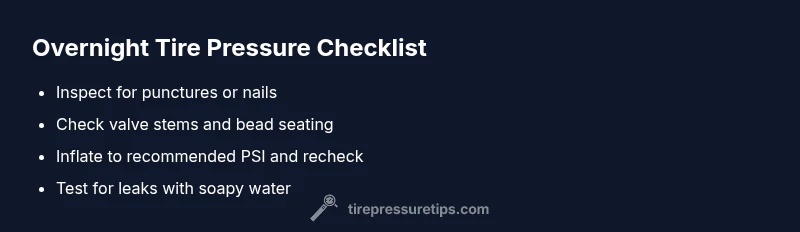
Start with a thorough walk-around of the tire you’re monitoring. Look for embedded nails, screws, or shards of glass in the tread that could be puncturing the surface. Check the sidewalls for cuts, bulges, or cracking that might lead to slow leakage. Inspect the bead area where the tire meets the rim—corrosion or damage there can create a slow leak that’s easy to miss. If nothing obvious is found, move to inflating to the recommended PSI and re-check after a few hours; a small puncture might seal temporarily after a quick fill, but the leak could return.
Step 2: Check the Valve and Bead
The valve stem is a common source of slow leaks. Remove the valve cap, look for cracks or corrosion on the stem, and gently press the valve core with a small tool to feel for air leakage. If you hear or see air escaping around the valve, you’ll need to tighten or replace the valve stem or valve core. The bead around the rim should sit evenly against the tire; if the bead is uneven, air can escape slowly. In either case, this is a job that often benefits from a professional inspection, especially if you cannot locate a clear source of the leak.
Step 3: Test for Leaks — Soapy Water Method
For stubborn suspicions of leaks, mix dish soap with water and apply it around the tire bead, valve stem, and any visible nicks. Bubbles indicate air escaping from the area under test. Focus especially on the bead and valve area and watch for continuous fizzing over several minutes. This method is safe and effective for identifying slow leaks that aren’t obvious on a visual inspection. If you find a leak, you can often seal small punctures with a plug or patch, but larger or bead leaks usually require professional repair or tire replacement.
Step 4: Consider Temperature vs Time
If the tire only shows a drop on cool mornings and returns to baseline after warming up, you’re likely dealing with temperature-related pressure changes. Air expands with heat and contracts with cold; a 20–30 degree Fahrenheit change can influence PSI readings. To verify, log readings over several days with consistent measurement times, and compare them to daily temperature data. If the pressure remains low even after driving and warming the tire, the leak source is more likely an actual defect than a temperature effect.
Step 5: When to Repair or Replace — TPMS, Punctures, and Beads
If you find a puncture or damaged tread, you may be able to repair if the puncture is within a repairable area and is not too large. Bead leaks or rim corrosion are less forgiving and often require professional tire repair or replacement. TPMS sensors should be tested if readings are inconsistent using a scan tool; a dead or weak battery can trigger false lows. If the tire fails any safety test or has been driven on significantly underinflated, it’s safer to replace rather than repair.
Step 6: After Repairs — Recheck and Road Test
Once you’ve addressed the leak source or completed a TPMS service, inflate to the recommended PSI and drive 5–10 miles to seat the tire and allow the system to stabilize. Recheck the pressure after cooling down; capture a new reading and compare with your baseline. If the pressure remains stable, you’ve likely resolved the issue. If it starts dropping again, you should revisit the source and consider a tire replacement or a professional inspection.
Step 7: Safety First — When to Seek Professional Help
If you’re unsure at any point, or if the leak is subtle and you cannot locate it, seek professional help. An experienced tire technician can perform a comprehensive leak test, rim integrity check, TPMS calibration, and can recommend whether patching, bead sealing, or tire replacement is necessary. Continuing to drive with a suspicious leak can lead to sudden tire failure, which is dangerous on the road.
Prevention Tips to Avoid Overnight Drops
- Regularly check tire pressures at least once a month and after trips of 3+ hours or weather changes.
- Use a high-quality gauge and record baseline PSI for each tire.
- Inspect tires for visible damage and check valve stems during every routine maintenance.
- Keep TPMS batteries and sensors in good condition; replace as needed.
- Consider seasonal checks in extreme temperatures to account for temperature-related changes.
Steps
Estimated time: 60-90 minutes
- 1
Prepare and safety check
Park on a flat surface, engage parking brake, and wear gloves. Gather a trusted tire gauge, soapy water solution, and a flashlight. If you’re alone, use your phone for a timer and call for help if you suspect a major leak.
Tip: Ensure you’re in a safe, well-lit area before starting. - 2
Visual inspection for damage
Walk around all tires and look for nails, screws, cuts, or bulges. Check the tread depth and look for uneven wear that may indicate alignment issues. Note any tire that visibly appears flatter than others.
Tip: Take photos of any damage to document for a repair shop. - 3
Measure and compare PSI
Use a reliable gauge to measure current PSI and compare to the vehicle’s recommended range on the door jamb. Record readings for all tires and track changes across measurements.
Tip: Always measure when tires are cold for accuracy. - 4
Inflate to recommended PSI
Inflate each tire to the manufacturer’s recommended PSI, not the maximum printed on the tire sidewall. Recheck the pressure after a 10–15 minute break to allow the air to settle.
Tip: Do not overinflate; overinflation can cause handling issues. - 5
Test valve and bead integrity
Inspect the valve stem for cracks and check the bead area for even seating. Apply a soapy-water test around the bead and valve to spot leaks.
Tip: If you hear air escape, replace the valve core or seal the bead if needed. - 6
Assess TPMS and readings
If readings continue to drop, consider TPMS issues. Check for sensor error codes with a diagnostic tool, replace batteries, or recalibrate the system as needed.
Tip: TPMS service is often covered by warranty; check coverage first. - 7
Make a repair or seek help
If a puncture is found but repairable within guidelines, perform or arrange a repair. If the leak is from the bead, rim, or you can’t locate the source, arrange professional service.
Tip: Never drive long distances on a suspected slow leak without inspection.
Diagnosis: Tire pressure drops overnight on one or more tires
Possible Causes
- highSlow puncture or nail/screw in tread
- mediumBead leak around rim due to seating or corrosion
- mediumValve stem leak or damaged core
- highTemperature-related air contraction in cold weather
- lowTPMS sensor fault or battery issue
Fixes
- easyInspect for visible leaks and punctures, then repair or replace the tire if needed
- easyTighten/replace valve core and ensure proper sealing with a new valve cap
- easyInflate to recommended PSI and recheck after 30-60 minutes; observe for stability
- mediumCheck for bead leaks with soapy water and pursue bead seating repair if detected
- mediumTest and calibrate TPMS; replace sensor batteries if necessary
Frequently Asked Questions
What is considered an acceptable tire pressure drop overnight?
There’s no fixed number; small drops can occur due to temperature. If the drop is consistent and large beyond a few hours, investigate leaks and TPMS issues. Always compare to your baseline and the recommended PSI.
There isn’t a universal acceptable drop. Compare to your baseline and check for leaks or sensor issues if the pressure keeps falling.
Can cold weather cause a tire to lose air overnight?
Yes. Colder temperatures cause air to contract, lowering PSI overnight. If you monitor over several nights, you’ll often see a pattern tied to temperature changes.
Yes, cold weather can lower tire pressure overnight. Check patterns over several nights to confirm.
Should I drive on a tire that lost pressure overnight?
If the pressure drop is significant or persists after reinflation, avoid driving long distances with underinflated tires. A slow leak or TPMS fault should be addressed before road use.
Don’t drive far on underinflated tires. Get the leak or sensor checked before long trips.
What if I can’t find a puncture after inspection?
If you can’t locate a puncture but the pressure keeps dropping, have the tire professionally tested for bead leaks, internal damage, or a failed TPMS sensor. Sometimes leaks are microscopic and require specialized equipment.
If you can’t find a puncture, have a professional test for bead leaks or sensor problems.
How often should TPMS be recalibrated or replaced?
TPMS should be checked when tire pressure is abnormal or after tire service. Calibration or sensor replacement may be needed if readings don’t stabilize after inflation and driving.
Check TPMS if pressures are off. Calibration or sensor replacement may be required.
When is tire replacement necessary due to overnight pressure drops?
If a tire shows repeated pressure loss with evidence of bead, tread, or sidewall damage, replacement is advised. Persistent leaks that cannot be repaired safely should be handled by a professional.
If leaks persist or beading is damaged, replacement may be necessary.
Watch Video
What to Remember
- Inspect for leaks first, not guesses.
- Temperature and time affect overnight readings.
- Use a reliable gauge and document baseline pressures.
- Seek professional help for persistent or hard-to-find leaks.