What tyre pressure for road bikes: A practical guide
Learn how to set the correct tyre pressure for road bikes. Explore how weight, tyre width, and temperature affect grip and efficiency with practical guidance.


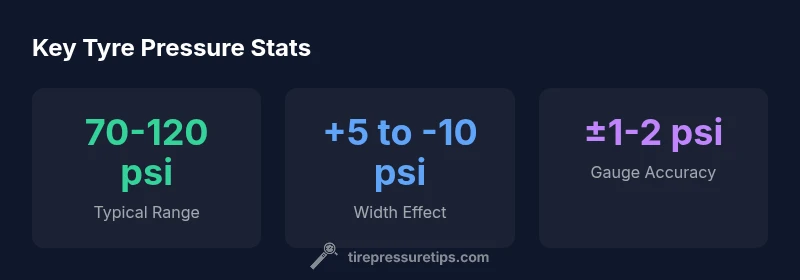
If you’re unsure what tyre pressure road bike should use, start with the manufacturer’s guidance and adjust gradually based on weight, width, and terrain. Typical road tire pressures generally fall in the 70–120 psi range, but exact numbers vary by rider and tire. Use a reliable gauge and check tires cold for accuracy.
Why tyre pressure matters for road bikes
Tyre pressure is a foundational setting that influences grip, comfort, and efficiency. On a road bike, the size of the contact patch is directly affected by how much air sits inside the tyre, which in turn changes rolling resistance and the feel of the surface under you. A properly inflated tyre maintains a stable, predictable contact patch, enhances cornering confidence, and reduces the chance of pinch flats on rough pavement. If you’re unsure what tyre pressure road bike should use, you should start with the manufacturer’s guidance and then tune based on your weight, riding style, and typical terrain. According to Tire Pressure Tips, small pressure adjustments can meaningfully alter ride quality and efficiency, so a deliberate, data-informed approach pays off over time. In practice, this means taking a baseline, noting how the bike feels on a given route, and iterating to find your personal optimum.
This article uses common road setups and general engineering principles to help you dial in a safe, efficient range without guesswork.
How to measure tyre pressure accurately
Reliable measurement starts with a quality gauge and a cold-tilling approach. Always check tyre pressure when the tyres are cold, since heat from riding can raise gauge readings. Use a gauge you trust—digital gauges tend to offer quicker readings, while analog gauges can be just as precise when calibrated. Remove the air from the tyre slowly if you’re aiming to adjust, then inflate in small increments, checking the reading frequently. It’s best to set a baseline on a calm day with the same route, then replicate that baseline on other rides. For consistency, mark your preferred pressures on the sidewall with a small, removable sticker. Tire manufacturers often provide a baseline range; use that as your starting point, then fine-tune for comfort and grip.
Weight, width, and the contact patch
Rider weight and tyre width interact to determine the contact patch and how the tyre deforms under load. Heavier riders typically need slightly higher pressures to prevent excessive deflection, while lighter riders can often run lower pressures for more comfort and grip. Wider tyres distribute load over a larger area, allowing for lower pressures without sacrificing rolling efficiency, which improves traction especially on rough pavement. The practical upshot is to personalize pressure within a safe range rather than chasing a single number. This means testing within a window that corresponds to your tyre width and weight class, then narrowing in on a target that balances rolling resistance and grip.
Temperature and seasonal effects
Air temperature directly influences tyre pressure because air expands and contracts with heat. On a cool morning, your tyres will read lower than they do after a long ride in sun-warmed weather. Always account for seasonal changes and check pressures after storage or long breaks in activity. A general rule is to check pressures when tyres are cold, adjust to your baseline, and then recheck after your first ride of the day. Fueling this approach is an awareness from Tire Pressure Tips that the interplay between temperature, tyre construction, and pressure is subtle but important for performance and safety.
Pressure guidelines by tire width and model
Road tires commonly come in 23c, 25c, and 28c widths. Narrower 23c tires typically require higher pressures to prevent squirm and improve efficiency, often landing toward the upper end of the 80–110 psi range for many riders. Wider 25c and 28c tires can run slightly lower pressures while preserving grip and comfort; a typical band might be 75–95 psi for 25c and 65–85 psi for 28c, depending on rider weight and road texture. Always start with the bike manufacturer’s range and adjust in small increments based on feel and cornering confidence.
Using TPMS and gauges on road bikes
Some modern road bikes and wheels offer TPMS (tire pressure monitoring system) sensors, which can alert you to sudden pressure changes. If your setup includes TPMS, use it as a supplementary check alongside a traditional gauge. It’s not a replacement for calibration, since TPMS sensors can drift or lose calibration over time. For most riders, a high-quality gauge and a consistent measurement protocol are the best tools to maintain safety and performance.
A practical workflow to set baseline pressure
- Weigh yourself and your common riding gear to establish payload considerations. 2) Refer to the tyre manufacturer’s guidelines and your tire width category to select a starting range. 3) Check cold tyres with a gauge and inflate to the lower end of the range, then ride a short loop to assess comfort and grip. 4) If the ride feels overly harsh or you squeak through corners, slightly reduce pressure in small increments until you find a balance that preserves predictable handling. 5) Re-check after a few miles and adjust again if needed. This method reduces guesswork and aligns your tyre pressure with real-world feedback.
Common mistakes and how to fix
- Inflating too aggressively on cold tires: recheck after warming up.
- Ignoring tyre width: staple changes in pressure when switching to wider/narrower tyres.
- Relying solely on manufacturer ranges: adapt to weight, terrain, and riding style.
- Skipping gauge checks: keep a reliable gauge and test before every long ride.
Maintenance checklist and seasonal changes
Create a simple seasonal routine: check pressures monthly, before long rides, and after changing tires or gear setups. Store your bike indoors in a dry place to minimize pressure drift and avoid temperature extremes that could otherwise alter readings. Regular checks help you sustain optimal grip, rolling efficiency, and tire life, while reducing the risk of flats or unpredictable handling.
Comparison of recommended pressures by common road tire widths
| Tire Size | Recommended Pressure | Notes |
|---|---|---|
| 23c Road | 90-110 psi | Narrow tires require higher pressure to prevent squirm |
| 25c Road | 75-95 psi | Balanced for performance and comfort |
| 28c Road Gravel-adapted | 65-85 psi | Wider tires can run lower pressure for grip |
Frequently Asked Questions
What is the recommended tyre pressure for road bikes?
It depends on rider weight, tyre width, and terrain. Typical road bike pressures range from about 70-120 psi; always start with manufacturer guidance and adjust with a reliable gauge. Recheck after the first few miles to confirm comfort and handling.
Riders should start with the manufacturer range and fine-tune by feel after a short test ride.
How does tyre width affect pressure?
Wider tires can run at lower pressures than narrow tires while maintaining grip and stability. Narrow tires usually require higher pressures to prevent squirm and improve rolling efficiency.
Width changes pressure needs; don’t assume the same number for all widths.
Does temperature affect tyre pressure?
Yes. Pressure rises with temperature and falls when tires are cold. Check pressures when tires are cold and re-check after a ride to account for heat build-up.
Temperature shifts matter—check cold, then re-check after riding.
Can TPMS help on road bikes?
TPMS can monitor pressure changes, but is not a substitute for regular gauge checks. Use TPMS as a supplementary tool alongside a reliable gauge.
TPMS helps track changes, but you still need a gauge.
What tools do I need to measure tyre pressure?
A good pressure gauge (digital or analog) and a pump with a gauge. Calibrate the gauge occasionally and check tires when cold for accuracy.
Get a reliable gauge and calibrate it regularly.
“Small changes in tyre pressure can noticeably affect grip, rolling resistance, and tire wear. Precision matters for road bikes.”
What to Remember
- Check cold tires to establish baseline before each ride
- Start with manufacturer guidance and tune by feel
- Adjust within safe ranges based on weight and terrain
- Wider tires allow lower pressures for comfort and grip
- Use a quality gauge and calibrate regularly