VW Passat Tire Pressure: A Practical Guide
Learn how to check, adjust, and maintain tire pressure on your VW Passat for safety, fuel efficiency, and longer tire life. Step-by-step guidance, TPMS tips, and maintenance reminders.


By the end of this guide, you'll be able to check and adjust the VW Passat tire pressure accurately, understand TPMS alerts, and establish a simple maintenance routine to protect tire life and fuel efficiency. You'll need a reliable gauge, access to the door placard or owner's manual, and a cold reading. We'll walk you through the steps, discuss how temperature affects readings, and highlight common mistakes to avoid.
Why Tire Pressure Matters for VW Passat
Maintaining correct tire pressure is essential for safety, handling, fuel economy, and tire life on any car, including the VW Passat. Under-inflated tires increase rolling resistance, raise heat, and shorten tread life, while over-inflated tires reduce grip on wet roads and produce a harsher ride. The Tire Pressure Tips team notes that small pressure changes can have outsized effects on ride quality and efficiency. For Passat drivers, a simple monthly check and before-long trips habit can prevent costly wear or unsafe driving conditions. The car's suspension and steering are tuned around recommended pressures, and the correct level helps even contact across the tire footprint for even wear. Remember to always start with the cold reading, because driving heats up tires and can skew the measurement. In the paragraphs that follow, we’ll cover how to find the exact numbers for your model, how to measure accurately, and how to handle TPMS warnings. Our goal is clear: safer trips, better fuel economy, and longer tire life.
wordCountNoteRemovedIfAny
Tools & Materials
- Digital tire pressure gauge or analog gauge(Choose a gauge that reads to 0.5 psi or 0.5 kPa precision)
- Access to VW Passat door jamb placard or owner's manual(Use it to confirm the exact cold tire pressures for your model and tire size)
- Air compressor or public air pump(Ensure it provides steady, controllable airflow and a built-in gauge if possible)
- Notebook or tire pressure log app(Record readings over time to spot trends and wear)
- Clean cloth or brush(Wipe valve stems and rims to remove dirt that could affect readings)
Steps
Estimated time: 30-40 minutes
- 1
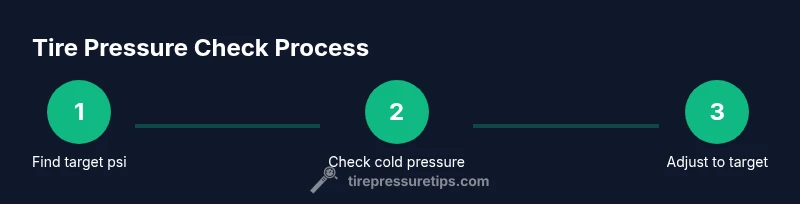
Find the correct tire pressures
Locate the recommended cold tire pressures on the door jamb placard or in the owner record. Note any differences between front and rear tires and between load conditions. This is your target when you inflate or deflate.
Tip: Always start from a cold reading; driving heats tires and can skew the result. - 2
Measure while the tires are cold
Park the car on level ground and wait at least 3 hours if you can, or measure first thing in the morning. Cold readings reflect the actual inflation level regardless of recent driving heat.
Tip: If you just drove, wait for at least 3 hours before checking to avoid inaccurately high readings. - 3
Attach the gauge and read each tire
Remove the valve cap, press the gauge onto the valve stem firmly, and note the pressure on all four tires. Do this for the front and rear and also the spare if your Passat configuration calls for it.
Tip: Be careful not to lose the valve cap; dirt can contaminate the stem. - 4
Inflate or deflate to the target pressure
If a tire is below the target, add air in small increments and recheck. If it’s above, release air gradually and recheck until you reach the exact number. Repeat for all tires.
Tip: Don’t exceed the placard number; if you’re close, adjust gradually. - 5
Recheck all tires after adjustment
Once all tires are within range, recheck each tire again to confirm consistency. Check the spare if your vehicle has a separate tire specification.
Tip: A second check ensures you didn’t miss a small leak or overfill. - 6
Address TPMS if it signals or stays on
If the TPMS light remains on after adjusting, drive a short distance to allow the system to relearn, or consult the user manual for a TPMS relearn procedure. If the alert persists, there may be a sensor issue.
Tip: A TPMS relearn is often required after changing tires or inflating to new pressures.
Frequently Asked Questions
What is the recommended tire pressure for a VW Passat?
The exact pressure depends on your model year, tire size, and load. Always check the door jamb placard or the owner's manual for the precise cold tire pressures for your Passat. Use those numbers as your target rather than the tire sidewall maximum.
Check the door placard or owner's manual for your exact Passat tire pressures. Use those cold readings as your target.
Can TPMS be wrong or give false warnings?
TPMS can indicate a real issue, but sensor faults, damaged valve stems, or slow leaks can cause false alerts. If readings don’t align with manual checks, inspect for leaks and consider sensor health or reset procedures per the manual.
TPMS is helpful but not perfect. If readings don’t match manual checks, inspect for leaks or sensor issues.
Is it safe to drive if one tire is low?
Driving on under-inflated tires is not safe. It can reduce handling and increase the risk of blowouts. If you discover a low tire, inflate to the target pressure and recheck as soon as possible.
Driving on a low tire is unsafe. Inflate to the target and recheck soon.
How often should I check tire pressure on a Passat?
Aim to check cold tire pressures at least once a month and before long trips, especially when carrying heavy loads or during season changes.
Check monthly and before long trips, especially when loading up.
Does temperature affect tire pressure?
Yes. Colder temperatures can drop tire pressure; warmer temperatures can raise it. Read measurements when tires are cold for accuracy and adjust for seasonal changes as needed.
Temperature changes affect readings; read them when cold for accuracy.
What should I do if TPMS stays on after inflation?
If the light remains after inflation, there may be a leak, a sensor issue, or a relearn needed. Check for punctures and consult the manual for TPMS reset steps or schedule service if unresolved.
If TPMS stays on after inflation, check for leaks and reset if advised in the manual.
Watch Video
What to Remember
- Check cold tire pressure regularly
- Use placard numbers, not max sidewall values
- Account for temperature and load when reading
- Recheck after inflation to confirm accuracy
- Monitor TPMS and relearn if needed