VW Tyre Pressure: Check, Set, and Maintain
Learn how to check, set and maintain VW tyre pressure for safety, efficiency, and TPMS reliability. Practical steps, model-specific tips, and maintenance guidance from Tire Pressure Tips.


Learn how to check and maintain proper VW tyre pressure for safety, efficiency, and performance. This guide covers model-specific specs, TPMS basics, and practical steps you can follow with a digital gauge and an air compressor. By following the official VW figures and Tire Pressure Tips recommendations, you can reduce wear, improve fuel economy, and enjoy reliable handling on all VW models.
VW tyre pressure: safety, efficiency, and performance
Maintaining the correct tyre pressure for your VW isn’t just about avoiding a tire failure. It affects handling, braking distance, ride comfort, fuel economy, and tire wear. The Tire Pressure Tips team emphasizes that consistent, model-appropriate pressure supports safer driving and optimal performance across VW’s lineup—from city hatchbacks to SUVs. Start with the official VW tire placard and your owner’s manual, then use a reliable gauge to verify cold pressures before you drive. Regular checks help you spot slow leaks, temperature-induced changes, and suspension quirks that can alter ride quality. By treating tyre pressure as part of a routine maintenance habit, you’ll notice steadier steering response and better overall vehicle behavior. According to Tire Pressure Tips, this consistency translates into safer trips and longer tire life.
words
Tools & Materials
- Digital tire pressure gauge(Provide quick, accurate readings; choose gauge with a clear display and a wide measuring range.)
- Air compressor or access to inflation station(Needed to adjust pressure to the correct specification; ensure the compressor is calibrated.)
- VW owner’s manual or placard(Check the exact cold tire pressure for your model and for front vs rear tires.)
- Valve-cap removal tool (optional)(Helpful for tight valve stems, but not strictly necessary.)
Steps
Estimated time: 15-25 minutes
- 1
Gather tools and locate the spec
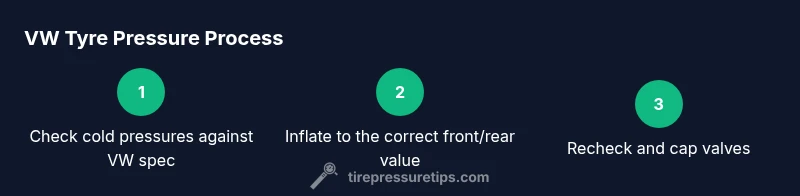
Collect a digital gauge, an inflation source, and your VW’s placard or manual. Identify the recommended cold tire pressure for the front and rear tires before you begin. Knowing these numbers upfront saves time and prevents guesswork.
Tip: Having the exact spec in hand prevents over- or under-inflation mistakes. - 2
Check tires when cold
Park in a shaded, level area and wait for tires to cool if they’ve been driven recently. Remove the valve caps and take initial readings for all four tires with the gauge. Record any tire that reads below the VW spec.
Tip: Cold readings are the most accurate; driving warms tires and skews results. - 3
Inflate to the correct spec
Add air gradually to each tire until the reading matches the front or rear specification on the placard. Use steady, small bursts to avoid overinflation and check again with the gauge.
Tip: If you encounter a slow leak, pause and troubleshoot rather than forcing air in. - 4
Recheck and adjust as needed
Recheck all four tires after inflation. Confirm that each matches its designated spec. Replace valve caps firmly and clean any debris near the valve stems.
Tip: Rechecking prevents subtle slow leaks from going unnoticed. - 5
Record and monitor
Note the date and readings in your maintenance log. If the readings trend downward over weeks, inspect for punctures or leaks, or consider a professional inspection.
Tip: A simple log helps you catch slow leaks early. - 6
Reassess after loading or temperature changes
If you regularly carry heavy loads or drive in varied temperatures, recheck after changes in load, route, or season to ensure continuous safety.
Tip: Temperature swings can quietly affect tire pressure; monitor accordingly.
Frequently Asked Questions
What is the recommended tyre pressure for VW models?
The recommended pressures depend on the model and tire size. Always consult the VW placard on the driver’s door jamb or the owner’s manual for the exact front and rear values.
Check the placard or manual for the exact VW pressure values for your model.
Why does the TPMS light come on even if the tires look normal?
TPMS can illuminate due to even a small pressure drop, sensor faults, or recent wheel changes. Use a gauge to verify actual pressures and inspect sensors if readings are inconsistent.
TPMS can trigger from small pressure changes or sensor problems; verify with a gauge.
Can temperature changes affect tyre pressure?
Yes. Colder temperatures lower tire pressure and heat can raise it. Check pressures when tires are cold and adjust for seasonal changes as needed.
Temperature changes can alter pressure; check when cold and adjust for seasons.
Should front and rear pressures be the same on all VW models?
Not always. Some VW models specify different front and rear pressures. Always follow the vehicle placard to set the correct values for each axle.
Different fronts and rears may be required; follow the placard.
What should I do if TPMS shows a fault?
If the TPMS warning persists, inspect tires for slow leaks, check sensors, and consider a professional calibration or sensor replacement if readings remain inconsistent.
If TPMS is faulty, check tires and sensors; consider professional service.
Do run-flat tires require different pressures?
Run-flat tires follow the same vehicle-specified pressures when the vehicle is not in a special mode; always verify on the placard and use a gauge for accuracy.
Run-flat tires follow the same specs; verify on the placard.
Watch Video
What to Remember
- Check cold pressures against VW specs before driving
- Use a reliable gauge and inflate gradually to target values
- Recheck after inflation and log readings
- Monitor changes with temperature and load
- Rely on TPMS, but verify with manual checks when needed