Tyre Losing Pressure Over a Week: Troubleshooting Guide
Urgent, practical guide to diagnosing tyre losing pressure over a week. Step-by-step checks, diagnostic flow, and safety tips from Tire Pressure Tips (2026).


Tyre losing pressure over a week is typically caused by a slow leak or valve issue rather than a sudden failure. According to Tire Pressure Tips, start with a visual check, then apply soapy water to locate leaks, and verify TPMS readings. Inflate to the correct PSI and monitor for new drops. If the leak isn’t obvious, seek professional assessment.
Why tyre losing pressure over a week happens
When a tyre loses pressure over a week, it's usually a sign of a slow leak rather than a sudden blowout. You may notice your daily driving feels less responsive, or the dashboard TPMS warning lights up intermittently as the pressure dips. According to Tire Pressure Tips (2026), the two most common culprits are a puncture that leaks slowly and a compromised valve stem. Environmental factors like temperature changes can exaggerate the loss, but a persistent drop deserves closer inspection. Start with a visual inspection of the tread and sidewall for nails, screws, or whisker-thin cracks. If you spot an object embedded in the tread, do not remove it unless you know you can repair the tire safely. A professional assessment is recommended if the object is large or the bead seating looks compromised. The goal is to determine whether the pressure drop is ongoing due to a leak, or if transient factors like seasonal temperature shifts are at play.
Common causes of slow pressure loss
Slow leaks have several reliable sources. A nail, screw, or piece of glass may puncture the tread and create a tiny leak that grows with every mile. A worn or damaged valve stem or core can leak air around the valve. Bead leaks occur where the tire bead seals against the rim; corrosion or improper seating here can produce a steady loss. A damaged wheel rim or a loose wheel nut can also let air escape around the bead. Temperature changes alone cause air to contract and expand; when it’s cold, pressure drops, but a week-long, continuous drop usually points to a leak. Finally, a failing TPMS sensor or a misread gauge can masquerade as a leak; verify with a physical gauge. Tire Pressure Tips Team notes that most leaks are repairable if detected early, but persistent drops require professional intervention.
How to spot leaks quickly
To locate a leak, inflate the tyre to the recommended pressure when cold, then inspect for bubbles using soapy water around the tread, sidewalls, valve stem, and bead area. A leak will produce continuous bubbles at the source. Gently tap the tire to locate slow leaks from the inside surface; you may hear hissing. If you find a visible puncture in the tread, assess repairability. Do not attempt to seal punctures larger than 6 mm; replace if necessary. Keep a spare tire or run-flat as a temporary measure while you arrange a repair. Always check the rim for cracks or corrosion, especially if you drive on salted roads.
How to test with a tire pressure gauge and TPMS
Use a high-quality gauge and measure after the tire has cooled for at least three hours or overnight. Record the PSI and compare to the vehicle’s recommended figure (in the owner’s manual or door jamb sticker). If the pressure continues to drop between checks, document the rate and seek professional help. For TPMS, ensure you’ve reset or recalibrated the system if you’ve inflated or rotated tires recently. A stuck or faulty TPMS sensor can misreport pressure; a technician can diagnose sensor power and position.
What to do if you can't locate the leak
If no leak is visible, consider a safe temporary fix: inflate to the recommended PSI and avoid driving long distances until inspected. You can use tyre sealant as a temporary measure only if the manufacturer permits it; many tires with sidewall damage should not be sealed. Replace or patch the tire only after a professional assessment. If a slow leak is confirmed but repairable, the patch or plug must be applied according to safety standards. In many cases, a separate rim or TPMS issue might be the cause.
Preventing future pressure loss
Regular checks help catch slow leaks early. Check tyre pressure monthly and before long trips, using a reliable gauge when tyres are cold. Be mindful of temperature fluctuations; in winter, your tyres can lose a few psi, so adjust as needed. Inspect valve stems and TPMS sensors during routine service. Rotate tires as recommended to prevent uneven bead seating. Keep metal rims clean and free of corrosion around the bead. If a puncture is repaired, ensure the tire repair is certified.
Steps
Estimated time: 60-90 minutes
- 1
Park safely and gather tools
Park on a flat surface, set the parking brake, and collect a trusted air pressure gauge, a soapy spray bottle, a tire iron, and a spare flashlight. Ensure you wear gloves and eye protection if you’ll be inspecting the wheel bead. This baseline setup helps you stay organized and safe.
Tip: Always work on cold tires and secure the vehicle before lifting. - 2
Check the tire when cold and record PSI
Inflate no more than necessary to reach the vehicle's recommended PSI, then read the gauge with the tire cold. Record the reading and compare to the door sticker. Note any rapid changes after a short drive, which may indicate a leak.
Tip: Use the same gauge for consistency and take measurements at the same time of day. - 3
Inspect for visible damage
Look for nails, screws, cuts, or embedded objects in the tread. Also inspect the sidewalls for cracks and the rim area for corrosion. Document any damage and avoid driving long distances if you suspect a big puncture.
Tip: Do not remove embedded objects unless you can safely repair the tire at the roadside. - 4
Apply soapy water to locate leaks
Dip a brush in soapy water and brush around the tread, sidewall, valve stem, and bead area. Look for continuous bubbles—this indicates a leak. If bubbles appear along the bead or rim, the leak may be from seating or the rim itself.
Tip: Wipe and dry the area after you find a bubble to confirm source. - 5
Assess repairability and fix or replace
If the puncture is in the tread and within repairable limits, patch from inside or plug as per safety guidelines. If the bead is compromised or the sidewall is damaged, replace the tire. For valve leaks, replace the core or stem with appropriate tools.
Tip: Follow manufacturer repair guidelines; some repairs invalidate tire warranty. - 6
Reinflate and verify
Inflate to the recommended PSI once more and recheck with the gauge. If the pressure holds, monitor for 24-48 hours. If it drops again, reassess or seek professional help.
Tip: Take a photo of the gauge reading for your records. - 7
Check TPMS readings
If you recently inflated, rotated, or repaired tires, reset or recalibrate the TPMS per the vehicle manual. A misread sensor can mimic a leak even when there is none.
Tip: Only reset TPMS after verifying tire pressure is correct. - 8
Decide on next steps
If the leak remains unresolved after these steps, schedule a professional inspection. Driving with an unresolved leak can lead to unsafe conditions and excessive wear.
Tip: Do not delay if you suspect bead or rim damage.
Diagnosis: Tire pressure drops gradually over a week despite regular inflation
Possible Causes
- highSlow puncture from nails, screws, or shards in tread
- mediumWorn, damaged, or loose valve stem core
- mediumBead seal leak around rim due to corrosion or improper seating
- lowTPMS fault or misread sensor/ transmitter
- lowTemperature-related air volume change (seasonal): cold weather
Fixes
- mediumInspect tire visually and locate the object; repair with patch/plug or replace tire if repairable
- easyReplace valve core or valve stem seal; reseat and recheck pressure
- hardInspect and refresh bead seating; clean rim, apply mounting lubricant, remount tire if necessary; consider rim repair if damaged
- easyReset or recalibrate TPMS; test sensor power and signal; replace faulty sensor if needed
- easyMonitor and adjust PSI with temperature changes; use cold-inflation, follow vehicle spec
Frequently Asked Questions
What are signs that my tyre is slowly losing air?
Slow air loss signs include a gradual dip in tire pressure over days, a subtle hissing sound, or frequent TPMS warnings. Always verify with a gauge when cold.
Look for a slow drop in air pressure measured with a gauge and occasional TPMS warnings.
Is a slow leak repairable or should I replace the tyre?
Many slow leaks in the tread are repairable with patches or plugs if rules permit. If the bead, sidewall, or structural integrity is compromised, replacement is safer.
Most slow leaks in the tread can be repaired, but damage to bead or sidewall usually means tire replacement.
Can temperature alone cause a week-long pressure drop?
Temperature changes can affect tire pressure, but a consistent, week-long drop usually indicates a leak rather than just cold weather.
Temperature affects air volume, but a continual drop typically signals a leak.
How often should I check tyre pressure?
Check tyre pressure monthly and before long trips, especially in extreme temperatures or after driving rains or snow.
Check monthly and before long trips, especially with big temperature swings.
What should I do if TPMS keeps warning even with correct pressure?
If the TPMS warns with correct pressure, reset the system and check sensors for faults or battery issues. A technician can diagnose sensor power and position.
Reset the TPMS and have sensors checked if warnings persist with correct pressure.
Is a sealant a safe long-term fix for leaks?
Sealants are typically temporary and may void tire warranty if not approved by the manufacturer. They should not replace professional repair for larger leaks.
Sealants are usually temporary; consult your tire professional for a proper repair.
Watch Video
What to Remember
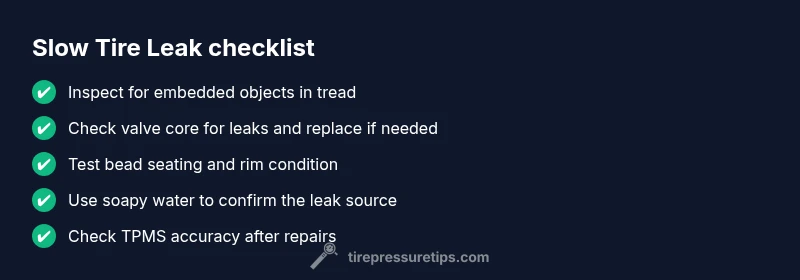
- Check for slow leaks first with soapy water.
- Document PSI changes to assess leak rate.
- Repair or replace if puncture or bead damage is found.
- Verify TPMS readings after any repair or inflations.
- Regular maintenance prevents future pressure loss.