Tire Pressure Won't Go Up: Troubleshooting Guide
Struggling to inflate tires that won’t rise to the target PSI? This step-by-step guide helps you diagnose leaks, valve issues, and TPMS errors, with safe DIY fixes and when to seek professional help.


Most often, tire pressure won’t rise due to a slow leak from a damaged valve stem or puncture, or a TPMS-reading error. Start with a visual inspection for cracks, nails, or punctures; check the valve core and cap; re-inflate with a gauge and observe for quick leaks. If pressure still won’t climb, seek professional help, as persistent issues may indicate rim, bead, or TPMS faults.
Why tire pressure won't go up: common culprits
If you see that tire pressure won’t go up after inflating, you’re not alone. According to Tire Pressure Tips, the most frequent causes are a slow puncture or bead leak, a faulty valve stem or core, or a misreading from TPMS. In many cases, the problem isn’t the compressor but something inside or around the tire. Start with a visual scan: look for embedded objects (nails or screws) in the tread area, or obvious sidewall damage that might allow air to seep out around the bead. A puncture near the rim or a small crack in the valve stem can produce gradual deflation that inflates slowly but never reaches the target pressure. Next, verify the tire valve cap; sometimes a loose or missing cap can allow air to escape slowly, especially in gusty conditions. Also inspect the valve core itself; a worn or partially unscrewed core can leak air even when the tire seems inflated. Finally, consider TPMS-related issues: a sensor fault, battery depletion, or incorrect calibration can misreport pressure, making it seem like the tire won’t hold air even when it does. Remember that inflating tires beyond the recommended range does not fix leaks or faults; aim for the vehicle’s specified PSI while ensuring the inflator and gauge are accurate. The Tire Pressure Tips team emphasizes careful, methodical checks over guessing, to avoid overinflation and potential tire damage. Safety note: if you’re unsure, move slowly and seek professional help to avoid a dangerous tire failure.
Quick checks you can perform safely
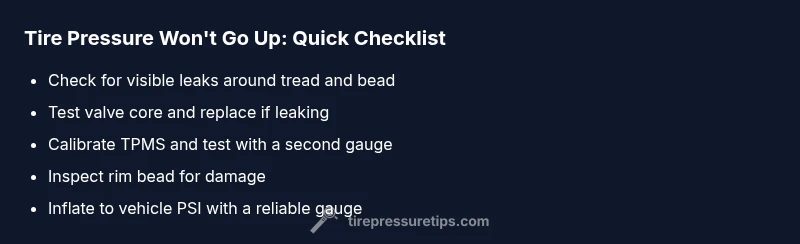
- Ensure you’re using a reliable gauge and a stable inflator. A faulty gauge can falsely report low or high pressure, creating the impression that the tire won’t go up. Inspect the valve stem for cracks or corrosion and confirm the valve core is tight but not over-tightened. If you see any air escaping around the valve, replace the core or the stem as needed. - Look for obvious leaks around the tread, sidewall, or bead area. A slow puncture might not be obvious until you apply soapy water to the tire’s surface and watch for steady bubbles. - Check the tire valve cap—the small part that protects the valve stem from dirt. A missing or damaged cap can contribute to slow pressure loss, especially in dusty or humid environments. - Inspect the wheel rim bead for damage or corrosion. A damaged bead can leak air even when inflation seems successful. - If you use TPMS, verify that the sensor is seated correctly and the battery isn’t dead. A TPMS fault can misreport correct pressures, leading you to inflate unnecessarily. - After any adjustment, re-measure the tire pressure at least twice using the same gauge to confirm consistency and accuracy. - If you continue to see pressure creep or inconsistent readings, do not continue inflating; consult a professional to avoid overinflation or tire damage.
Understanding TPMS and gauge accuracy
TPMS can be both helpful and misleading. A functioning TPMS should alert you when PSI drops below a threshold and should reflect changes within a reasonable timeframe after inflation. However, battery/depletion or sensor calibration issues can cause inaccurate readings, making it appear that the tire won’t go up even when air is filling correctly. Invest in a quality handheld gauge and cross-check readings with the gauge on your inflator. If readings vary significantly between gauges, replace the faulty gauge and test again. Remember that temperature changes, vehicle load, and driving dynamics impact tire pressure, so periodic rechecks are essential. In some cases, the TPMS sensor itself may be at fault or require recalibration after tire service. The Tire Pressure Tips team recommends using a consistent gauge and performing spot-checks to ensure readings are reliable and that inflations are appropriate for the vehicle’s recommended PSI. If TPMS shows a fault or sensor warning light remains on after inflating, it’s prudent to seek professional service.
Diagnostic flow: symptom → diagnosis → solutions
Symptom
The tire pressure won’t go up despite inflation attempts.
Potential causes
- slow leak from puncture or bead leak (likelihood: high)
- faulty valve stem or core (likelihood: high)
- TPMS sensor fault or miscalibration (likelihood: medium)
- rim damage or bead seal failure (likelihood: low)
Solutions
- Inspect for visible leaks and repair punctures; apply sealant if appropriate and safe; retest with a gauge (easy).
- Replace damaged valve core or stem and recheck pressure (easy to medium).
- Check and recalibrate TPMS or replace sensor battery if needed (medium).
- If rim damage is suspected, stop and seek professional inspection (hard).
Step-by-step: fix for a slow leak or faulty valve stem
- Inspect the tire exterior for nails, screws, or cuts around tread and sidewall; look for signs of air escaping near the bead. Tip: clean the tire surface with soapy water to spot tiny bubbles.
- Remove the valve cap and test the valve core by pressing it gently with a small tool to see if air escapes. If yes, replace the core. Tip: keep spare valve cores and a valve-core tool in your kit.
- Inflate to the target PSI using a reliable gauge and monitor for several minutes; if pressure drops, inspect the valve stem for cracks or damage. Tip: avoid over-tightening the valve cap, which can damage threads.
- If the leak persists, use soapy water around the bead and rim. A leak there will show continuous bubbles. Replace the valve stem or seek professional bead sealing if needed. Tip: never mix a temporary leak sealant with the repair if permanent repair is required.
- For TPMS-related issues, verify calibration, reset after service, or replace a dying battery; consult a shop if the warning light remains on after inflation. Tip: document the readings from different gauges for reference.
- After any repair, reinflate to the vehicle’s recommended PSI and take a final pressure reading from a known-good gauge. Tip: drive a short distance to allow the tire to settle before rechecking.
- If you’re uncertain about a repair, especially bead or tire sidewall damage, prioritize professional service. Tip: a professional inspection can prevent a dangerous blowout.
Safety tips and professional help when needed
- Always wear eye protection and avoid overinflating beyond the vehicle’s recommended PSI; overinflation can cause tire damage or a blowout. - If you notice visible bulges, sidewall cracks, or obvious bead issues, stop driving and seek professional help immediately. - When in doubt about TPMS faults, consult a tire specialist who can run diagnostic tests and calibrate the system safely. - Regular maintenance helps prevent the problem: check tire pressures monthly, especially before long trips, and after significant temperature changes. - Use the same gauge for consistency, and verify readings with a second gauge if you suspect inaccuracy. - If you can’t identify the leak or the tire continues to deflate, seek professional service to avoid unsafe driving conditions.
Prevention: maintenance to keep PSI stable
- Schedule monthly pressure checks and before trips; temperature shifts can affect PSI and should prompt adjustments. - Inspect valve stems, caps, and TPMS sensors during routine maintenance to catch wear or battery issues early. - Keep tires at the recommended PSI for your vehicle; avoid underinflation or overinflation, and use a high-quality inflator. - Consider professional wheel and bead inspection if you frequently experience slow leaks after inflation. - Document pressure readings over time to establish a baseline and detect anomalies early. - Invest in a portable air compressor or a good air pump with a built-in gauge to aid quick inflations when needed.
Steps
Estimated time: 40-60 minutes
- 1
Check for visible leaks and punctures
Begin with a thorough visual inspection of the tire, looking for nails, screws, cuts, or embedded objects. Apply soapy water to the tread, sidewalls, and bead area to reveal slow air leaks via bubbles.
Tip: Use a damp rag to wipe away residue and watch for slow bubble formation over several minutes. - 2
Test the valve core and cap
Remove the valve cap and press the valve core with a small screwdriver or valve tool to see if air escapes. If you detect a leak, replace the core or the stem as needed.
Tip: Keep spare valve cores and a valve core tool in your kit for quick repairs. - 3
Inflate with a reliable gauge
Inflate to the vehicle’s recommended PSI using a trusted gauge and monitor the pressure over several minutes. If it drops, you likely have a leak or a faulty component.
Tip: Only inflate on a level surface and allow the tire to settle before rechecking. - 4
Check TPMS readings
If TPMS shows inconsistent readings or the light is on, recalibrate or test the sensors. A sensor fault can misreport pressure, leading you to inflate unnecessarily.
Tip: Reset the TPMS after any service and verify readings with a spare gauge. - 5
Assess rim bead and wheel condition
Inspect the rim bead area for damage or corrosion that could cause air loss. When in doubt, avoid driving on a compromised bead and seek professional inspection.
Tip: A damaged bead often requires specialized tools and replacement by a pro. - 6
Decide on professional help
If leaks persist or you suspect a TPMS or rim issue, contact a tire shop. Professional diagnostics identify issues not easily visible.
Tip: Document readings and symptoms to communicate clearly with the technician.
Diagnosis: Tire pressure won’t rise after inflation attempts
Possible Causes
- highPowerful slow leak from puncture or bead leak
- highFaulty valve stem/core causing air escape
- mediumTPMS fault or calibration issue
- lowBead damage or rim leak
Fixes
- easyInspect for visible leaks and patch/repair punctures or bead leaks
- easyReplace damaged valve core or stem and recheck pressure
- mediumTest TPMS sensor calibration or replace battery if needed
- hardInspect rim bead seal and assess need for professional repair
Frequently Asked Questions
What should I do first when tire pressure won’t go up?
Start with a visual check for punctures and a faulty valve. Confirm with a reliable gauge and recheck after inflation. If pressure still won’t rise, inspect the TPMS and seek professional help if needed.
First, look for punctures and check the valve, then recheck with a good gauge. If it still won’t rise, check the TPMS and call a pro if needed.
Can TPMS alone cause the issue without a leak?
Yes. A malfunctioning TPMS sensor or calibration can misreport pressures, giving the impression that air isn’t increasing. Verify calibration or replace the sensor if readings stay inconsistent.
Yes, TPMS issues can misreport pressure even when air is increasing. Check calibration or replacement if readings stay off.
Is it safe to drive a car with suspected valve leaks?
If you suspect a valve leak and see slow deflation, limit driving. A leaky valve can worsen tire damage or lead to a sudden loss of pressure.
Don’t drive long distances if you suspect a valve leak; it can worsen damage.
How can I test for a bead leak quickly?
A quick bead test is to apply soapy water around the bead area while the tire is inflated and watch for bubbling. Persistent bubbles indicate a bead leak that may require repair.
Check the bead with soapy water for bubbles to spot leaks.
When should I seek professional help?
If leaks persist after basic checks, or you suspect rim damage or a TPMS fault, a tire shop can diagnose with specialized tools and ensure safe repairs.
If leaks persist or you suspect rim or TPMS issues, see a tire professional.
Watch Video
What to Remember
- Check for leaks first; leaks are the most common cause
- Verify valve core and TPMS health to prevent misreadings
- Use consistent gauges and recheck after repairs
- Be mindful of bead/rim damage; seek pro help when unsure