Tire Pressure Up and Down Troubleshooting Guide
Learn how to diagnose and fix tire pressure up and down, interpret TPMS alerts, locate leaks, and stabilize pressure with practical steps from Tire Pressure Tips.


If tire pressure up and down is happening, start with the simplest checks: verify baseline pressure when cold, inspect for visible damage, and test with a calibrated gauge. Most common causes are slow leaks from nails or punctures, a faulty valve stem, or a loose tire bead. After quick checks, recalibrate TPMS and recheck pressure after a short drive.
Why tire pressure up and down matters
According to Tire Pressure Tips, fluctuating tire pressure can affect handling, fuel economy, and tire wear. When pressure varies, tires may not contact the road evenly, reducing grip and increasing the risk of blowouts in extreme conditions. Understanding why your tire pressure up and down happens helps you respond quickly and safely. Regular monitoring protects your tires and improves mileage, braking, and overall control. Proactive checks reduce the chance of unexpected flats, improve steering feel, and keep TPMS warnings from becoming a routine nuisance.
Common causes of fluctuating tire pressure
Several common culprits cause tire pressure to change unexpectedly: slow leaks from nails, punctures, or internal bead leaks; a faulty or aging valve stem; a loose or leaky wheel rim seal; and issues with the TPMS itself. Tire Pressure Tips analysis shows that temperature and road conditions also play a major role in pressure changes, making a single measurement unreliable. Inspect the tire surface for nails or screws; check the valve stem for cracks; examine bead seating at the rim; and ensure the wheel is clean and free of debris. If you find damage beyond simple fixes, replacement may be required, and you should avoid driving on a compromised tire.
The role of temperature and weather in tire pressure
Ambient temperature swings cause air inside the tire to expand or contract, which translates to higher or lower PSI readings. In cold mornings, you might see a noticeable drop, while a warm afternoon can raise the pressure. Long drives and heavy loads also contribute to incremental increases. Because of these effects, it's important to measure pressure when the tire is cold and after allowing time for the tire to cool post-drive. Always compare against the vehicle’s recommended PSI rather than chasing absolute numbers. Temperature is a major driver of observed fluctuations, so plan checks around weather and daily temperature cycles.
How to measure and verify pressure accurately
Use a calibrated digital or dial gauge for precise readings, and check both front and rear tires. Park on a flat surface and allow the tires to cool for at least three hours or drive less than a mile since last measurement. Remove the valve cap, place the gauge on the valve stem, and take a reading. If the reading differs significantly from the recommended PSI, adjust by inflating or deflating gradually until you reach the target. Repeat the measurement after a short drive to confirm stability. Consistency matters, so use the same gauge and measurement conditions each time.
Diagnostic approach: from symptoms to solutions
Start with the simplest signs: a sudden drop after overnight rest, or a minor loss after a long drive suggests a leak or slow puncture. If a tire is visibly deflated or the bead seal looks compromised, address that first. If all tires appear normal, consider TPMS calibration or sensor failure. Temperature changes can mimic a leak; validate by measuring in a consistent environment and after a cooldown period. Use soapy water to locate leaks if you suspect one. Document any consistent oscillations to discuss with a professional.
Step-by-step fixes for the most common causes
- Locate the source of the leak: inspect the tire, rim, valve stem, and bead area for damage. 2) Patch or plug a nail wound if found in the tread; assess whether a temporary tire repair is feasible or if full replacement is needed. 3) Replace a faulty valve stem and ensure the core is tight. 4) Re-seat the tire bead on the rim and clean the rim surface before inflation. 5) Refill to the recommended PSI for each axle and tire size. 6) Recheck pressure after a brief drive and again after cooling. Pro tip: if you detect a rapid or persistent loss, seek professional service promptly.
Safety considerations when inspecting tires
Never exceed the tire’s maximum PSI printed on the sidewall and avoid overinflation, which can cause blowouts. If you're not comfortable inspecting the tire bead or replacing a valve stem, call a mobile tire service or bring the car to a shop. When performing repairs, use proper jacks and wheel chocks, wear eye protection, and keep hands away from rotating components.
Long-term maintenance to keep tire pressure stable
Create a routine: inspect tire pressure monthly and before long trips, especially in extreme heat or cold. Keep a portable tire gauge in your glovebox and use it to track changes over time. Ensure TPMS sensors are functioning by testing at least once a season or after any tire service. Maintaining clean, properly seated rims helps avoid bead leaks, and using good-quality tires reduces the likelihood of slow leaks. The Tire Pressure Tips team recommends regular checks and TPMS monitoring to keep tire pressure up and down within safe limits.
Steps
Estimated time: 30-45 minutes
- 1
Check baseline pressure when cold
Park on a level surface and measure all tires before driving for the day. Record psi from a calibrated gauge. Compare to the vehicle's recommended psi printed on the door placard.
Tip: Use a cold measurement for accuracy; wait at least 3 hours after driving. - 2
Inspect tires for visible damage
Look for nails, screws, cuts, bulges, or sidewall cracking. A slow puncture often starts small and grows over days.
Tip: If you see damage, stop driving and assess repair options. - 3
Check valve stems and cores
Remove the valve caps, press the center pin to confirm air escapes only slowly. Replace faulty stems or seals as needed.
Tip: Tighten the valve core with a proper wrench; avoid overtightening. - 4
Test the TPMS sensors
If a TPMS warning persists, drive to trigger the system after pressure is near target; if not, TPMS calibration may be required.
Tip: Consider professional TPMS calibration if warnings persist. - 5
Re-seat bead or rim if needed
An improper bead seal can cause slow leaks. Clean the rim and ensure the tire bead sits evenly around the rim.
Tip: Only attempt bead work if you have the right tools to prevent rim damage. - 6
Inflate to recommended PSI and verify
Inflate to the vehicle's recommended PSI for each tire; recheck after a short drive and cooldown.
Tip: Avoid inflating beyond the max sidewall PSI.
Diagnosis: Tire pressure fluctuates between readings or triggers TPMS warnings inconsistently
Possible Causes
- highSlow leak from nail, puncture, or bead leak
- mediumFaulty/aging valve stem or core
- lowLoose or damaged wheel bead seal
- mediumTemperature-related changes (ambient heat/cold)
Fixes
- easyInspect tire surface, look for punctures or bead leaks; use soapy water to locate slow leaks
- easyReplace faulty valve stem or tighten the core; reseat valve cap securely
- mediumRe-seat bead on rim, clean rim seating surface, verify no debris or corrosion
- mediumPatch or plug nail wounds in tread if repairable; replace tire if needed
- hardCalibrate or replace TPMS sensor if warnings persist after inflation
Frequently Asked Questions
Why does tire pressure seem to fluctuate with temperature?
Temperature changes cause air to expand or contract, which affects tire pressure readings. Measure when tires are cold and account for ambient temperature when checking PSI.
Temperature changes make tire pressure go up or down, so check when tires are cold for accurate results.
What should I do if I find a slow leak?
Mark the tire, avoid driving long distances, and inspect for punctures. Patch or plug if repairable; replace the tire if necessary.
If you suspect a slow leak, stop driving if the tire deflates noticeably and get it inspected.
When should I replace TPMS sensors?
If warnings persist after inflating to the target PSI, check calibration and battery; replace the sensor if needed.
If the TPMS acts up, have the sensor and battery checked and replaced if required.
Can I drive on a slightly low tire?
Driving on a low tire can affect handling and increase heat buildup. Reinflate to the recommended PSI as soon as possible and avoid long trips.
Avoid driving long distances on a low tire; re-inflate to the recommended PSI quickly.
How often should I check tire pressure?
Check at least monthly and before long trips, especially in extreme temperatures or after tire service.
Check your tires at least once a month and before road trips.
Watch Video
What to Remember
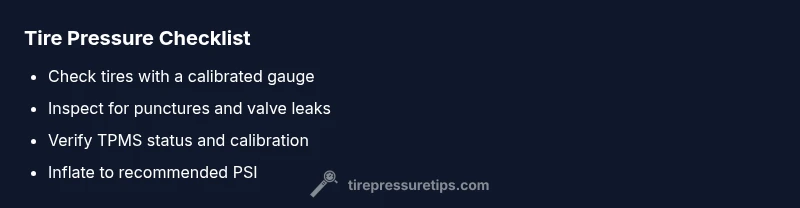
- Measure pressure when cold for accuracy.
- Inspect for leaks and damaged valve stems.
- Recalibrate TPMS after any pressure change.
- Maintain consistent pressures with regular checks.