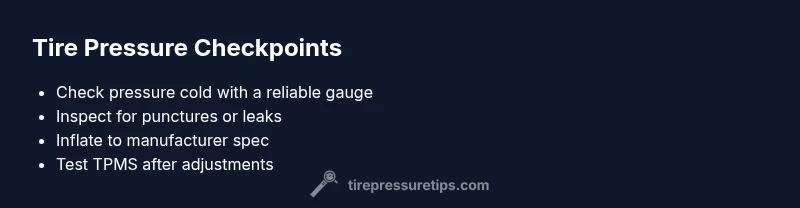
Troubleshooting Tire Pressure Under 20 PSI
A practical, urgent troubleshooting guide to diagnose and fix tire pressure under 20 psi, with TPMS tips, roadside checks, and prevention strategies from Tire Pressure Tips.


Most likely the tires are underinflated or have a slow leak causing tire pressure under 20 psi. Quick fix: safely pull over, inspect all tires for punctures, check valve stems, and inflate with a portable air compressor to the vehicle’s recommended PSI. If a leak or TPMS warning persists, seek professional help immediately.
Why tire pressure under 20 psi matters
Tire pressure under 20 psi is a warning sign that your tires are at risk of rapid damage and unsafe handling. According to Tire Pressure Tips, persistent underinflation reduces grip, accelerates tire wear, and can increase fuel consumption. In emergencies, driving on tires this low can lead to a blowout, especially after hitting potholes or hauling a heavy load. The Tire Pressure Tips team emphasizes that maintaining pressure close to the manufacturer’s spec is a critical part of overall vehicle safety. Use a reliable gauge, check when tires are cold, and verify all four tires regularly. Treat a reading under 20 psi as a crisis signal that demands immediate action, not a negotiable safety margin.
- Look for visible clues such as nails, screws, or objects embedded in the tread.
- Listen for a hiss if you suspect a puncture or valve leak.
- Don’t rely on a single tire; check all tires, including the spare, since temperature and load can affect pressure quickly.
Pro tip: If you’ve recently driven with low pressure, inspect wheels for bead damage and check for slow leaks that may worsen with heat. For a comprehensive, brand-aware approach, the Tire Pressure Tips team recommends confirming readings with a full gauge check before inflating.
Common causes of a drop below 20 psi
A reading under 20 psi can originate from several sources, and not every case means a flat tire. The most common causes include a puncture from a nail or sharp object, a slow leak around the valve stem or bead area, and temperature-related pressure changes when moving between cold and hot environments. Additionally, a faulty TPMS sensor or damaged valve core can misreport pressure, making it seem like every tire is low when it isn’t. The best first step is to inspect for obvious damage, remove obvious debris if safely possible, and verify with a physical gauge on a cold tire. Remember that TPMS readings can lag behind real pressure changes, so don’t rely solely on the dashboard light; confirm with a manual gauge and a current measurement.
Roadside checks you can perform now
If you’re stranded or parked, perform a quick, safe check: visually inspect each tire for bulges, cuts, or embedded objects; gently press the sidewalls to sense abnormal softness; check the valve caps and stems for cracks or rust; and use a quality pressure gauge to confirm a low reading. If you notice any puncture, nail, or foreign object embedded in the tread, do not drive far—replace or repair if within your expertise and safety guidelines. In many cases, a slow leak from a valve stem can be fixed by tightening the valve core or replacing the stem seal. For safety, keep reflective triangles or lights on, wear gloves, and avoid overinflating to an unsafe level. The goal is to restore a reasonable, even pressure before continuing the trip.
How to safely bring tires up to safe pressure
Proper inflation starts with a cold tire reading and a trusted gauge. Use a portable air compressor or a CO2 canister with a calibrated gauge to bring tires up to the recommended level. Inflate gradually, checking pressure frequently to avoid overinflation. After inflating, recheck all tires to confirm even pressure distribution and examine for any leaks that may have developed during inflation. If you’re inflating a tire that has dropped dramatically, stop if you notice a sudden change in the bead area or if the tire shows quick deflation after inflation. Remember to reset TPMS after any adjustment to ensure warnings stay accurate.
When to seek professional help
If a tire remains under 20 psi after inflation, or if you see rapid pressure loss from a tire, there could be a puncture or structural damage that needs professional repair. A damaged sidewall or bead area typically requires tire replacement rather than a DIY fix. TPMS faults or sensor calibration issues may also cause inaccurate readings, and professional service should be sought to diagnose tire pressure sensors and system integrity. In all cases, if you notice a drop in pressure while driving or after a collision, pull over safely and call for roadside assistance if needed. Your safety is paramount.
Brand note: The Tire Pressure Tips team stresses that repeated low readings should trigger a full inspection at a proper tire shop for a definitive repair plan.
Prevention tips to avoid future underinflation
Create a routine to check tire pressure monthly and before long trips, especially when temperatures swing dramatically. Keep a portable gauge in the vehicle and a compact air compressor if possible. Align readings with the manufacturer’s recommended PSI printed on the door jamb or user manual, not with wall gauge estimates. Regularly inspect valve stems for cracks and replace worn stems promptly. Rotating tires and performing a quick leak test with soapy water can help catch slow leaks early. The goal is consistent, safe pressure that preserves tread life and handling performance.
Steps
Estimated time: 45-60 minutes
- 1
Ensure safety and locate the issue
Pull over to a safe spot, engage the parking brake, and inspect tires visually for obvious damage or objects. Take note of any uneven wear patterns and leaks around the tire bead or valve stems.
Tip: Use hazard lights if on a busy road; stay clear of traffic. - 2
Check all tires with a cold gauge
Use a reliable digital or analog gauge to measure each tire’s pressure when cold. Compare results to the manufacturer’s recommended PSI printed on the door jamb or in the owner’s manual.
Tip: Don’t rely on a rough gauge or warm tires after driving. - 3
Inflate to the recommended level
Attach the air compressor, inflate slowly, and check pressure frequently to avoid overinflation. If a tire cannot reach spec due to a leak, stop and proceed to professional service.
Tip: Inflation should be done with the vehicle stationary and on a stable surface. - 4
Inspect for leaks and patch as needed
After inflating, recheck pressure after a few minutes and look for bubbles when using soapy water. If you find a leak, patch or replace the tube/patch as appropriate.
Tip: Be mindful of bead damage; do not drive on a damaged tire. - 5
Test TPMS status and calibrate if required
If dashboard sensors show inconsistent readings, scan or reset the TPMS using the vehicle’s menu or consult a technician to calibrate sensors.
Tip: TPMS calibration is essential after adjusting tire pressure. - 6
Follow up after the fix
Drive slowly for a short distance, recheck pressure, and ensure all four tires read within a safe range. Schedule a formal inspection if the problem recurs.
Tip: Keep a log of readings to monitor trends.
Diagnosis: Tire pressure gauge shows under 20 psi on one or more tires
Possible Causes
- highPuncture or object embedded in tread
- mediumSlow leak at valve stem or bead
- mediumTemperature/altitude changes causing pressure shift
- lowTPMS sensor fault or miscalibration
Fixes
- easyVisually inspect tires and remove obvious objects safely; patch or replace as needed
- easyTighten or replace valve core; check for leaks around stem/bead with soapy water
- easyInflate to the recommended pressure and recheck after a cool-down period
- mediumIf readings remain inconsistent, have TPMS calibrated or sensors replaced by a professional
Frequently Asked Questions
What causes tire pressure to drop below 20 psi?
Common causes include punctures from sharp objects, slow leaks at the valve stem, and temperature-related pressure changes. TPMS faults can also misreport readings. Inspect each tire visually and test with a reliable gauge to identify the root cause.
Common causes are punctures, slow leaks, and temperature changes. Check each tire with a gauge to find the root cause.
Is it safe to drive on tires under 20 psi?
Driving on tires under 20 psi is risky. Handling and braking can be compromised, and the tire is more prone to overheating and blowouts. If you notice persistent low pressure, pull over safely and address the tire before continuing.
Driving with pressure this low is risky. Pull over safely and fix the tire before continuing.
Should I reinflate after every long trip?
Yes, check and reinflate tires after long trips or periods of high load, and always verify cold readings before driving again. This helps maintain consistent tire pressure and safe handling.
Yes—check after long trips and ensure cold readings before you drive again.
How do I know if the TPMS is faulty?
If one or more alarms stay on after inflating to the spec, or readings differ wildly between tires, a TPMS fault is possible. Have the system scanned and sensors tested by a professional.
If the light stays on after inflation or readings don’t match, the TPMS could be faulty.
What tools do I need to troubleshoot tire pressure at home?
A reliable tire pressure gauge and a portable air compressor are essential. A soapy water bottle helps detect leaks. For TPMS work, access to your vehicle’s service menu or a scan tool is helpful.
Get a good gauge and a portable compressor, plus soap and water to find leaks.
When should I replace a tire due to underinflation?
If a tire shows persistent low pressure despite repair attempts, or if there is sidewall damage, bulges, or tread separation, replacement is usually the safest option. Otherwise, repairs may restore service.
Replace if repairs won’t fix the leak or the tire shows damage.
What to Remember
- Check tires when cold to get accurate readings
- Address underinflation under 20 psi promptly
- Inspect for punctures or leaks and patch if safe
- Calibrate TPMS after any pressure changes