Tire Pressure Quick Fit: Quick, Safe Checks and Maintenance
Learn how to perform a tire pressure quick fit with a portable gauge and TPMS. This guide covers safety, tools, and best practices for quick, accurate tire pressure checks.


Tire pressure quick fit means performing a fast, safe check of your tire pressures using TPMS data or a handheld gauge, then adjusting to the manufacturer’s recommended values. You’ll need a reliable gauge, access to a compressor or inflator, and a written target PSI. This approach saves time on busy days while maintaining safety and efficiency.
The Why Behind Tire Pressure Quick Fit
Maintaining correct tire pressure is a cornerstone of vehicle safety, fuel efficiency, and tire longevity. A tires pressure that’s too low or too high affects grip, braking distance, and even wear patterns. The phrase tire pressure quick fit captures the idea of a rapid, repeatable check that you can perform during routine maintenance or travel without a lengthy service appointment. According to Tire Pressure Tips, the speed and accuracy of a quick fit approach rely on the right tools, a clear target pressure, and a consistent routine. Always start with cold tires because driving heat increases readings, and you want a resting baseline to guide your adjustments. For most passenger vehicles, the target PSI lives on the door placard or in the owner’s manual, with slight differences for front and rear tires and for loads.
The payoff is real: safer handling, better braking response, reduced risk of blowouts, and improved fuel economy when tires run at their optimal pressure. A quick fit cadence—weekly or every few weeks—helps catch slow leaks and seasonal changes before they become noticeable problems. Tire Pressure Tips emphasizes that speed should never trump accuracy; you want a fast check that you can trust. The integration of TPMS data with a physical gauge often provides the most reliable result, especially when you’re away from home and rely on a portable inflator.
The Quick Fit Mindset: Speed, Accuracy, and Safety
Quick fit isn’t about rushing the job; it’s about a disciplined approach that minimizes downtime while maximizing safety. The Tire Pressure Tips team recommends three guardrails: use a precise gauge (digital is preferred), read cold tires for accuracy, and compare the number to the vehicle’s target pressure rather than relying on a single measurement. This approach minimizes guesswork and helps you verify that your tires are within the manufacturer’s recommended range. You’ll also save fuel and improve tire wear by avoiding chronic underinflation or overinflation. When used consistently, quick-fit checks become a habit that your whole household can adopt. For drivers who commute long distances, a quick check before each week’s trips can catch issues early and prevent more serious tire problems on the road.
Practical notes for quick fit practice
- Always read cold PSI values for accuracy
- Check all tires, including the spare, if applicable
- Record readings to monitor trends over time
- Use TPMS as a reference, but verify with a gauge
- If you’re unsure, consult a professional rather than over-inflating or deflating aggressively
The Right Tools for a Fast, Reliable Read
A tire pressure quick fit relies on the right tools. You’ll want a reliable gauge (digital preferred for speed and precision), a stable inflator or access to an air source, and a copy of the manufacturer’s PSI targets. In a pinch, most modern cars display TPMS readings, but remember that TPMS can lag or give slightly different impressions than a direct gauge. The hardware you choose should be clean, calibrated, and capable of matching both low and high PSI values. A small notebook or a digital log is helpful for tracking changes over time and spotting slow leaks. Clarity in readings reduces the risk of overcorrection and makes the quick fit workflow dependable.
Integrating TPMS Data with a Manual Gauge
Smart drivers combine the convenience of TPMS with the accuracy of a physical gauge. Start by noting the TPMS-reported value, then use the gauge on each tire. If readings differ significantly from the target, top off or release air in small increments (1–2 PSI at a time) and recheck. This hybrid approach often yields the most accurate results quickly, especially on vehicles with unusual wheel setups or heavier loads. The Tire Pressure Tips team notes that keeping a consistent order (front left, front right, rear left, rear right) helps reduce confusion during quick checks, particularly in dim lighting or on windy days.
Step-by-Step Quick Fit Checklist
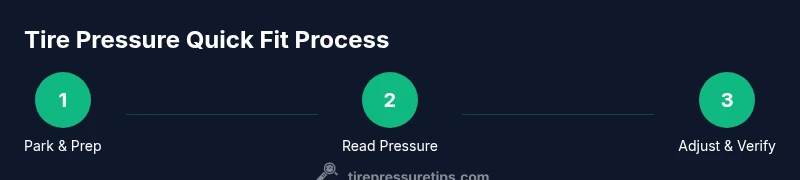
This section provides a concise, repeatable checklist you can apply in under 10 minutes in most cars. Start with a cold tire check, then verify and adjust as needed, and finally log the outcome for future reference. Remember: safety first. If you notice a rapid loss of pressure, a damaged valve stem, or a tire bead leak, seek professional assistance immediately.
Common Pitfalls and How to Avoid Them
Mistakes are common when performing tire pressure quick fit, especially when drivers focus on speed rather than accuracy. Common errors include reading a hot tire, inflating beyond the maximum tire pressure listed on the sidewall, and ignoring the differences between tire positions. Always verify with the placard values and never exceed the wheel’s rated maximum. In addition, inflated readings can be affected by ambient temperature, so consider the environment when you’re checking pressure.
Seasonal and Temperature Effects on Readings
Air pressure inside a tire changes with temperature: colder weather lowers PSI, while heat from driving raises it. Quick-fit checks are most accurate when tires are cold, ideally before you drive or after they’ve been parked for a few hours. In winter, you may see a drop in pressure as temperatures fall; in summer, readings may rise slightly with heat. The best practice is to check pressure at consistent times and to adjust for seasonal changes by pairing a scheduled check with a seasonal maintenance plan.
Building a Quick Fit Routine: Frequency, Records, and Safety
A recurring routine keeps your tires safe and efficient. Many drivers find that a 1–2 minute pre-trip check plus a weekly quick-fit review is enough to catch issues early. Keep a simple log of PSI readings, dates, and any maintenance performed. If you notice a persistent change in readings, you may have a slow leak or a faulty TPMS sensor. The goal is to convert a quick fit into a reliable habit that protects safety and saves money over time.
Real-World Scenarios: City Driving, Highway Trips, and Seasonal Shifts
Urban commutes with frequent braking and potholes can stress tires differently from highway cruising. Quick-fit checks are particularly useful in transition seasons when pressure can shift with temperature. For drivers who routinely carry heavy loads, the PSI targets may differ from standard values; always consult the placard for the vehicle’s designated pressure targets. The habit of quick-fit checks helps you adapt to these changing conditions without sacrificing safety.
Troubleshooting: When Readings Don’t Make Sense
If TPMS readings and your gauge readings disagree beyond a reasonable margin, recheck your gauge calibration, ensure the tire is fully seated, and inspect the valve stems for leaks. TPMS warnings may be triggered by low battery, sensor damage, or recent tire rotation. If you continue to see inconsistent data, seek professional assistance. A reliable quick-fit routine can still work, but two independent measurements may be necessary to confirm the current state.
Tools & Materials
- Digital tire pressure gauge(Calibrated and easily readable; prefer one that reads to 0.5 PSI.)
- Air compressor or access to air(City and highway trips will benefit from portable options at home or station outlets.)
- Vehicle placard or owner's manual(Used to confirm recommended PSI per tire position.)
- Notepad or digital log(Record PSI before/after adjustments and dates.)
- Tire chocks or sturdy parking brake(Safety measure to prevent rolling during checks.)
- Rag or paper towels(Clean valve stems before taking readings to ensure accuracy.)
Steps
Estimated time: Estimated total time: 15-25 minutes
- 1
Park on a flat surface
Park your vehicle on level ground and engage the parking brake. Ensure the engine is off and the tires have cooled for accurate readings. Locate the tire pressure targets from the placard or owner’s manual; note that front and rear tires may have different values.
Tip: Check cold tires for the most accurate baseline reading. - 2
Read current pressures with gauge
Remove the valve cap and press the gauge onto the valve stem firmly to get a reading. If using TPMS, note the dashboard reading as a reference. Record each tire’s reading before making any adjustments.
Tip: Wipe the valve stem before attaching the gauge to avoid debris affecting the reading. - 3
Adjust to target PSI
Add or release air in small 1–2 PSI increments. Recheck after each adjustment using the same tire. Do not exceed the target value shown on the placard or in the manual.
Tip: If overinflating, release air gradually and recheck to avoid underperforming tires. - 4
Recheck all tires
Repeat measurements for all four tires, and the spare if applicable. Ensure consistency across tires to maintain balanced handling. Re-check after any adjustment to confirm the final values.
Tip: Follow a standard order (front-left, front-right, rear-left, rear-right). - 5
Document results
Log the final PSI for each tire, the date, and the ambient temperature if you track seasonality. This helps identify leaks or sensor issues over time.
Tip: Keep the log in your car or a digital note so you can review trends later. - 6
Wrap up and review TPMS
If TPMS readings differ significantly from gauge readings, reset or recalibrate TPMS if you’re comfortable, or consult a technician. A consistent check routine minimizes surprises on the road.
Tip: A calibration check after tire changes or rotations is smart practice.
Frequently Asked Questions
How often should I perform a tire pressure quick fit check?
A quick-fit check is useful at least once a week, and before long trips. If you drive in extreme temperatures or carry heavy loads, check more often. Keeping a routine helps you catch leaks early and maintain optimal performance.
Check your tires weekly, and before long trips. In extreme weather or with heavy loads, check more often to catch leaks early.
What is the correct PSI for my tires?
The correct PSI is listed on your door placard or in the owner's manual; it varies by vehicle and sometimes by axle. Use that target and avoid relying on the tire's maximum pressure rating on the sidewall.
Use the target PSI from your placard or owner’s manual, not the tire’s maximum pressure.
Can I check tire pressure when tires are hot?
Checking hot tires can give you falsely high readings. Always check cold tires for the most accurate measurement, ideally after the car has sat for a few hours or after a brief drive when the tires have cooled.
Prefer cold tires for readings. Hot tires give inflated numbers.
What should I do if my TPMS reading seems off?
If TPMS readings seem inconsistent with a gauge, verify with a manual gauge on all tires. Consider sensor recalibration or replacement if disparities persist.
If TPMS and gauge disagree, double-check with a manual gauge and consider a sensor check.
Is it safe to inflate tires to the maximum sidewall pressure?
No. Do not inflate to the tire’s maximum sidewall pressure unless the placard specifies that value for your vehicle. The target is typically lower and designed for optimal performance and safety.
Don’t inflate to the max sidewall value unless your placard says so.
Watch Video
What to Remember
- Check cold tires for accurate readings
- Use a precise gauge and record results
- Adjust in small increments and recheck
- Log readings to spot leaks and TPMS issues
- Make quick-fit a regular habit for safety