tire pressure on vs off car: A Thorough Comparison
Explore how tire pressure changes when the car is on versus off, why it matters for safety and efficiency, and how to check and adjust pressure accurately in all conditions.


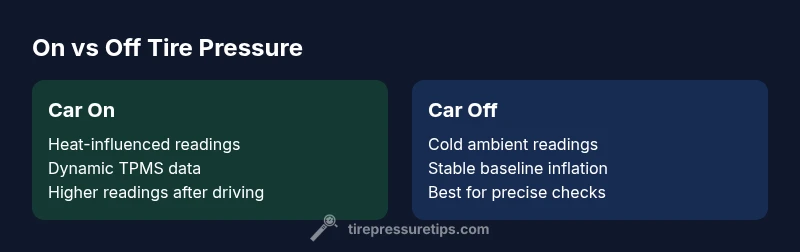
tire pressure on vs off car is not a fixed value. When the car is on, heat from braking, friction, and engine operation can raise tire pressure slightly, while when off and cold, pressures reflect ambient temperature. For most drivers, check tires when cold and aim for manufacturer-recommended pressures; use TPMS as a guide, not a sole source of truth.
tire pressure on vs off car: Why it Changes
The phrase tire pressure on vs off car captures a practical reality: tire pressure is dynamic and responsive to temperature, motion, and load. When a vehicle is parked and cool, the air inside the tires mirrors the ambient environment. After a drive, heat from road contact, braking, and engine heat raises air temperature inside the tires, increasing pressure. Understanding this dynamic is essential for a safe and efficient driving experience. According to Tire Pressure Tips, the most reliable way to gauge correct pressure is to measure when tires are cold and before any heavy use, then inflate to the recommended range. Keep in mind that the same tires can read differently on a hot day versus a chilly morning, so consistency in testing conditions matters for accuracy.
For drivers who ask about tire pressure on vs off car, the answer is not a single number but a set of conditions that influence readings. The goal is to maintain the recommended range under normal operating conditions, accounting for fluctuations caused by temperature, speed, and load. By embracing a systematic approach, you can prevent underinflation and overinflation that lead to premature wear, reduced fuel economy, and unsafe handling.
Reading and Interpreting Pressure: Cold vs Hot Readings
Pressure readings are not absolute unless you consider temperature and recent activity. A cold tire, typically after several hours of inactivity, will show a lower pressure than the same tire after a hot drive. This is not a failure of the gauge; it is basic physics. To avoid chasing a moving target, many drivers check tire pressure when the tires are cold and before the car has been driven for the day. When you drive, the air inside heats up and expands, temporarily raising the reading. If you inflate to the cold-reading target while the tires are hot, you may end up slightly overinflated once the tires cool down.
Practical tip: Always inflate to the cold-reading specification from the vehicle manufacturer, not to a hot-reading value. This simple rule helps align with the expected performance and wear patterns.
The Role of TPMS and On Vehicle Readings
Tire Pressure Monitoring Systems on most cars provide a live indication of pressure while the car is on and moving. TPMS values are influenced by rapid temperature shifts and dynamic loads; they are excellent for early warning but not a precise measurement under all conditions. When the car is off, TPMS sensors still hold data, but readings can drift if the tire is cold or hasn’t circulated air for a while. For best results, rely on manual gauges for precise checks and use TPMS as a safety net to flag underinflation or overinflation trends between checks.
How Driving Affects Pressure: Heat, Friction, and Load
When you drive, tires generate heat through rolling resistance and deformation. This heat increases air temperature inside the tire and raises pressure slightly. The longer and faster you drive, the more air expands, leading to higher numerical readings. While this is normal, it means that a single hot reading should not dictate inflations. The safe practice is to adjust pressure when cold, then recheck after you have driven a short distance to confirm you remain within the recommended range. Temperature and load conditions should be treated as the main influencers of pressure, alongside vehicle speed and tire wear.
Checking Techniques: Step by Step for Consistency
To achieve consistent results for tire pressure on vs off car, follow a repeatable process:
- Check tires when cold, ideally before a trip or after the car has sat for several hours.
- Use a high-quality gauge and record results for each tire.
- Inflate to the vehicle manufacturer’s cold inflation specification.
- Recheck after a short drive to observe how readings shift due to heat, adjusting if necessary.
- Don’t exceed the maximum pressure printed on the sidewall; stay within the recommended range for your vehicle and load.
Consistency is the foundation of reliable tire pressure management.
Seasonal Considerations and Temperature Effects
Temperature plays a major role in tire pressure variability. In cold weather, air contracts and pressure readings drop; in hot weather, air expands and readings rise. The same tire can show different values on a morning chill versus a mid-afternoon heat spike. For tire pressure on vs off car, this means scheduling checks in the same environmental window each season, and using the same gauge type to minimize measurement discrepancies. In climates with extreme temperature swings, check more frequently and adapt inflation targets within the manufacturer’s recommended range.
Practical Scenarios: Morning Routine, After a Long Drive, and Heavy Load
Morning checks usually show lower readings; after a long drive, the numbers rise due to heat. If you routinely drive with a heavy load or tow, you might see your pressures skew higher during and after use. The key is to base inflation on cold readings and adjust gradually when you expect changes due to load or temperature. By recognizing the pattern of tire pressure on vs off car, you can maintain optimal tire shape, even wear, and safer handling.
Safety Implications: Why Small Differences Matter
Underinflation causes higher rolling resistance, increased fuel consumption, and accelerated wear along the edges of the tread. Overinflation reduces the contact patch, diminishing grip and causing faster wear in the center. Both conditions can compromise steering response and braking, particularly in wet or icy conditions. Regularly checking tire pressure in relation to car state and environmental variables helps maintain consistent handling and safety.
Tools and Techniques: Getting Accurate Readings Every Time
Choose a gauge you trust and use it consistently. A digital gauge can be easier to read, while a dial gauge is robust and fast. Calibrate or verify gauges against a known standard periodically. Keep a small tire pressure log to track changes over time. By combining a reliable tool with disciplined checking, you’ll get meaningful readings regardless of whether you’re considering tire pressure on vs off car in a given situation.
Real-World Guidance: What to Do If Readings Don’t Match the Target
If your readings consistently differ from the target after cold checks, inspect for leaks, damaged valves, or damaged tires. A tire that won’t hold pressure or shows irregular readings may indicate a puncture, a failed valve stem, or a wheel rim issue. In such cases, seek professional inspection. Maintaining the target range under cold conditions remains the standard practice for long-term performance and safety.
Quick Reference: What to Remember
Always start with the manufacturer specification for cold tire inflation. Check when tires are cold, use a reliable gauge, and account for temperature and load. Remember that the car being on or off changes readings through heat buildup, but the recommended pressure remains a constant reference for safe, efficient driving.
Comparison
| Feature | Car On | Car Off |
|---|---|---|
| Typical reading shift due to heat | Readings rise with tire heat during driving | Readings reflect cold ambient conditions |
| Reliability for precise inflation | Moderate; influenced by temperature | High when tires are cold |
| TPMS behavior | Provides live pressure while driving | Sensor data is less dynamic when parked |
| Best time to inflate | When tires are cold and vehicle is stationary | After allowing tires to cool post-drive |
| Risk of underinflation | Increased risk when hot readings are used for inflation | Lower risk when cold readings are used |
Strengths
- Supports accurate inflation decisions when using cold readings
- Helps identify temperature-related changes that affect handling
- Encourages consistent maintenance habits and safer driving
Drawbacks
- Hot readings can mislead inflations if used in the moment
- TPMS readings may lag or vary with rapid temperature changes
Check tire pressure when cold; use TPMS as a safety check, not a sole guide
Driving warms tires and shifts readings; rely on cold-inflation targets for accuracy and safety. TPMS is useful for real-time alerts but may not match cold readings precisely.
Frequently Asked Questions
Why does tire pressure differ when the car is on compared to when it is off?
Tire pressure changes with temperature and load. When the car is on and tires heat up, air expands and pressure rises. When off, tires cool and pressure drops. Checking cold and inflating to the manufacturer’s cold specification helps ensure stable performance.
Pressure changes with heat. Check when cold to get the right target, then drive to see how readings shift.
Should I check tire pressure with the car on or off?
Always check tire pressure when the tires are cold and the car is off. This provides a consistent baseline. Use the TPMS as a supplementary monitor, not as the primary inflation target.
Check when cold, off the car. Use TPMS as backup information.
How does driving affect tire pressure during a trip?
Driving heats tires and increases pressure slightly. The longer and faster you drive, the more the pressure rises. Inflate to the cold target, then recheck after a short drive to confirm you remain within the recommended range.
Heat from driving raises pressure; recheck after a short drive.
Can TPMS readings be trusted when tires are hot?
TPMS provides valuable real-time alerts but can mislead if taken as exact inflation numbers during or after a run. Use manual gauges for precise checks when tires are cold.
TPMS helps monitor but isn’t exact during heat; verify with a gauge when cold.
What is the best practice for checking tire pressure in different seasons?
Check and inflate based on cold readings across seasons. Temperature swings can alter readings significantly, so adjust more frequently in extreme weather and always verify with a cold check.
Check cold; adjust for seasonal temperature swings.
Can low tire pressure cause incorrect TPMS readings?
Low pressure can trigger TPMS alerts, but it does not guarantee accurate static readings. Always verify with a handheld gauge when tires are cold and within the target range.
Low pressure triggers alerts; verify with a gauge when tires are cold.
What should I do if a tire never reaches the target pressure?
If inflation never stabilizes around the target, inspect for leaks, damaged valves, or a faulty sensor. Professional inspection is recommended to prevent unsafe driving conditions.
If pressure won’t stabilize, inspect for leaks or damage and seek professional help.
What to Remember
- Check tires cold before inflating
- Temperature drives pressure changes
- Use a reliable gauge and stick to manufacturer targets
- TPMS supports safety but not precise inflation
- Account for load and seasonal changes