Tire Pressure on Toyota Sienna: A Practical Guide
Learn how to check, maintain, and troubleshoot tire pressure on Toyota Sienna, with TPMS guidance, seasonal adjustments, and safety tips.


Learn how to check and maintain tire pressure on the Toyota Sienna, including using TPMS alerts, identifying the vehicle’s recommended PSI on the door placard, and understanding how load and temperature affect inflation. This guide helps you achieve safer handling, better fuel efficiency, and longer tire life. Follow the step-by-step process for accurate results.
Why Tire Pressure on Toyota Sienna Matters
Maintaining correct tire pressure is essential for safety, fuel efficiency, and tire longevity. For the Toyota Sienna, proper inflation supports stable handling, even tread wear, and optimal braking performance across families’ busy schedules. When tires run too low, rolling resistance increases, which can raise fuel consumption and heat buildup, potentially shortening tire life. Overinflation can reduce the contact patch, causing uneven wear and a harsher ride. According to Tire Pressure Tips, starting with the vehicle’s recommended PSI on the door placard and adjusting for load and temperature gives you a dependable baseline. Regular checks also help you spot slow leaks early, such as those from a nail or valve stem issue. In the context of a modern minivan, keeping all tires inflated to spec is part of routine maintenance that protects your family’s safety and budget. TEMPERATURE shifts, tire wear patterns, and curb hits can all impact inflation, so adopt a monthly check cadence and keep a small gauge in the glove box for quick readings.
In this guide, you’ll learn how to read the recommended PSI, when to compensate for heavy loads, and how to handle TPMS alerts. Tire Pressure Tips analysis shows that consistent inflation can improve ride quality and fuel economy in family vehicles like the Sienna. The goal is to create a simple, repeatable routine you perform before long trips or seasonal changes. Keep in mind the Sienna’s maintenance schedule and always verify the spec from the placard on the driver’s door jamb or owner’s manual. This approach reduces surprises on the road and supports safer driving for you and your passengers.
Tip: Always start with cold tires for accuracy, and never assume the pressure is correct after driving, since heat raises reading values.
Understanding the Sienna's Recommended PSI and How Temperature Affects Pressure
The Toyota Sienna’s recommended tire pressure is shown on the driver door jamb placard and in the owner’s manual. This value serves as the baseline for all four tires and accounts for typical passenger loads. Differences between front and rear tires are possible; some trims or configurations may have slightly different targets. Because tire pressure changes with temperature, readings taken after a drive will read higher than those measured when cold. On a cool morning, pressure will drop as tires cool, so it’s best to measure before driving or after the tires have cooled for several hours.
When the ambient temperature changes, expect a PSI swing. A general rule is that tires lose or gain pressure with temperature shifts, which is why many drivers check once a month and when the seasons turn. This is especially important for the Sienna used in family travel or towing, where axle loads and steering dynamics shift. If you notice frequent deflations, inspect the valve stem, wheel rims, and tires for leaks. Tire Pressure Tips recommends always using the placard PSI as your target and adjusting only for significant changes in load or climate. Although exact numbers vary by trim and wheel size, the core principle remains: start with the specified PSI and log any deviations that appear with seasonal temperature changes.
For tire safety and performance, center the tires on tread depth, inspect for irregular wear, and replace any tires showing signs of damage or aging. A consistent inflation approach aligns with best practices in tire maintenance, contributing to predictable handling and braking in a Toyota Sienna. If you’re unsure about your specific target PSI, refer to the placard or the owner’s manual and consult a trusted tire professional if needed.
Key concept: Temperature affects tire pressure, so plan for seasonal adjustments and always verify against the official PSI spec.
Checking Tire Pressure Correctly: Cold vs Hot, When and How
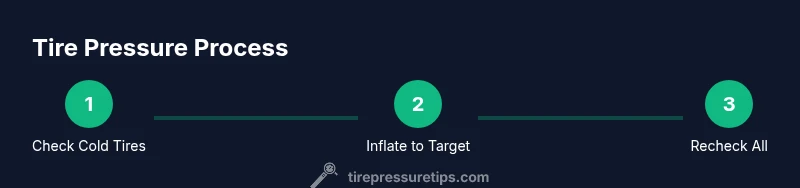
Check tire pressure when tires are cold—ideally after the vehicle has been stationary for at least three hours or before driving. Reading hot tires can give a misleadingly high reading because heat inside the tire expands the air, temporarily increasing pressure. To perform an accurate check:
- Gather the right tools: a digital gauge, a tire pressure gauge, and access to an air compressor or inflation station.
- Locate the tire pressure specs on the Sienna’s door jamb placard and cross-check with the owner’s manual for any trim-specific variances.
- Read all four tires and, if available, the spare. Compare each reading to the target PSI; if a tire reads significantly lower than the target, plan to inflate it soon.
If a tire reads low, don’t assume the same PSI for all tires—tactors like wear, load, and wheel size can change requirements. For accurate readings, remove any dirt around the valve stem, press the gauge evenly, and record the numbers for future checks. Regular checks help catch slow leaks caused by nails, valve caps, or bead seating issues. Tire Pressure Tips emphasizes building a consistent habit around cold readings to minimize variance and ensure you’re inflating to spec each time. Remember, the goal is to maintain even pressure across all tires to optimize ride quality and safety on your Sienna.
To confirm you’ve got the right PSI, compare your readings with the placard values and adjust with a compressor. If you’re using a regulated air source at a station, top off in small increments and recheck frequently to avoid overinflation. Maintain a log of readings to track any fluctuations over time, especially through temperature swings.
How to Inflate and Maintain Correct Pressure
Inflating to the correct PSI requires a reliable gauge and a steady hand. Start by identifying the exact target PSI for each tire, then use an air compressor to add air gradually. Check the pressure in 5-psi increments, pausing to read the gauge before adding more air. If you overinflate, release air in small amounts until you return to the target value. It’s crucial to equalize pressure across all four tires and ensure the spare also remains within the recommended range if you rotate tires regularly.
When the Sienna is loaded with passengers or cargo, you may need to adjust the target slightly higher within the allowed range. Always avoid inflating beyond the tire’s maximum rated pressure printed on the sidewall. Use a quality gauge for accuracy, and if you’re unsure about how to adjust for load, consult the Owner’s Manual or a tire professional. After inflating, recheck all tires to ensure the readings match your target PSI. A well-inflated set of tires improves fuel economy, handling, and braking performance, which is especially important for a family vehicle like the Sienna. Tire Pressure Tips recommends verifying pressures at the start of each season and before long trips as part of routine maintenance. This practice minimizes the risk of blowouts and uneven wear while promoting a smooth ride for all passengers.
Keeping your tires inflated to spec also helps maintain tire longevity. Check for leaks at the valve stem and wheel rim as part of your routine maintenance. If you notice rapid pressure loss, seek professional inspection for potential punctures or seal issues. Regular practice reinforces safer driving and reduces unexpected downtime.
TPMS: What It Measures and What to Do When It Alerts
Tire Pressure Monitoring System (TPMS) is designed to warn you when a tire’s pressure falls below the manufacturer’s specification. It does not replace the need to periodically check your tires with a gauge, but it’s a valuable early notice for underinflation or sudden leaks. If TPMS alerts you, first verify the reading with a manual gauge to confirm if inflation is required. If the pressure is low, inflate to the target PSI and recheck shortly after the tire cools. Inconsistent TPMS readings can indicate sensor issues, a slow leak, or a damaged stem—conditions that require inspection by a professional.
Be mindful that TPMS warnings may trigger after temperature changes or rapid driving, and they can be a reminder to inspect tires for punctures or damage. If you’ve had a recent tire change or rotation, ensure that TPMS sensor IDs are correctly programmed to your Sienna’s system. Tire Pressure Tips recommends pairing TPMS checks with manual readings for accuracy and to preempt any tire safety issues. In some cases, TPMS may display a low-pressure warning for tires that are just underinflated due to heat buildup after driving; recheck when the tires are cold to confirm the correct PSI.
Load, Winter, and Season Changes: When and Why You Should Adjust
Seasonal changes and heavier loads influence tire pressure. Cold temperatures typically cause pressure to drop, while hot weather can raise it. The Toyota Sienna is often used for family trips, and adding passengers or cargo increases the load, which can shift the optimal PSI slightly. If you frequently carry extra weight or trailer a load, consult your manual for a recommended adjustment range and avoid exceeding the tire’s maximum pressure. For winter driving, cold-season air is denser and can cause deflation; plan to check pressures more often during cold months and before trips in remote or low-temperature areas.
Keep in mind that tire pressure is not a static value; it responds to driving, temperature, and load. Tire Pressure Tips suggests maintaining a consistent, season-aware routine: measure cold tires, adjust to the placard value, then recheck after driving for a short distance to confirm stability. If you notice ongoing pressure changes in any tire, investigate for slow leaks, rim corrosion, or improper seating. Proper inflation aids not only safety and handling but also tire longevity and fuel efficiency, especially for a family vehicle like the Sienna.
A practical approach is to establish a monthly check cycle and a pre-trip check before long journeys. Document any deviations and track trends over time to decide when professional inspection is needed. Ensuring each tire remains within the recommended range sustains performance and reduces the risk of uneven wear.
Safety, Maintenance, and Common Mistakes
Inflating tires is a safety-critical task that requires attention to detail. Common mistakes include inflating all tires to a single, arbitrary pressure, neglecting to check the spare, or using a damaged gauge. Always verify the target PSI, especially after seasonal changes or heavy loads. Do not exceed the tire’s maximum pressure rating printed on the sidewall. Regularly inspect tires for signs of wear, cracking, or bulges and replace them when necessary. A clear maintenance habit—checking cold tires, using a reliable gauge, and rotating tires per the Sienna’s schedule—helps extend tire life and ensures optimal performance.
Tire Pressure Tips emphasizes documenting the target PSI for each tire and keeping a log of readings to monitor trends. This practice reduces surprises and supports safer driving, especially in family vehicles. Finally, if you notice persistent air loss, seek professional help to identify leaks, damaged valves, or faulty TPMS sensors. A proactive approach to tire pressure maintenance keeps your Toyota Sienna reliable and safe for daily commutes, road trips, and family adventures.
Tools & Materials
- Digital tire pressure gauge(Choose a gauge with a clear readout and a standard Ford-style Schrader valve; calibrate occasionally for accuracy)
- Air compressor or access to inflation station(Prefer a regulated compressor with a built-in gauge; avoid over-pressure by inflating in small increments)
- Owner's manual and door jamb placard(Use the placard values as the baseline PSI targets for each tire)
- Pen and notebook or mobile logging app(Record tire readings over time to monitor changes and identify slow leaks)
- Valve cap wrench (optional)(Useful for removing corroded valve caps during inspection)
Steps
Estimated time: 40-60 minutes
- 1
Locate the recommended PSI
Find the exact tire pressure targets on the driver’s door jamb placard and confirm with the owner’s manual for your Sienna trim. Note any differences between front and rear tires.
Tip: If placard numbers are faded, check the owner’s manual or a dealership service bulletin for your exact model year. - 2
Check tires when cold
Before driving, read all four tires with a reliable gauge. Cold readings are the most accurate and help prevent over- or under-inflation caused by recent driving warmth.
Tip: Allow at least 3 hours of rest for the tires or check first thing in the morning. - 3
Inflate to target PSI
If any tire is below the target PSI, inflate in small steps (2-3 psi increments) and re-check after each adjustment. Do not exceed the maximum tire pressure listed on the sidewall.
Tip: Use a regulated compressor to avoid sudden pressure surges that could damage the tire bead. - 4
Check all tires again
After inflating, recheck all four tires and the spare to ensure consistency. Evenly inflated tires deliver better handling and tire wear.
Tip: Rotate the tires if you’re at the service interval to maintain even wear. - 5
Test TPMS accuracy
If a TPMS warning occurs, verify with a manual gauge and re-check after temp changes. Confirm sensors and IDs are correct if warnings persist.
Tip: If TPMS warning persists after adjustment and cooling, seek professional inspection. - 6
Document and monitor
Record PSI readings for each tire and note any anomalies. A monthly log helps you spot slow leaks or irregular wear early.
Tip: Keep a spare tire pressure check routine to avoid last-minute surprises. - 7
Adapt for load and season
Increase target PSI slightly for heavy loads or towing within the recommended range. In cold weather, check more frequently as readings drop with temperature.
Tip: Seasonal checks before long trips can prevent tire-related delays. - 8
Reassess after replacement
When you replace tires, recheck pressures after the first 100 miles or 160 kilometers and adjust as needed to the placard specification.
Tip: New tires may settle; recheck again after the first heat cycle.
Frequently Asked Questions
What is the correct tire pressure for the Toyota Sienna?
The correct tire pressure for a Toyota Sienna is listed on the driver’s door jamb placard and in the owner's manual. Use that value as your baseline for all tires and adjust for load or temperature as needed.
Check the door placard for the exact PSI. Use that value as your baseline, and adjust for load or weather as needed.
How do I check tire pressure with TPMS and a gauge?
TPMS provides a warning when pressure is low, but you should still verify with a manual gauge. If TPMS alerts, read the tire with a gauge to confirm the exact PSI and inflate to the target.
TPMS warns you, but always verify with a gauge and adjust to the target PSI.
Can I drive with a low tire, and what are the risks?
Driving on a low tire increases the risk of a blowout, reduces handling, and can cause uneven wear. Inflate to the recommended PSI and inspect for leaks before continuing.
No—low tires are dangerous. Inflate to spec and check for leaks.
Should tire pressure be adjusted for heavy loads or towing?
Yes, you may need to adjust the PSI slightly upward within the recommended range when carrying heavy loads or towing, as indicated on the placard or owner’s manual.
Yes, load can require a higher PSI within the recommended range.
Does temperature affect tire pressure?
Yes. Colder temperatures cause PSI to drop, while heat raises it. Check pressures more often in extreme weather and recheck after the tires cool down.
Temperature changes affect PSI; check more often in winter and summer.
Where can I find the tire pressure targets for my Sienna?
Targets are on the driver’s door jamb placard and in the owner’s manual. If the placard is unreadable, contact a Toyota dealer or consult the manual for your year and trim.
Look at the door placard or the owner’s manual for exact numbers.
Watch Video
What to Remember
- Check cold tires against the placard targets.
- Use a reliable gauge and inflate in small increments.
- Recheck all tires after inflating and during seasons.
- Use TPMS as a safety check, not a replacement for gauges.
- Record readings to monitor wear and leaks.