How to Check Tire Pressure on Toyota Camry
Learn how to check tire pressure on Toyota Camry with a step-by-step method, the right tools, and tips to maintain optimal PSI for safety, fuel efficiency, and tire longevity.


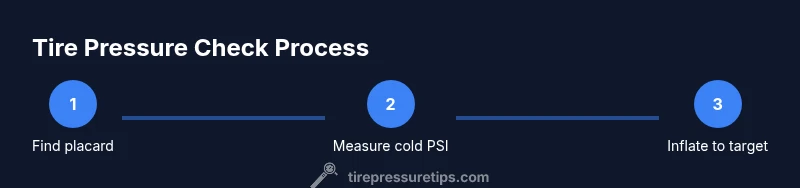
By following this guide, you’ll learn how to check tire pressure on Toyota Camry quickly and accurately. You’ll use a reliable gauge, read the cold PSI from the door placard, and adjust each tire as needed. The process also covers TPMS awareness, safe inflation practices, and how to log readings for ongoing maintenance. According to Tire Pressure Tips, regular checks save wear and fuel.
Why checking tire pressure matters on the Toyota Camry
Maintaining proper tire pressure is one of the simplest and most impactful maintenance tasks you can perform on a Toyota Camry. Correct pressure improves handling, braking, fuel efficiency, tire wear, and overall safety. Underinflated tires waste fuel and increase wear on the edges of the tread, while overinflated tires can reduce traction and create a harsher ride. For Camry owners, regular checks help ensure consistent performance across daily commutes, highway trips, and seasonal driving. The Tire Pressure Tips team emphasizes that even small pressure changes can alter ride quality and gas mileage, so a quick monthly check—and before long trips—adds up to meaningful long-term benefits.
Understanding Camry tire pressure: what to know
The official Camry tire pressure specification isn’t a guess; it’s printed on the vehicle’s door placard and in the owner’s manual. That placard lists the recommended cold PSI for both front and rear tires, and often shows a separate value for the spare tire. Camry models vary slightly by trim and wheel size, so always verify the exact numbers for your car. Reasonable expectations align with the placard rather than a generic target. If you’ve recently installed different tires or changed wheel sizes, recheck the recommended PSI; the Camry can respond noticeably to even small deviations. Reading the placard and understanding the difference between front and rear pressures helps you avoid over- or under-inflation and maintains even tire wear.
Cold tires vs warm tires: when to measure
Tire pressure is most accurate when tires are cold. A tire is considered cold when the car has been stationary for at least three hours or has driven less than a mile. Driving heats tires and inflates air inside, creating higher readings. If you’ve just driven, wait for tires to cool before measuring, or account for the heat by subtracting a few PSI as a rule of thumb. Temperature swings can cause noticeable fluctuations, especially in climates with extreme heat or cold. Regularly checking when cold ensures you’re inflating to the correct level rather than chasing a reading affected by recent driving.
Tools and environment you’ll need to perform a check
Set up in a well-lit, flat area away from direct sunlight or ant-free surfaces. You’ll need a few practical tools: a reliable tire pressure gauge (digital or analog), access to an air pump or compressor, the Camry’s door placard or owner’s manual, and a notebook to record readings. Keeping a small log helps you track readings over time and notice gradual changes. If you’re checking in winter, recognize that cold air reduces tire pressure and may require slightly higher inflations when temperatures rise.
Reading tire pressure with a gauge: what to look for
Begin by removing the valve cap from the tire valve stem. Press the gauge onto the stem firmly to get a crisp reading. Note the PSI on the gauge and compare it to the Camry’s recommended cold PSI from the placard. If you see a reading that’s below or above the target, you’ll inflate or let air out accordingly. Digital gauges provide a numeric readout, while analog gauges show a dial; both require clean valve stems and correct attachment to avoid leaks. If you’re unsure, retake the measurement to confirm accuracy, especially when readings are near the threshold between underinflation and overinflation.
Common mistakes that waste time or create risk
Common errors include inflating tires while they’re hot, not securing the valve cap, using a damaged gauge, and inflating beyond the placard value. Another frequent issue is neglecting the spare tire or treating all tires the same, even though front and rear pressures can differ in some Camry models. Temperature and wheel load influence readings, so consistency matters: measure the same tire types and ensure the ground is level when you measure. Avoid rushing; a deliberate check yields reliable results and safer driving.
Maintaining consistent tire pressure for safety and efficiency
Regular checks keep you aligned with the Camry’s designed performance. Consistency in tire pressure contributes to even tire wear, predictable handling, and better fuel economy. If you notice persistent changes in readings—rapid drops or unusually high numbers—there may be a slow leak, a damaged valve stem, or a TPMS fault. In such cases, inspect for punctures, cracked sidewalls, or leaking beads, and seek professional service if needed. Keeping tires properly inflated is a simple habit with meaningful long-term benefits.
Tools & Materials
- Tire pressure gauge (digital or analog)(Choose a gauge with a readable scale (20-60 PSI range covers most passenger tires); ensure it’s calibrated and undamaged)
- Air compressor or gas station inflator(Essential for adjusting readings promptly; portable options are convenient for home use)
- Owner’s manual or door placard(Contains the exact Camry recommended cold PSI for front and rear tires)
- Notebook and pen(Record readings, date, temperature, and any anomalies for trend tracking)
- Valve caps(Keep and replace after measuring to prevent dirt and leaks)
- Rag or brush(Wipe the valve stem to remove dirt and ensure a clean seal before measuring)
Steps
Estimated time: 15-25 minutes
- 1
Find the Camry’s recommended cold PSI
Locate the door placard on the driver's side door jamb and consult the owner's manual for the specified cold PSI values for front and rear tires. Write these numbers down if helpful, and note any differences between front and rear specifications.
Tip: If numbers differ by wheel size, use the value for your current tire size - 2
Prepare the car and tires
Park on a level surface, turn off the engine, and let the tires cool for at least three hours. Avoid inflating right after a drive to prevent reading inflated numbers due to heat.
Tip: If you’ve just driven, wait or measure after a controlled cool-down period - 3
Remove the valve cap from one tire
Gently twist off the cap from the valve stem and keep it in your pocket or a nearby container. Dirt on the valve stem can cause an inaccurate reading or a slow leak.
Tip: Keep the cap in a safe place to avoid losing it - 4
Attach the gauge and read the pressure
Press the gauge onto the valve stem firmly and read the PSI. Ensure a proper seal to prevent air escape while measuring. If using a digital gauge, note the numeric value; with an analog gauge, read the pointer against the scale.
Tip: Take a quick second reading to confirm accuracy - 5
Compare with the recommended value
Check whether the measured PSI falls within the target range for front or rear tires. If readings are low, you’ll add air; if high, you’ll release air until you hit the target.
Tip: Remember, consistency across tires improves handling and wear - 6
Inflate or vent to reach the target
If underinflated, use the air compressor to bring the pressure up in small increments, pausing to recheck after each addition. If overinflated, release small amounts of air and recheck.
Tip: Avoid overfilling in a single burst; small adjustments reduce overshoot - 7
Recheck all tires and reinstall valve caps
Repeat steps 3–6 for all tires (including the spare if you regularly monitor it). After final readings, replace the valve caps securely and wipe away any spilled moisture or dirt.
Tip: Double-check the spare if you carry one; it’s often overlooked - 8
Record readings and monitor over time
Log the date, tire pressures, and ambient temperature. If you notice a rapid change in one tire, inspect for leaks, punctures, or TPMS faults. Schedule a follow-up check if readings drift with the seasons.
Tip: A simple log helps detect slow leaks early
Frequently Asked Questions
How often should I check tire pressure on a Toyota Camry?
Check at least once a month and before long trips, especially when temperatures shift. Tires lose or gain pressure with temperature, and TPMS may alert you even if a quick manual check confirms the numbers.
Check your tires at least monthly and before long trips; temperature affects pressure, and TPMS is a helpful backup.
What should I do if the TPMS light stays on after inflating?
If the light remains on after inflation, inspect for slow leaks or damaged valve stems, and consider resetting the TPMS if your vehicle supports it. If the problem persists, have the system checked by a technician.
If TPMS stays on after inflation, check for leaks or faults and reset if applicable; otherwise seek a technician.
Can I check tire pressure when the tires are hot?
Measuring on hot tires gives inflated readings. Wait for tires to cool for accurate measurements, or account for heat by adjusting target PSI slightly after a drive.
Don’t check on hot tires; wait for them to cool to get accurate numbers.
Do I need to check the spare tire as well?
Yes, if you carry a full-size spare or if the spare is regularly rotated with the others. The spare should hold the same PSI as recommended for the other tires if used.
Check the spare too; it should be at the recommended level if you use it.
What if my gauge reads differently from the placard?
Take multiple readings to confirm accuracy, ensure the valve stem and gauge are clean, and re-measure after a few minutes to rule out transient errors.
If readings don’t match, take a few measurements to confirm accuracy.
Is nitrogen better than air for Camry tires?
For everyday driving, regular air is sufficient. Nitrogen can offer minor benefits in some conditions, but consistent PSI is the main factor for safety.
Air is fine for daily use; nitrogen isn’t a magic fix for most drivers.
Watch Video
What to Remember
- Check cold tires against the placard values.
- Use a reliable gauge and recheck after inflation.
- Inflate in small increments to avoid overshoot.
- Log readings for ongoing maintenance and safety.
- Address any persistent changes promptly.