Tire Pressure for Toyota Venza: Check, Maintain, and Troubleshoot
Learn how to check, adjust, and maintain tire pressure for Toyota Venza, including TPMS tips, load considerations, and seasonal guidance for safer, more efficient driving.


By the end of this guide, you’ll confidently manage tire pressure for Toyota Venza, ensuring even wear, better fuel economy, and safer handling. You’ll learn to locate the official cold-pressure specification on the door placard and in the owner’s manual, read TPMS alerts, and adjust pressure for load and temperature. This step-by-step approach also covers maintenance and troubleshooting essentials.
Why Tire Pressure Matters for Toyota Venza
Maintaining correct tire pressure is essential for safety, fuel efficiency, and even tire wear. For a crossover like the Toyota Venza, the right pressure helps with steering response, braking performance, and ride comfort across city streets and highways. According to Tire Pressure Tips, starting from the labeled cold pressure on the door jamb placard reduces axle-to-axle variation and produces more predictable handling in wet or slippery conditions. Pressure that is consistently too low or too high forces tires to deform differently under load, which can shorten tread life and increase the risk of blowouts at high speeds. In practice, you’ll notice steadier steering and better fuel economy when you maintain the recommended level for each axle. If you frequently carry a full load or take long highway trips, you’ll benefit from rechecking pressure after filling with luggage or passengers, because added weight changes the load distribution on the tires. This section lays the foundation for precise checks and adjustments that keep your Venza performing as designed.
Where to Find the Official Tire Pressure Specification for Your Venza
Every Toyota Venza has a recommended cold tire pressure value, often shown on a sticker inside the driver’s door or in the owner's manual. This specification is the baseline for daily driving and heavy-loading scenarios. Locate the placard on the door jamb of the driver’s side; it lists the front and rear tire pressures and sometimes a separate spare. If you’re unsure, consult the vehicle’s owner’s manual or the Toyota official website for your exact model year. No single universal number fits every Venza, because tire size, load, and even regional temperature can shift the ideal pressure. For example, a tire pair sized for a Touring trim might have a slightly different recommended pressure than the standard setup. Always verify the position-specific values: front-left, front-right, rear-left, rear-right, and spare. Regularly recording these specs helps you spot deviations quickly and keeps your maintenance consistent.
Understanding Vehicle-Specific Pressure vs. General Guidelines
General guidelines can point you in the right direction, but vehicle-specific numbers matter most. Toyota designs tire pressure targets for each axle to balance handling, load capacity, and tire wear. The Venza’s load distribution changes with passengers, cargo, and roof racks, which may shift the ideal pressure slightly from season to season. The TPMS (tire pressure monitoring system) is a helpful safety check, but it does not replace the requirement to know the correct cold pressures for your tires and model year. If a tire is newly mounted with a different tire size, or if you switch wheel types, recheck and reset the spec according to the new configuration. When in doubt, contact a Toyota service advisor or reference the latest owner resources. Your goal is to match the official specification as closely as possible for each tire position rather than chasing a universal number for all tires.
How to Check Tire Pressure: Tools, Steps, and Accuracy
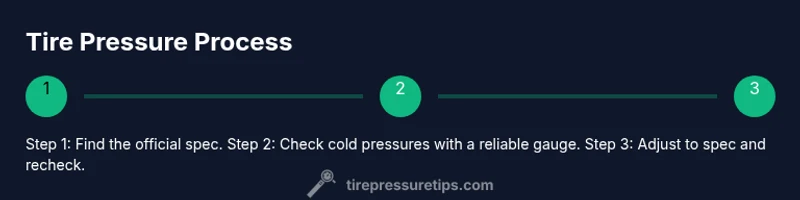
To measure tire pressure accurately, you’ll need a few reliable tools and a calm environment. Start with a proper tire pressure gauge—digital gauges provide easy-to-read numbers, while a good mechanical gauge is still perfectly adequate if used carefully. Before checking, ensure the tires are cold (they haven’t been driven for at least 3 hours). Remove the valve stem cap, press the gauge onto the valve, and note the reading quickly to minimize air loss. Repeat for all tires, including the spare if you keep one inflated for road trips. Compare your readings to the door placard values and adjust as needed by adding or releasing air in small increments. After adjusting, recheck the pressure to confirm it’s within the specified range. If your readings vary widely between tires, or if the gauge shows inconsistent numbers, recalibrate your tool or replace it. Record the results so you can monitor trends over time and catch slow leaks early.
Reading the Tire Pressure Label on the Vehicle
Your Venza’s tire pressure label is the quickest reference for the correct settings. The placard shows the required cold pressures for each axle, sometimes separated by tire size. If the label is difficult to read, photograph it with your phone for offline reference, then store the image in a dedicated maintenance folder. Note that different tires on the same vehicle can have different recommended pressures; never assume uniform values across all four corners. For most drivers, the front axle pressures are similar to, but not necessarily identical to, the rear axle pressures. Use the label as the baseline, then confirm with the owner’s manual for any unusual configurations or optional equipment, such as a spare or roof rack.
TPMS Basics: What Triggers Warnings and How to Respond
TPMS provides a critical safety check, but it doesn’t replace the need to verify exact pressures. On a Toyota Venza, a low-pressure warning will illuminate when one or more tires fall below the recommended value by a small margin. Depending on the system, the warning may illuminate after a short drive to prevent unnecessary nuisance alerts, so you should still stop and check when you see the light. If a tire is confirmed low, inflate to the specified cold pressure value and recheck after driving a short distance to ensure the system recognizes the change. If the TPMS warning stays on after inflation, there may be a sensor fault, a leak, or a damaged stem. In that case, consult a tire professional or Toyota service. TPMS calibration can be necessary after rotating tires, changing wheels, or servicing the TPMS sensor batteries. Always document your checks and keep a note of the warning history to spot recurring issues.
Adjusting for Load, Speed, and Temperature Changes
Your Venza’s tire pressures should reflect real-world conditions beyond the base spec. Heavier loads from passengers, cargo, or roof racks increase tire loading and can raise the far-edge temperature of the tires during operation. In warm weather, readings can trend higher, while cold weather lowers readings at the same pressure. If you regularly tow or carry heavy loads, you may need to adjust the pressures accordingly—within the recommended range—to maintain even wear. When you replace tires with different sizes or types (for example, all-season vs. touring tires), recheck and adjust the pressures to match the new configuration. For low-speed, daily driving, keeping within the manufacturer’s spec is the safest path; for aggressive driving or long stretches at highway speeds, ensuring the tires are within spec becomes even more important for stability and control. If you’re unsure, start with the placard numbers and test gradually while monitoring the tire temperature and wear patterns. The goal is consistent contact patch with the road.
Seasonal Considerations and Tire Maintenance Best Practices
Seasonal temperature changes can affect tire pressure by a noticeable amount. Colder weather tends to reduce tire pressures, while hot days can increase them. Checking tire pressure monthly, particularly during seasonal transitions, helps catch slow leaks, aging valves, or damaged stems before a problem becomes a roadside event. In addition to pressure, inspect the tires for tread depth, even wear, and signs of damage. Rotate tires as recommended by Toyota, typically every 5,000 to 7,500 miles, to maintain even wear. If you store a vehicle for extended periods, consider relieving pressure on long-term storage tires to prevent uneven deformation. Use a high-quality gauge, verify the seal on the valve stem, and avoid over-inflating to prevent poor ride quality and increased risk of tire damage. This proactive routine keeps your Venza safe and efficient in all seasons.
Common Pitfalls and Quick Fixes for Toyota Venza Tire Pressure
A few common mistakes undermine tire pressure goals. Relying on the TPMS readings alone without verifying the actual cold pressure can lead to over- or under-inflation. Avoid inflating immediately after a long drive; always check when tires are cold. Never mix different tire brands or sizes without confirming the manufacturer’s recommendations; this can cause handling imbalance and uneven wear. If you notice slow leaks, temperature-related fluctuations, or frequent TPMS warnings, seek guidance from Tire Pressure Tips and a qualified tire technician. Keep a maintenance log of readings and dates to identify patterns and catch leaks early. By following these best practices, you’ll extend tire life, improve fuel economy, and maintain safer handling in all driving conditions.
Tools & Materials
- Tire pressure gauge (digital or analog)(Choose a gauge with a clear readout; calibrate if possible.)
- Air compressor or access to service station(Must provide stable, controllable air flow.)
- Door jamb placard and owner's manual(To confirm exact front/rear values per tire position.)
- Notebook or smartphone to log readings(Helpful for tracking changes over time.)
- Valve stem caps and a small wrench for replacement if needed(Keep caps clean and replace after measurement.)
Steps
Estimated time: 25-40 minutes
- 1
Identify exact tire pressures for each tire position
Locate the door jamb placard or owner's manual to find the front and rear pressures for each axle. Note any differences between tires that share the same vehicle. This step ensures you aim for the correct targets and avoid cross-reference errors.
Tip: Double-check per-axle values; front and rear pressures are not always identical. - 2
Prepare your tools and vehicle
Pull the vehicle onto a level surface, apply the parking brake, and gather your gauge, air source, and documentation. Make sure tires are room temperature and the vehicle is stationary before you begin measuring.
Tip: Level ground helps prevent reading errors; ensure wheels aren’t turned. - 3
Check cold tire pressure
Remove valve caps and attach the gauge to each valve stem. Read each tire’s pressure quickly to minimize air loss, then record the numbers.
Tip: Cold tire pressure is the baseline; wait if tires were recently driven. - 4
Adjust air to the target pressure
If a tire is below or above the target, add or release air in small increments (about 1–2 psi per adjustment) until the measurement matches the spec.
Tip: Avoid overcorrection; small changes are safer and more accurate. - 5
Re-check all tires
With all tires adjusted, re-measure each one to confirm they are within the specified range. Don’t forget the spare if you carry one in regular use.
Tip: Recheck helps catch gauges or seals that missed air loss. - 6
Reset TPMS and verify readings
If your vehicle displayed a TPMS warning, drive a short distance to allow the system to reassess. If warnings persist, consult a tire professional.
Tip: TPMS may require recalibration after inflation or wheel changes. - 7
Log readings and monitor over time
Document pressures and dates to spot trends, slow leaks, or gradual changes. Review the data monthly to maintain consistent performance.
Tip: A simple spreadsheet or note helps you spot anomalies early.
Frequently Asked Questions
What is the recommended tire pressure for the Toyota Venza?
The recommended pressure is specific to your Venza model, tire size, and load. Check the driver’s door placard and the owner's manual for the exact figures. If you’re unsure, contact a Toyota service advisor for confirmation.
Check the door placard and owner's manual for your exact Venza tire pressures. If in doubt, contact a Toyota service advisor.
How often should I check tire pressure on my Venza?
Check tire pressure monthly and before long trips, especially when the weather changes. Regular checks help catch slow leaks and prevent unsafe driving conditions.
Check monthly and before long trips, especially during temperature changes.
How do I read TPMS warnings and what should I do?
TPMS lights indicate low pressure; stop and inspect. Inflate to the recommended cold pressure and re-check after driving a short distance. If warnings persist, seek professional service.
TPMS shows low pressure; inflate to spec and recheck. If it stays on, see a tire professional.
Is it safe to run different tire pressures on front and rear?
Yes, if the manufacturer specifies different front and rear pressures for your axle arrangement. Always follow the official table for each tire position and avoid guessing.
Yes, but only if the manufacturer specifies different front and rear pressures.
What if I replace tires with different sizes?
If you change tire size, recheck the pressures per the new configuration and update TPMS settings if needed. Consult the manual or a qualified technician.
If you change tire sizes, recheck pressures for the new setup and update TPMS if needed.
Can driving with underinflated tires be dangerous?
Yes. Underinflated tires can overheat, wear irregularly, and increase the risk of failure. Always bring tires up to the manufacturer’s specified pressure before driving.
Underinflated tires are unsafe; bring them to spec before driving.
Watch Video
What to Remember
- Check door placard for exact pressures
- Measure tires when cold for accuracy
- Use TPMS as a safety check, not a substitute
- Log readings to identify slow leaks and trends
- Exclude overinflation; stay within manufacturer range