Tire Pressure and Wear: A Practical, Data-Driven Comparison
Explore a rigorous side-by-side look at manual tire pressure checks plus TPMS monitoring versus TPMS-only approaches. Learn how pressure affects wear, fuel economy, and safety with actionable guidance from Tire Pressure Tips.


According to Tire Pressure Tips, maintaining the vehicle’s recommended tire pressures minimizes irregular wear and enhances safety. This quick comparison weighs manual pressure checks against TPMS-based monitoring, highlighting how sustained proper inflation affects tread wear, fuel economy, and handling. If you want reliable results, start with an accurate gauge and recalibrate your approach as seasons and loads change.
The Link Between Pressure and Tire Wear
Tire pressure and wear are tightly coupled. When tires run underinflated, the outer edges of the tread carry more load, increasing wear on the shoulders while reducing the contact patch efficiency. Overinflation, conversely, concentrates wear toward the center of the tread, reducing overall contact with the road and shrinking the usable tread life. These wear patterns don’t just reduce grip; they also influence rolling resistance, which impacts fuel economy. For drivers, understanding this relationship means recognizing that pressure is not a static value but a dynamic parameter affected by road temperature, load, and driving style. Tire Pressure Tips emphasizes that consistent inflation is a low-cost, high-impact lever for tire longevity and safety. For most cars, tire wear is minimized when pressures are kept within the manufacturer’s recommended range and adjusted seasonally for temperature and load.
In practical terms, wear is a gradient effect. Small, gradual deviations from recommended pressures can accumulate over time, producing uneven wear that shortens tread life and changes handling characteristics. The reader should interpret tire wear as a signal that the inflation system, gauge accuracy, and maintenance cadence all play a part. By treating pressure as a variable in tire wear management, drivers can plan proactive inspections rather than reactive replacements.
Mechanical Pathways: How Inflation Affects Tread
Inflation controls the size and shape of the tire’s contact patch—the portion of the tread that actually touches the road. When pressure is too low, the contact patch grows wider, causing more flexing and heat buildup at the shoulders, which accelerates edge wear. When pressure is too high, the contact patch narrows and pushes more load to the center of the tread, creating center wear that can reduce grip during cornering and braking. Temperature plays a crucial role: as ambient temperature rises, air inside the tire expands, slightly increasing pressure; as temperatures drop, pressure decreases. This means a hot day can mask a latent underinflation, while a cold morning may reveal it. The cumulative effect over thousands of miles is how tire wear emerges as a function of pressure dynamics, rather than solely the miles driven.
Because wear patterns are predictable when pressure is controlled, drivers who track and adjust inflation based on calibration with a reliable gauge will see more uniform tread wear and extended tire life. Wear history tells a story about how tires have been inflated, rotated, and balanced over time.
Manual Checks: Pros, Cons, and Best Practices
Manual tire pressure checks require discipline but deliver direct control over inflation. A high-quality gauge, used correctly, provides accurate readings that you can verify against the vehicle’s recommended pressures. The advantages include low cost, immediate feedback, and the ability to tailor pressure to load, axle configuration, and driving conditions. The main caveat is human error: gauges differ in accuracy, and readings can vary if tires are hot or recently driven. Best practices include checking tires when they are cold (ideally before the car has been driven more than a mile or two), measuring all four tires, and adjusting to the recommended range rather than a single value. Seasonal changes and heavy luggage can necessitate adjustments beyond standard settings. The manual approach also pairs well with routine visual inspections for tread depth and shoulder wear. When done consistently, manual checks empower drivers to reduce abnormal wear and optimize fuel efficiency.
To maximize effectiveness, maintain a dedicated tire pressure log, keep a calibrated gauge accessible, and calibrate your method with the car’s service manual. The Tire Pressure Tips framework recommends tying checks to specific milestones (e.g., before road trips, after long commutes, and with every seasonal switch).
TPMS: Capabilities and Limitations
Tire Pressure Monitoring Systems (TPMS) provide continuous, real-time alerts when pressure deviates from the preset thresholds. The core benefit is timely warnings that prevent driving on dangerously underinflated tires. However, TPMS reports are not a direct substitute for regular pressure verification: they indicate a problem when pressure is already off but don’t always reveal the exact pressure value or the rate of leakage. Some TPMS sensors can drift or lose battery power, producing false alarms or missed alerts. Therefore, a hybrid approach—relying on TPMS for immediate risk signals and using manual checks to confirm exact pressures—tends to produce the most reliable wear management. Seasonal temperature shifts can also affect sensor accuracy and the interpretation of thresholds, so periodic cross-checks remain important. TPMS should be viewed as a safety net, not the sole method of inflation control.
Finally, when TPMS alerts occur, recheck pressures with a gauge, inspect for slow leaks (punctures, valve stem issues, or bead seating problems), and consider tire health history as part of maintenance scheduling. This layered approach reduces wear variability and enhances overall performance.
Seasonal and Load Variations: When Pressure Changes Most
Pressure does not stay constant across seasons or loads. Temperature is a primary driver: roughly a 1 psi pressure change can occur for every 10°F (-12°C) change in ambient temperature. A hot day can mask underinflation by expanding air inside the tire, whereas a cold morning can reveal it. Heavy cargo, trailer towing, and higher speeds also raise load demands, pushing pressure downward on the sidewalls and increasing wear risk if inflated only to a light load setting. Altitude and tire heat during highway driving further complicate the equation. Drivers who regularly switch between seasons should anticipate a pressure drift and adjust accordingly using measured cold pressures. Because wear accumulates over time, even small, repetitive changes can produce noticeable differences in wear distribution across the tread. The takeaway is simple: treat pressure as dynamic—check, verify, and adjust as weather, load, and driving patterns change. Tire Pressure Tips underscores that proactive adaptation reduces wear disparity and extends tire life.
For most vehicles, re-check pressure after substantial temperature swings and before long trips; this habit minimizes wear variability and maintains consistent handling.
Practical Checklists: How to Inspect and Maintain
A practical approach combines consistent measurements with proactive maintenance. Start by confirming the vehicle’s recommended tire pressures in the owner’s manual or door placard. Use a reliable gauge and verify readings when tires are cold. Check all four tires, including a quick visual inspection for tread depth, wear on edges, and any bulges or punctures. Rotate tires per the manufacturer’s schedule, balance wheels if you notice vibration, and align the suspension if uneven wear persists. Record your pressures and inspect measurements after long trips or seasonal shifts. If a TPMS warning appears, don’t ignore it—recheck with a gauge to confirm whether the warning reflects an actual pressure discrepancy or a sensor issue. Finally, understand how load, speed, and driving style influence inflation needs; adjusting pressure to the correct range for your typical use reduces wear and improves efficiency.
This section provides a compact, repeatable routine you can adopt monthly or seasonally to keep tire wear predictable and costs manageable.
Real-World Scenarios: Underinflation, Overinflation, and Mixed Tires
A driver who routinely underinflates by 6-8 psi tends to see greater shoulder wear and reduced fuel efficiency, especially on highway drives. Overinflation pushes wear toward the center, which can compromise grip in wet conditions and shorten tire life if not corrected. In mixed-tire setups (different brands or tread types), pressure equilibria may mask wear differences; this makes regular checks and a uniform maintenance plan even more important. For vehicles with heavy payloads or routinely towing, maintaining higher end of the recommended pressure range can reduce fatigue on the tread shoulders and maintain even wear. When replacing tires, strive for uniform tread depth and ensure TPMS recalibration after mounting new tires. These scenarios illustrate how pressure choices translate into wear outcomes across diverse driving realities, reinforcing the need for a robust maintenance routine that blends manual checks with TPMS data.
Long-Term Impact: Cost, Fuel, and Safety
The long-term effect of tire pressure on wear is cumulative. Proper inflation consistently minimizes irregular wear, which means more uniform tread life and more predictable performance in rain and on dry pavement. This translates to lower maintenance costs over time, better fuel economy, and improved safety margins because tires maintain consistent contact with the road. Conversely, chronic underinflation or overinflation accelerates wear patterns that necessitate earlier tire replacement and can degrade braking performance. The most cost-effective strategy is a disciplined inflation schedule aligned with vehicle specifications, seasonal conditions, and driving loads. TPMS can reduce the risk of undetected underinflation, but manual checks remain essential for precise pressure management and wear optimization. When combined, these practices support longer tire life, steadier handling, and lower total cost of ownership.
Common Misconceptions: Debunking Myths
Several myths persist around tire pressure and wear. One is that TPMS replacements alone are sufficient; the reality is that TPMS signals require verification with a gauge to confirm exact pressures. Another is that inflating tires to the maximum sidewall pressure improves ride quality; this often increases center wear and reduces overall grip. A third misconception is that tire age alone determines wear; while aging tires can become brittle,pressure management and alignment play major roles in wear patterns. A fourth misconception is that seasonal temperature changes do not affect tire pressure; in fact, temperature swings can cause significant pressure drift, influencing wear. Finally, many drivers believe that checking pressure is only necessary when a warning appears; in truth, proactive checks reduce wear variability well before warnings emerge. Refuting these myths clarifies the real drivers of tire wear and supports smarter maintenance.
Comparison
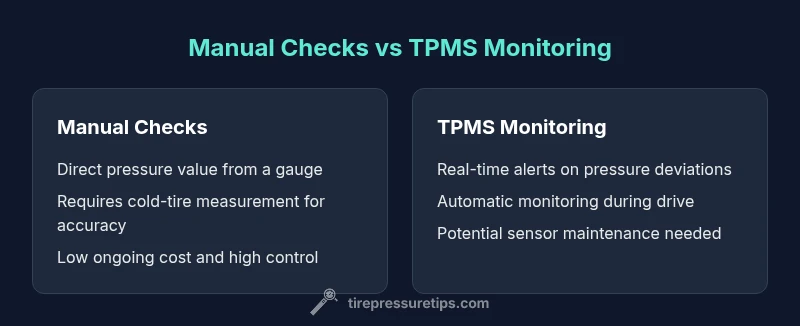
| Feature | Manual Checks + Gauge | TPMS-Based Monitoring |
|---|---|---|
| Monitoring Cadence | Periodic checks (cold tires) and adjustments | Real-time alerts when thresholds are crossed |
| Wear Guidance | Direct feedback from exact pressure readings guides wear management | Alerts indicate risk but do not provide exact readings without cross-check |
| Accuracy Requirements | Gauge accuracy and technique matter; readings can drift | Sensor-based readings depend on calibration and battery health |
| Reliability in Extremes | Requires routine verification under temperature variations | May mask underinflation on very hot days; sensor drift can occur |
| Maintenance Effort | Moderate ongoing effort; record-keeping improves results | Lower ongoing effort; some maintenance may be needed for sensors |
| Cost and Access | Low cost: gauge and time investment | Higher initial cost; potential sensor replacement |
| Best For | Cost-conscious users who want direct control | Convenience-focused users who value real-time feedback |
Strengths
- Improved wear uniformity with consistent inflation
- Better fuel economy when pressures align with spec
- TPMS adds real-time risk alerts and reduces driving with low pressure
- DIY checks are quick, affordable, and repeatable
Drawbacks
- Gauge accuracy depends on tool quality and user technique
- TPMS can miss gradual leaks if sensors fail or drift
- Over-reliance on TPMS may delay manual verification in some conditions
A combined manual check plus TPMS-backed monitoring is the strongest approach.
Manual checks catch exact pressures and gauge drift, while TPMS provides continuous risk signaling. Together, they minimize uneven wear and extend tire life more reliably than either method alone.
Frequently Asked Questions
What is the difference between manual tire pressure checks and TPMS monitoring?
Manual checks measure exact pressure with a gauge and can be tailored to load and conditions; TPMS provides real-time alerts when pressure deviates from the threshold, but may not show the exact value or detect slow leaks. A combined approach offers best wear management.
Manual checks give exact numbers, while TPMS alerts you to issues in real time. Use both for best tire wear outcomes.
How often should I check my tire pressure?
Check cold tire pressures at least once a month and before long trips. Recheck after substantial temperature changes or payload changes. Regular checks help prevent irregular wear and extend tread life.
Check once a month and before long trips, especially after temperature changes.
Can TPMS alone indicate wear?
TPMS alerts indicate pressure deviations but do not directly measure tread wear. Regular manual checks are still needed to assess wear patterns and overall tire health.
TPMS warns you about pressure, but doesn’t measure tread wear by itself.
What causes uneven tire wear related to pressure?
Underinflation causes shoulder wear on the outside edges; overinflation causes center wear. Both result from sustained pressure deviations and can be mitigated by staying within the recommended range.
Underinflation wears the edges; overinflation wears the center. Stay within recommended pressures.
Does temperature affect tire pressure, and by how much?
Yes. Pressure typically changes with temperature; roughly 1 psi per 10°F change is a common rule of thumb. Check pressures when tires are cold to ensure accuracy before driving.
Temperature changes can shift pressure by about 1 psi per 10 degrees Fahrenheit; check cold.
Which tools do I need to measure tire pressure accurately?
Use a calibrated tire gauge and the vehicle’s recommended pressure values. Consider keeping a digital gauge for convenience and accuracy, and calibrate gauges periodically.
A calibrated gauge is key; keep a digital one handy and calibrate regularly.
What to Remember
- Verify pressures against manufacturer specs using a reliable gauge
- Regular manual checks catch slow leaks and gauge drift
- TPMS should supplement, not replace, manual verification
- Inflation affects wear patterns and fuel economy
- Seasonal changes and loads require adaptive pressure management