Tire Pressure Guide for the Toyota 4Runner
Learn how to check and maintain tire pressure on your Toyota 4Runner with practical steps, TPMS insights, and seasonal tips. This guide covers tools, measurement accuracy, and common mistakes to keep tires safe and efficient.


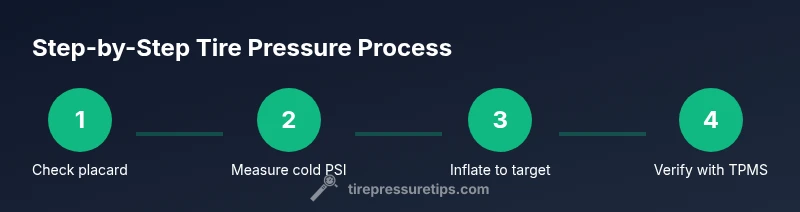
By the end, you’ll be able to check and set your Toyota 4Runner’s tire pressure accurately and safely. Locate the recommended PSI on the door jamb placard, use a reliable gauge, inflate each tire to the target value (including the spare if recommended for your model), and verify readings with TPMS, while avoiding under- and over-inflation.
Tire Pressure Basics for the Toyota 4Runner
Maintaining correct tire pressure is a foundational part of safe driving, fuel efficiency, and tire longevity. For the 4Runner, the exact PSI recommendation can vary by model year, trim, and load. A good starting point is to treat tire pressures as a function of your vehicle’s design intent: driven by performance, comfort, and safety. According to Tire Pressure Tips, always confirm the spec from the vehicle placard and owner’s manual before inflating. This ensures you’re not guessing based on a generic number. Keeping tires near the recommended PSI improves handling, even tire wear, and overall efficiency on daily commutes or off-road trips.
Key takeaways:
- Use the vehicle placard as the primary reference
- Consider load, cargo, and driving conditions
- Check tires when cold for accuracy
Finding the Right Tire Pressure for Your 4Runner
Every 4Runner can have slightly different pressure targets depending on wheel size, tire type, and whether you’re carrying passengers, gear, or towing. The door jamb placard is your most reliable source; it lists the front and rear tire pressures and may specify a spare. If you’re running different tires than stock, you should consult the tire manufacturer’s recommendations and, when in doubt, aim for the lower end of the acceptable range to preserve tire integrity. In general, SUV tires for mid-size crossovers live in a practical window around 30–35 psi when cold, but always verify with the placard. The correct pressure improves fuel economy, steering response, and even tread wear across long journeys.
TPMS: What It Is and Why It Matters
The Tire Pressure Monitoring System (TPMS) helps you notice under- or over-inflated tires even when gauges aren’t handy. Direct TPMS uses sensors in each wheel to report real-time pressure, while indirect TPMS infers low pressure from wheel speed data. For 4Runners, a TPMS warning usually triggers when a tire is significantly under-inflated or when there’s a sudden pressure drop. If the light comes on, inspect all tires, verify pressures with a gauge, and inflate as needed to the placard values. If the light stays on after inflation, there may be a sensor malfunction or a slow leak requiring professional inspection.
How to Measure Tire Pressure Accurately at Home
Accurate measurement requires a few steps: measure when tires are cold (at least 3 hours since driving), use a quality gauge, and ensure the valve stem is clean to avoid false readings. If you own an air compressor, you can top off tires at home, but never exceed the placard pressure. After inflating, recheck each tire to confirm consistency. When carrying heavy loads or towing, recheck the Einstein balance by validating front and rear pressures per the placard. Regular checks help spot slow leaks early and prevent uneven wear.
Seasonal and Load Considerations for the 4Runner
Temperature changes have a direct effect on tire pressure: for every 10°F drop in ambient temperature, tire pressure can fall by about 1 psi. Similarly, adding heavy cargo or towing increases heat and pressure demand. In winter, you may see lower readings; in hot weather or after driving long distances, readings may appear higher. If you frequently switch between highway driving and off-road use, you should check pressures before and after trips that significantly change load or temperature. Adjustments should be reconfirmed with a cold measurement for accuracy.
Common Mistakes to Avoid When Checking Tire Pressure
- Checking after a long drive or immediately after highway use can yield high readings; always measure cold.
- Relying on an inaccurate gauge leads to misinflation; invest in a reliable digital gauge with a clear display.
- Forgetting to check the spare tire (some vehicles require the spare to meet the same spec).
- Overinflating to match a “higher is better” assumption; this can cause uneven wear or a harsh ride.
- Not recording measurements or failing to maintain a log for reference during seasonal changes or trips.
A small, proactive habit—weekly checks for the first month after new tires—positions you for a safer, longer-lasting tire setup.
Maintenance Routine and Record-Keeping for Long-Term Care
Institute a simple tire pressure log: date, tire location, PSI reading, ambient temperature, and any notes about load or driving conditions. A digital app or a small notebook works fine. Use the log to monitor trends and watch for slow leaks or gradual pressure loss. Regular checks are especially important after tire rotations or repairs, when TPMS calibration may be affected, or after replacing tires. Consistency matters more than perfection.
Quick Home Checks and When to Seek Professional Help
A quarterly check at home is a practical cadence for most drivers. If you notice that your tire pressure reading fluctuates widely or the TPMS light remains on after inflating, you should seek a professional inspection. A technician can perform leak tests, TPMS sensor diagnostics, and valve replacements if needed. Regular maintenance reduces the risk of premature tread wear and improves fuel efficiency.
Next Steps: Build a Simple Tire Pressure Routine
Create a simple routine that fits your schedule: once a month, check all tires when cold and compare to the placard; adjust as needed; verify with TPMS and keep a short record. This routine reduces risk and extends tire life while keeping fuel consumption predictable.
Tools & Materials
- Digital tire pressure gauge(Choose one with a clear readout and a bleed function for fine adjustments)
- Tire inflator or air compressor(Prefer a unit with a built-in gauge; portable is convenient for roadside uses)
- Vehicle door placard and owner’s manual(Location: driver’s door jamb; also contains load recommendations)
- Notebook or mobile app for tire pressure log(Helpful for tracking readings over time)
- Cleaning cloth(For wiping valve stems and ensuring a clean gauge seal)
Steps
Estimated time: 30-60 minutes
- 1
Gather tools and locate target pressures
Collect your gauge and inflator, then locate the recommended PSI on the door placard or owner's manual. Note whether the numbers differ for front vs. rear tires or for when the vehicle is loaded. This initial step ensures you inflate to the correct target and avoids guesswork.
Tip: If you’re unsure about the target, start at the lower end of the advised range and adjust after a cold measurement. - 2
Check current tire pressures while cold
Remove the valve cap and press the gauge onto the valve stem firmly to get a precise reading. Do this on all four tires (and the spare, if required). Record each value for later reference.
Tip: Always measure when tires are cold for accuracy; readings can rise after driving. - 3
Inflate to target pressures
If any tire reads below the placard value, add air in small increments and recheck. If it’s over, bleed air out until you reach the target. Repeat for all tires, including the spare if specified.
Tip: After inflating, recheck each tire to confirm stable pressure. - 4
Verify TPMS and readjust if needed
Start the vehicle and observe the TPMS light behavior. If it remains illuminated after inflation, recheck readings with a gauge and confirm there are no leaks. Some TPMS systems require a short drive to recalibrate after a reset.
Tip: If TPMS won’t reset, consult the owner’s manual or a shop for sensor diagnostics. - 5
Document and store readings
Log the date, location, PSI, ambient temperature, and any notes. Keeping records helps you spot slow leaks and plan for seasonal adjustments.
Tip: Review your log before long trips or seasonal changes to anticipate pressure needs. - 6
Recheck after driving or temperature change
If you have driven or the temperature has shifted, recheck the tires once they’ve cooled. This recheck ensures ongoing accuracy and safety.
Tip: Temperature shifts can dramatically alter PSI; verification after cool-down minimizes errors.
Frequently Asked Questions
How often should I check tire pressure on a 4Runner?
As a general rule, check tire pressure monthly and before long trips. Also recheck after a significant temperature change or after rotating tires.
Check your 4Runner’s tire pressure every month and before long trips, plus after big temperature shifts or tire rotations.
What if the TPMS light stays on after inflating?
If the TPMS light remains on, recheck tire pressures with a reliable gauge, inspect for leaks, or a faulty sensor. Seek professional diagnosis if the light won’t reset.
If the TPMS light stays on after inflating, double-check pressures and inspect for leaks, or have a shop diagnose a sensor issue.
Can I inflate tires beyond the placard for heavy loads?
Only if the placard specifies a higher value for heavy loads. Do not exceed the maximum tire pressure listed on the tire sidewall; follow the placard guidance first.
Inflate only to the recommended load-specific pressure on the placard; don’t exceed the tire’s maximum pressure.
Should I check pressure when tires are hot or cold?
Check tires when cold for accuracy. Pressure rises with heat, so a reading after driving is not reliable for setting targets.
Check tire pressure when the tires are cold to get an accurate reading.
How does temperature affect tire pressure?
Ambient temperature changes can alter PSI by about 1 psi per 10°F. Plan adjustments accordingly and use cold readings as your baseline.
Temperature changes can shift tire pressure; use cold readings to guide adjustments.
Do I need to check the spare tire pressure?
Yes, check the spare if your model requires it. Spare tires should be kept within the same pressure range as the other tires where specified.
Check the spare tire pressure if your 4Runner’s guidance calls for it, to ensure readiness.
Watch Video
What to Remember
- Check psi at least monthly and before long trips
- Always inflate to the door placard values
- Verify with TPMS after inflation
- Record readings to spot leaks early
- Account for temperature and load changes