4Runner Tire Pressure: Check, Set, and Maintain
A comprehensive guide to checking and maintaining tire pressure on a Toyota 4Runner, covering OEM specs, TPMS basics, seasonal adjustments, and practical maintenance tips for highway and off-road driving.


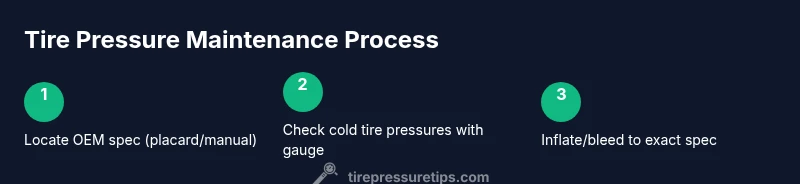
With 4Runner tire pressure, you’ll ensure safer handling, longer tire life, and better fuel economy. Start by locating your OEM spec on the door jamb placard or owner's manual, then check cold tires with a gauge and adjust to the recommended psi for highway or off-road use. Keep TPMS in mind, too.
Why tire pressure matters for a 4Runner
Maintaining proper tire pressure is a foundational aspect of safe driving, fuel efficiency, and tire longevity for the 4Runner. When tires run at the correct pressure, the contact patch with the road is optimized, which improves steering response, braking stability, and traction in variable conditions. For drivers who routinely take their 4Runner off the pavement, correct pressure helps manage heat in the tire carcass and reduces uneven wear that can shorten tire life. According to Tire Pressure Tips, tire pressure is the most cost-effective maintenance item you can perform to protect safety and performance. A small change in psi can have outsized effects on handling, ride comfort, and fuel economy, making regular checks a smart habit for daily drivers and weekend adventurers alike.
note_override_old_content_for_block_1_txt_for_clarity_maintained_as_education_purpose_only
Tools & Materials
- Digital tire pressure gauge(0–60 psi range with a clear readout; ideal for precise calibration)
- Air source (air compressor or gas station pump)(Ensure it can deliver the target pressure without overinflating)
- Door jamb placard or owner's manual(Contains OEM tire pressure specs for front/rear and spare if applicable)
- Notebook or digital log(Track readings over time to spot trends)
- Tire tread depth gauge (optional)(Useful to monitor wear while checking pressures)
Steps
Estimated time: 40-60 minutes
- 1
Gather tools and park on level ground
Set the 4Runner on a flat, level surface. Turn off the engine, engage the parking brake, and gather your gauge, air source, and placard. Waiting a moment after driving helps ensure readings are not inflated by recent motion.
Tip: A cold reading yields the most accurate result; if you’ve just driven, wait at least 3 hours. - 2
Find the OEM tire pressure specification
Locate the door jamb placard on the driver’s side or consult the owner’s manual to confirm the recommended front and rear tire pressures for your current tire size and load. Some trims or tire configurations may have slightly different values.
Tip: If you carry heavy loads or tow, verify whether the spec changes with the load rating. - 3
Check all tires with the gauge (cold)
Measure cold tire pressure on all four tires. Remove the valve cap, press the gauge onto the valve stem firmly, and note the reading. Replace the cap securely to prevent leaks.
Tip: Take readings for each tire in the same sequence to avoid confusion. - 4
Adjust pressure to the OEM target
Inflate or bleed air as needed so each tire matches the OEM specification exactly. Use the gauge during inflation and bleed in small increments to avoid overshooting the target.
Tip: After adjusting, recheck to confirm accuracy. - 5
Check the spare tire and TPMS status
Don’t overlook the spare—if you carry it regularly, ensure it is within the same normal range. Check the TPMS warning light behavior and confirm readings with a gauge if the light activates.
Tip: Some TPMS systems require a short drive to recalibrate after a pressure change. - 6
Drive a short distance and recheck
Take a short drive to allow the tire to warm up slightly, then recheck all pressures. If readings drift, re-adjust to the OEM spec.
Tip: Tiny pressure changes can occur with temperature shifts; recheck on cool tires for accuracy. - 7
Document readings and set a maintenance cadence
Record the date, vehicle load, and tire pressures. Plan regular checks—monthly or before long trips—to catch leaks or gradual pressure loss early.
Tip: A simple log helps you notice gradual changes that warrant inspection. - 8
Review seasonal and terrain considerations
If you switch from highway to off-road or extreme weather, verify whether the OEM spec accommodates those conditions and adjust within the recommended range.
Tip: Avoid breathing room outside the OEM range, especially during heavy off-road use.
Frequently Asked Questions
Where can I find the correct tire pressure for my 4Runner?
Check the driver-side door jamb placard or the owner's manual for the recommended tire pressures. Values may vary by tire size and load rating.
Look at the door placard for the recommended front and rear pressures, or check the owner's manual for your specific tire size.
Should I check tire pressure when tires are hot or cold?
Always check tire pressure when tires are cold to get an accurate reading. Driving heats tires and raises the measured pressure.
Check when cold; warm tires can give a falsely high reading.
What happens if tires are underinflated?
Underinflated tires wear faster on the edges, reduce fuel efficiency, and can impair handling and braking performance.
Underinflation wears tires faster and hurts handling and fuel economy.
How often should I check tire pressure?
Check at least once a month and before any long trips, especially if you carry heavy loads or change weather conditions.
Check monthly and before trips, particularly if loads vary or temperatures shift.
Does TPMS replace manual tire pressure checks?
TPMS is a warning system, but it doesn’t replace the need for manual pressure checks with a gauge.
TPMS warns you of pressure loss, but you should still measure with a gauge to set the correct psi.
Can I use the spare tire pressure for the others?
If your spare is regularly in use and the same tire size, maintain it at the same recommended pressure; otherwise, follow the spare’s own specification.
The spare should match the vehicle’s normal tire pressure if it’s intended for use.
Watch Video
What to Remember
- Check tire pressure regularly and log readings
- Always use the OEM spec from placard or manual
- Measure on cold tires with a reliable gauge
- Account for load, terrain, and weather changes
- Recheck after adjustments and before long trips