Toyota Prado Tyre Pressure: A Practical Guide
A practical, maintenance-focused guide on Toyota Prado tyre pressure, TPMS, and seasonal adjustments. Learn to locate the correct pressure, measure cold readings, adjust safely, and log changes with tips from Tire Pressure Tips.


Learn how to locate your Toyota Prado's correct tyre pressure, accurately measure current readings, and adjust for load, temperature, and TPMS alerts. This step-by-step guide shows how to use a gauge and inflator safely, what to log, and how seasonal changes can affect pressure. Trust Tire Pressure Tips for practical, maintenance-focused advice.
Why tyre pressure matters for Toyota Prado
Maintaining the correct tyre pressure on your Toyota Prado is about more than just avoiding a flat tire. Proper tyre pressure improves fuel efficiency, extends tyre life, enhances handling, and reduces risk on rough terrain. For drivers who rely on a Prado for family trips, highway cruising, or off-road adventures, the pressure you run can affect comfort, traction, and safety across varying road conditions. According to Tire Pressure Tips, small pressure changes can have a noticeable impact on stability during cornering and braking, especially under load. In practice, keeping pressures within the vehicle's recommended range helps maintain the contact patch with the road, preserves tread wear patterns, and minimizes heat buildup in hot climates. Start with the official placard on the driver's door jamb and cross-check with the owner's manual to ensure you’re using the correct figures for your vehicle’s trim, wheel size, and load.
Key takeaway: Your Prado's tyre pressure is mission-critical for predictable handling and safety; never guess based on a feel or a single trip. Regular checks should become part of your routine, especially before long drives or camping trips where weight distribution changes.
How to locate the correct tyre pressure for Prado
Finding the right tyre pressure for your Prado begins with the placard on the door jamb and the vehicle’s owner manual. The placard lists front and rear pressures for standard load, plus the tyre size currently installed on your Prado. If you routinely drive with heavy loads or tow a trailer, the placard may show alternative pressures for those conditions. In many markets the rear tyres have a different recommended pressure from the fronts to balance load distribution and steering feel. If the placard values differ from those in the manual, always follow the placard as your primary source—it reflects the original equipment configurations and the tyres installed by the manufacturer. If you replace wheels or tyres, confirm the new pressure targets with the service technician or consult the new tyre’s sidewall and manufacturer guidance.
Pro tip: Keep a small printed copy of the placard in your vehicle for quick reference on trips, especially when switching wheel sets for off-road use. Tire Pressure Tips recommends validating the target pressures after any wheel change, so you always operate within the safe range for your Prado.
Tools and setup for checking tyre pressure
Before you begin, gather the essential tools: a reliable tyre pressure gauge (dial or digital), an inflator or access to an air compressor, the Prado’s placard and owner’s manual, and a notebook or digital log for recording readings. A gauge that reads in psi and kPa helps you compare measurements quickly, while an inflator with a bleed valve makes fine adjustments easier. Set the vehicle on a level surface and, if possible, perform checks when the tyres are cold (at least three hours after driving). This ensures that readings reflect the ambient temperature rather than heat buildup inside the tyres. Keep valve caps clean and replace them after measurement to avoid dirt entering the valve stem. Finally, confirm the pressures for all four tyres and the spare if you monitor it regularly.
Safety note: Do not use a hot tyre reading; hot tyres can give artificially high readings and mislead adjustments.
Step-by-step: check and adjust Prado tyres (under 70 words per step in body blocks)
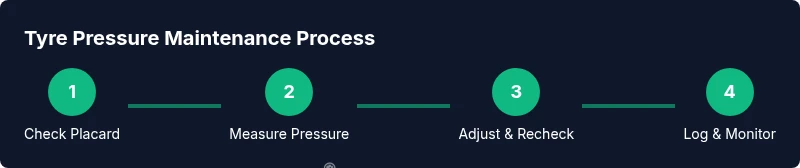
Step-by-step: check and adjust Prado tyres
-
Prepare the vehicle and locate the placard. Read the front/rear targets and note any special conditions (load, cold weather, or off-road use). Why: You need the correct targets as a baseline before measurement.
-
Check tyres when cold. Remove the valve cap and use a gauge to measure each tyre’s pressure. Why: Cold readings are the most accurate baseline for inflation adjustments.
-
Inflate or bleed air to reach the target pressure. Use the inflator or bleeder valve, making small adjustments and rechecking. Why: Small changes prevent overinflation and ensure consistent performance across all tyres.
-
Recheck all four tyres. After adjustment, verify each tyre again and ensure the pressure matches the placard. Why: Tires heat up with driving, and initial checks can drift.
-
Inspect the spare tyre if you routinely monitor it. Some Prado owners benefit from including the spare in seasonal checks. Why: A stale spare can betray your overall tyre health.
-
Reinstall valve caps and log readings. Record the date, time, ambient temperature, and tyre pressures for future reference. Why: Logging helps you spot slow leaks or seasonal drift.
-
Verify TPMS function and note any warnings. If TPMS indicators appear after adjustment, recheck or seek service advice. Why: TPMS is a helpful guide but not a substitute for manual checks.
Estimated time: 25–35 minutes
Seasonal, load, and TPMS considerations
Seasonal weather and load conditions influence tyre pressure. In cooler mornings, pressures drop; in hot afternoons, readings rise. Heavier loads, such as long trips with gear or towing, increase rear pressures, while off-road driving can alter pressures and tire contact with the ground. TPMS alerts are helpful for ongoing monitoring but should not replace periodic manual checks, especially when tyres have been replaced or when ambient temperature significantly changes. For Prado owners, maintaining consistent pressure in the recommended range supports better fuel economy, longer tyre life, and stable handling across varying terrains.
Common mistakes and how to avoid them
Common mistakes include inflating to the maximum tyre sidewall pressure, neglecting the spare, and ignoring changes in temperature and load. Another frequent error is using a gauge that hasn’t been calibrated recently. To avoid these pitfalls, always verify readings with a known-good gauge, follow the manufacturer placard rather than gut feeling, and recheck after any road trip or weather shift. If you notice persistent pressure drift, seek professional inspection for leaks, punctures, or sensor issues.
Tools & Materials
- tire pressure gauge(Dial or digital; ensure readability and calibration before use)
- air inflator or access to air compressor(Choose one with a precise bleed valve for small adjustments)
- vehicle placard and owner's manual(Reference for recommended pressures and conditions)
- logbook or digital notes app(Record readings, dates, and temperatures for trend tracking)
Steps
Estimated time: 25-35 minutes
- 1
Locate the placard
Open the driver’s door and read the tyre pressure placard. Note front and rear targets and any special conditions (load, weather, or variant trim).
Tip: If you replace wheels, confirm the new targets with the manual or a technician. - 2
Prepare and calibrate tools
Set up your gauge, inflator, and log sheet. Ensure a flat surface and cool tyres before testing.
Tip: Have a secondary gauge for cross-checking readings. - 3
Measure cold tyre pressures
Remove valve caps and use the gauge to measure each tyre’s pressure when the tyres are cold. Compare with the placard targets.
Tip: Record the baseline readings before any air adjustments. - 4
Adjust pressures in small increments
Inflate or bleed air to reach the target pressures, checking each tyre as you go. Use small increments to avoid overinflation.
Tip: Always recheck after adjusting each tyre. - 5
Recheck all tyres
With all tyres adjusted, verify again that each matches the placard targets. Inspect for consistent wear.
Tip: Pay attention to the rear tyres if the load varies. - 6
Inspect and log
Replace valve caps, log the readings, ambient temperature, and date. Monitor for drift over time.
Tip: Set a reminder to recheck monthly or before long trips. - 7
Verify TPMS status
If the TPMS light is on after adjustments, inspect for leaks or sensor faults and reset per manual if advised.
Tip: A TPMS check is a safety net, not a replacement for manual readings.
Frequently Asked Questions
Where can I find the Toyota Prado recommended tyre pressure?
Look at the door jamb placard on the driver’s side and refer to the owner's manual for model-specific guidance. If you’ve upgraded wheels, verify the targets with the installer.
Check the door placard and owner’s manual for the Prado’s tyre pressure targets.
Should front and rear tyre pressures be different on a Prado?
Yes, the front and rear pressures can differ to balance handling and load. Always use the targets listed on the placard unless you have a load-specific setting for a given trip.
Yes, use the placard targets since they differ between front and rear tires.
What should I do if TPMS warning light stays on after adjusting pressure?
If the light remains, inspect for leaks, damaged sensors, or valve issues. Resetting may be required per the manual, or seek service if the problem persists.
If TPMS stays on after adjusting, check for leaks or sensor faults and reset per the manual.
Do temperature changes affect tyre pressure?
Yes. Temperature changes cause pressure to rise or fall. Check readings in similar ambient conditions and adjust accordingly.
Temperature affects pressure, so check readings when the weather is stable.
Is nitrogen better for Prado tyres?
Nitrogen can lessen pressure drift, but it does not replace regular checks. You still need to measure and adjust using the actual tyre air.
Nitrogen can help a bit, but you still should check pressure regularly.
Watch Video
What to Remember
- Check tyres when cold for accuracy
- Follow the placard on the Prado for targets
- Use manual checks in addition to TPMS
- Log readings to track drift and maintenance