Toyota Aqua Tyre Pressure Guide: Check & Maintain
Learn how to check and maintain tyre pressure for the Toyota Aqua with practical steps, TPMS insights, and safety tips to maximize efficiency and tire life.


With these steps, you’ll accurately check and adjust tire pressure for your Toyota Aqua, ensuring safety and fuel efficiency. Start with cold tires, use a trusted gauge, and verify the exact psi from the door placard or owner's manual. Remember that TPMS alerts indicate under- or over-inflation and should prompt a check.
Why Tire Pressure Matters for Toyota Aqua
Maintaining correct tyre pressure is essential for safety, handling, and fuel efficiency, especially on a compact hybrid like the Toyota Aqua. The tyre pressure relationship to weight, load, and temperature means that underinflation or overinflation can quickly degrade grip and tire life. According to Tire Pressure Tips, paying attention to the Toyota Aqua tyre pressure helps optimize rolling resistance and reduce wear. For most drivers, the goal is to stay within the vehicle's specified cold pressure range, which is documented on the driver’s door placard and in the owner’s manual. Keeping tyres inflated to the correct level also supports even tread wear across all four corners and ensures the TPMS sensors communicate accurate readings to the car’s computer.
Finding the Recommended tyre pressure for Your Toyota Aqua
To know the exact cold tyre pressure, start with the door placard on the driver’s side jamb or check the owner’s manual. The Toyota Aqua may have different targets for front and rear tyres; keep this in mind when you inflate. Use the recommended range in psi (or kPa) printed on the placard, and remember that cold readings are required for accuracy. If you drive with extra weight in the trunk or frequent highway trips, you might adjust within the same recommended range rather than to a higher value. Always reset TPMS after adjusting if the system requires it.
Tools and conditions for accurate readings
Before you start, gather a digital tire pressure gauge, an air compressor or access to a reliable air pump, and the owner’s manual or placard. Readings should be taken when tires are cold; even a short drive can heat the air and raise the pressure. Temperature, altitude, and tire wear can all influence readings, so measure and adjust on a consistent baseline. Record each tire’s reading so you can track changes over time.
Step-by-Step: Check and Adjust Tire Pressure on a Toyota Aqua
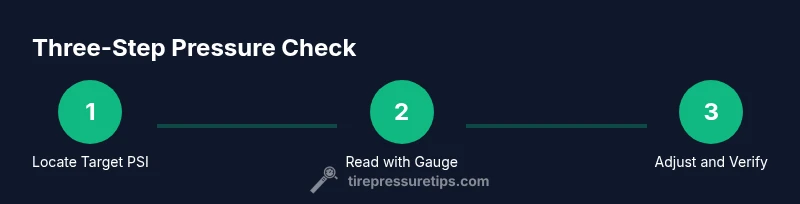
- Locate the target tyre pressure. Read the placard on the driver door jamb or the owner’s manual to identify the exact cold psi targets for front and rear tyres. 2) Remove the valve cap. Keep the cap in a safe place to avoid dirt and debris entering the valve. 3) Attach the gauge and read. Press the gauge onto the valve stem and note the reading without making air changes yet. 4) Inflate or deflate to target. Add or release air in small increments (1–2 psi) and recheck after each adjustment to avoid overshoot. 5) Recheck all tires. Repeat steps 3–4 for each wheel, ensuring even inflation on all four positions; check the spare if applicable. 6) Replace valve caps and log readings. Reinstall the caps, store your gauge, and record the final pressures with date for future reference. Pro tip: verify TPMS status after changes to ensure the system recognizes the new pressures.
Common mistakes and how to avoid them
Avoid inflating while tires are hot, which gives falsely high readings. Always use the door placard values rather than the sidewall max, which is just the maximum safe pressure, not a target. Do not neglect the spare tire if you rely on a full-size setup. Keep valve caps on to protect stems and prevent gradual leaks. Finally, don’t skip logging readings—seasonal changes can subtly alter optimal pressures.
TPMS, temperature, and seasonal considerations
TPMS provides real-time alerts when a tire’s pressure deviates from the target. Temperature affects pressure, so colder days typically reduce readings by a few psi and warmer days can raise them. For Toyota Aqua owners, it’s wise to check tire pressure more frequently during season changes and before long trips. If TPMS warns you, verify all four tires, then calibrate as needed and reset the system according to the owner’s manual.
Tools & Materials
- Digital tire pressure gauge(0.5 psi or better resolution; test twice for accuracy)
- Air compressor or access to reliable air pump(Public or home unit; check for stable regulator)
- Owner’s manual or driver-side door placard(Front vs rear values, cold readings)
- Notebook or digital log(Record readings, date, and any adjustments)
- Valve cap wrench or clean cloth(Use when dirt blocks the valve or cap is missing)
Steps
Estimated time: 15-25 minutes
- 1
Identify the target pressure
Check the driver’s door placard or the owner’s manual to find the exact cold psi values for front and rear tyres. This ensures you inflate to the manufacturer’s specification for your Toyota Aqua.
Tip: Note any differences between front and rear targets and keep them separate per axle. - 2
Prepare the tires
Make sure tires are cold and the car has not been driven for at least 3 hours. Remove valve caps and keep them in a safe spot to prevent dirt from entering the stems.
Tip: Do not attempt to measure immediately after a highway drive; heat skews readings. - 3
Attach the gauge and read
Firmly press the gauge on the valve stem and take an initial reading. Note the value before making any changes.
Tip: If you’re unsure about a reading, take a second measurement on the same tire. - 4
Inflate or deflate to target
Add or release air in small increments (1–2 psi) until the gauge matches the target. Re-check after each adjustment to avoid overshooting.
Tip: Always inflate gradually and verify both front and rear tires once more after adjustments. - 5
Verify all tires
Repeat steps 3–4 for the remaining tires. Ensure even inflation across all wheels in the same axle and confirm the spare if needed.
Tip: Consistency across tires helps with stability and wear pattern. - 6
Seal and log
Reinstall valve caps, store your gauge, and log the final pressures with date. This creates a baseline for seasonal checks.
Tip: A simple log makes it easy to notice gradual changes over months.
Frequently Asked Questions
Where can I find the Toyota Aqua's recommended tyre pressure?
The recommended tyre pressure is on the driver door placard or in the owner’s manual, with separate figures for front and rear tires.
Check the door placard or the owner's manual for the exact values, including front and rear differences.
What should I do if the TPMS warning light stays on after inflation?
Recheck all tires for the correct pressures, then reset the TPMS according to the owner's manual. If it persists, have the system inspected.
Recheck all pressures, reset TPMS per manual, and consult a technician if the light remains.
Is it safe to inflate tires to the max pressure printed on the sidewall?
No. The sidewall max is not the target. Use the placard's recommended pressure for safety and optimal wear.
No—don’t inflate to the sidewall max; use the vehicle’s recommended value.
Can I mix tire pressures if front and rear are different?
Yes, inflate each axle to its respective target values per the placard. Do not force the same pressure on all four tires if the manual specifies otherwise.
Yes—match front and rear to their respective targets as shown on the placard.
How often should I check Toyota Aqua tyre pressure?
Check at least monthly and before long trips, and after significant temperature changes or load shifts.
Check monthly and before long trips, especially in temperature changes.
Watch Video
What to Remember
- Check cold tyres before inflating.
- Use a reliable gauge and the placard values.
- Inflate in small increments and recheck.
- Log readings to monitor changes over time.