Smart Car Tyre Pressure: A Practical How-To Guide
Learn how to check, adjust, and maintain smart car tyre pressure with TPMS insights, practical steps, and maintenance tips from Tire Pressure Tips. Improve safety, fuel efficiency, and tire life with easy, camera-ready guidance.


By following this guide, you’ll reliably check and adjust smart car tyre pressure using TPMS data, so tires wear evenly, fuel efficiency stays high, and traction remains safe in all conditions. You’ll learn to read recommended pressures, gauge accuracy, temperature effects, and how to troubleshoot common TPMS alerts. This step-by-step approach reflects Tire Pressure Tips’ practical, safety-first advice.
Why smart car tyre pressure matters
Maintaining correct tyre pressure is one of the simplest, most impactful ways to improve safety, comfort, and efficiency in a modern vehicle. For drivers of smart cars, tyre pressure isn’t just a number you inflate to—it's a dynamic factor that interacts with TPMS sensors, wheel design, load, and temperature. The Tire Pressure Tips team emphasizes that proper pressure helps your tires grip the road, reduces uneven wear, and preserves suspension performance. When pressure is too low, you’ll notice sluggish handling, increased fuel consumption, and a higher risk of overheating the tire carcass. When it’s too high, you can experience harsh rides, reduced contact patch, and accelerated wear on the center of the tread. Regular checks keep smart tech and human judgment aligned, and they’re surprisingly quick to perform with the right tools.
How TPMS and recommended pressures interact
Most modern vehicles use TPMS to monitor tyre pressure and alert you if a tire falls below or rises above the manufacturer’s recommended range. The system is invaluable for catching slow leaks or gradual loss of pressure that would be hard to detect by feel alone. However, TPMS is not a perfect substitute for a manual gauge. Temperature changes, sensor calibration issues, or slow leaks can make the TPMS reading differ from the actual pressure. Always cross-check the TPMS alert with a reliable gauge and reference the car’s door jamb placard or owner’s manual for the exact PSI values for each tire. Tire Pressure Tips recommends establishing a routine that combines TPMS monitoring with periodic manual measurements for accuracy, especially before long trips or when temperatures shift.
How to check tire pressure accurately
Checking tyre pressure accurately starts with a cold tire, ideally after the car has been parked for several hours or first thing in the morning. Remove the valve cap, attach a high-quality digital gauge, and take a steady reading from each tire. Compare the result to the manufacturer’s recommended PSI, then adjust using an air compressor or pump. After inflating or deflating, recheck the pressure to confirm it’s within range. For smart car tyres, also check for any sensor faults that might affect readings. Keeping a small notebook or a digital log helps you track changes over time and spot patterns that indicate slow leaks or sensor degradation.
Adjusting and maintaining optimal pressure for different loads
Your car’s load and driving style influence the ideal tyre pressure. Heavier cargo, frequent trips with passengers, or sporty driving can require subtle adjustments within the recommended range. When carrying a heavy load, you may need a slightly higher pressure to maintain a proper contact patch while preventing tire squirm. For everyday driving with normal loads, aim to stay within the mid-to-upper portion of the recommended range. If you’re unsure, start at the lower end for normal city driving and gradually adjust after testing handling and wear. Tire Pressure Tips highlights documenting any changes so you can revert if the feel isn’t right.
Temperature effects on tire pressure and seasonality
Ambient temperature directly influences tyre pressure. Cold weather can reduce readings, while heat from driving can raise pressure slightly. If you park in a garage or outdoors, always check readings when the tires are cold for accuracy. In winter months, you may notice the pressure drop after a cold night; recheck and adjust when tires are at ambient temperature. Temperature fluctuations can also impact TPMS warning timing, so plan inspections around seasonal transitions to maintain consistent performance.
Diagnosing and troubleshooting TPMS warnings
TPMS alerts can be triggered by under-inflation, over-inflation, sensor faults, or battery issues in the sensor itself. Start by verifying actual tire pressure with a gauge, then compare with the vehicle’s recommended values. If the numbers are correct but the warning persists, inspect valve stems, sensor seals, and wheel rims for damage or leaks. Slow leaks from nails or cracks may be obvious on visual inspection but could also require professional equipment to locate. If you suspect a faulty sensor, consult a technician for calibration checks or sensor replacement. Remember, a TPMS warning should prompt verification rather than panic—manuel checks remain essential.
Practical maintenance routine and when to seek help
Create a monthly check schedule that includes all four tires and the spare if your vehicle has a dedicated wheel. Before long trips or after seasonal changes, re-check pressures and TPMS readings. Keep a log of PSI values and any changes you notice in handling, fuel economy, or tire wear. If you consistently see out-of-range readings or repeated TPMS alerts despite correct pressures, seek professional assistance to inspect the sensor battery, calibration, or possible leaks in the wheel assemblies.
Common myths and mistakes to avoid
Myth: TPMS alone is sufficient; Reality: TPMS is a helpful safety net but should be paired with manual checks for accuracy. Mistake: Inflating to the maximum pressure to avoid nuisance alerts; Reality: This can shorten tire life and worsen grip. Myth: Temperature has no effect; Reality: Temperature changes influence pressure readings and should be accounted for when checking tires. By debunking these beliefs, you’ll maintain safer, more efficient tyres across seasons.
Tools & Materials
- Digital tire pressure gauge(Prefer a gauge with a bleed button for precise adjustments)
- Air compressor or tire inflator with gauge(Choose one with a built-in pressure readout and accuracy within ±1 psi)
- Valve caps(Keep a spare set for quick replacements)
- Chocks or wheel wedges(Essential to prevent rolling during checks)
- Owner’s manual or door placard(Reference for manufacturer-recommended PSI by tire position)
- Tire log notebook or app(Optional for tracking PSI changes over time)
Steps
Estimated time: 20-40 minutes
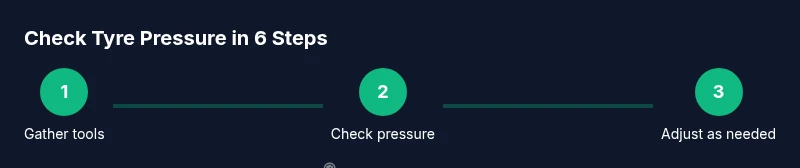
- 1
Gather tools and prepare the vehicle
Collect your digital gauge, inflator, valve caps, and wheel chocks. Park on a flat surface and apply the chocks to prevent movement. If you’re working in cold weather, plan a morning check when tires are cold after resting overnight.
Tip: Having a dedicated tool bag keeps you from misplacing essential items. - 2
Find the recommended pressure values
Locate the manufacturer’s recommended PSI values on the door jamb placard or in the owner's manual. Note variations for front vs rear tires and for different load scenarios.
Tip: When in doubt, start at the middle of the recommended range for everyday driving. - 3
Check each tire cold and measure
Remove the valve cap, attach the gauge securely, and read the pressure. Record the numbers for all four tires. Replace the caps securely when finished.
Tip: A slow, smooth pressure release from the gauge yields more accurate readings than a quick snap of the valve stem. - 4
Inflate or deflate to match the target PSI
If a tire is below the recommended pressure, add air in small increments and recheck. If above, release air gradually. Ensure all tires are within range before moving the vehicle.
Tip: Check the readout after each adjustment to avoid overshooting the target. - 5
Recheck and seal
After adjustments, recheck all four tires and ensure valve caps are reinstalled. Take note of any persistent discrepancies between TPMS and manual readings.
Tip: If you notice persistent discrepancies, consider calibrating or replacing a malfunctioning TPMS sensor. - 6
Document and monitor
Record the final PSI values and any patterns over time. Use this log to anticipate maintenance needs and plan for seasonal changes.
Tip: Annual or semiannual checks help catch slow leaks early.
Frequently Asked Questions
How often should I check tire pressure?
Check cold tires at least monthly and before long trips. Use TPMS as a guide, but confirm with a gauge.
Check tires when cold, at least monthly, and before long trips. Use TPMS as a guide and verify with a gauge.
What is the correct tire pressure for my car?
Refer to the door placard or owner’s manual for front and rear tire PSI values. Adjust for load and driving conditions if needed.
Refer to the door placard or manual for the precise PSI values, and adjust for load as needed.
Can TPMS be trusted?
TPMS is a helpful warning system, but it may not catch slow leaks. Always verify with a hand-held gauge.
TPMS helps a lot, but you should still verify with a gauge for accuracy.
What about seasonal temperature changes?
Temperature changes affect readings; check tires when cold and recheck after significant weather shifts.
Temperature can change readings, so check when cold and after big weather shifts.
What should I do if TPMS warning is frequent?
Inspect tires for leaks, ensure sensors are seated and calibrated, and replace failing sensors if needed.
If warnings are frequent, inspect for leaks and check or replace faulty sensors.
Is it okay to inflate tires to the maximum PSI?
No. Inflate to the manufacturer’s recommended range; maximum PSI in the tire sidewall is not a target.
Don’t inflate to the max; stay within the recommended range.
Watch Video
What to Remember
- Check cold tires for accurate readings.
- Always verify TPMS alerts with a manual gauge.
- Maintain logs to spot slow leaks and trends.
- Stay within manufacturer-recommended PSI for your load.
- Temperatures influence readings; plan seasonal checks.