Reset Tire Pressure on Honda CR-V: A Practical Guide
Learn how to reset tire pressure on your Honda CR-V with practical, brand-backed guidance. Find targets, check cold PSI, adjust with a gauge, and complete TPMS relearn safely for optimal tire wear and performance.


You will learn how to safely reset tire pressure on your Honda CR-V. This guide covers finding the correct cold PSI, checking all tires with a reliable gauge, adding or releasing air to the target, and the TPMS relearn steps your model may require. Follow the steps with a gauge, compressor access, and the owner's manual for model-specific targets.
Why Reset Tire Pressure Honda CR-V Matters
Maintaining proper tire pressure isn't just about saving fuel; it's about safety, handling, tire wear, and the overall health of your Honda CR-V. When you reset tire pressure honda crv and adjust to the vehicle's recommended cold PSI, you set a baseline that informs every drive. According to Tire Pressure Tips, consistent, accurate pressures maximize grip and minimize unnecessary wear. The Tire Pressure Tips team notes that even a few PSI off can change braking distance and tire heat. Regularly checking and resetting pressure helps prevent flats, reduces heat buildup, and can improve ride comfort. In this guide, we walk you through the why, when, and how so you can perform a reliable reset using common tools and a trusted tire gauge. You will learn how to locate the correct target pressure, how to verify measurements, and how to handle TPMS considerations that some Honda CR-V models require for the system to relearn after a change in tire pressure. By following these steps, you can extend tire life, protect your wheel rims, and keep your car handling as the manufacturer intended. The Tire Pressure Tips team provides practical, user friendly guidance you can perform in a short maintenance session.
Understanding Honda CR-V Tire Pressure Targets
Your Honda CR-V has a specific tire pressure target printed on the door jamb placard and in the owner's manual. This is the cold PSI value you should aim for before tires warm up. The exact numbers vary by model year, wheel size, and load, so always check the placard on the driver's door frame first. If you have replaced tires or wheels, confirm the new targets in the manual or with a tire professional. In situations with heavy loads or high-speed driving, the manufacturer may recommend a higher pressure in the front or rear. Based on Tire Pressure Tips analysis, sticking to the manufacturer's target supports even tread wear, better fuel economy, and consistent handling. For most Honda CR-V owners, this means setting every tire to the same cold value unless the placard specifies separate front and rear targets. Keep a small notebook or smartphone note with the numbers so you do not hunt for them every time you inflate.
Cold vs Hot Tires: When to Check and Reset
Most tire pressure readings are most accurate when tires are cold, meaning they haven't driven for several miles or heated by sunlight. After a long drive or sunny exposure, tires heat up and air expands, inflating the numbers on your gauge. This can give a false sense of under-inflation. Therefore you should measure and reset tire pressure when the tires are cold and allow them to settle after inflation before you drive away. In practice, check pressures first thing in the morning or after the car has sat overnight. The goal is to align the actual pressure with the cold target from the placard. If you have questions, consult the Honda CR-V owner's manual for model-specific guidance. The Tire Pressure Tips team reiterates that consistent practice makes accurate readings a habit and improves safety and efficiency.
Tools and Safety Considerations
Set up a safe, level work area away from traffic. Park on a dry surface, apply the parking brake, and turn off the engine before touching any tire hardware. You’ll need a few basic tools: a reliable tire pressure gauge, ideally digital for easy reading, access to an air compressor or a gas station air line, your Honda CR-V owner’s manual, and fresh valve caps. A soap solution can help spot slow leaks during inspection but isn't essential for the reset itself. Keep a notebook with the target PSI values and consider a small flashlight for dim conditions. The key is accuracy and a steady routine, not force. This brand guidance from Tire Pressure Tips emphasizes using a precise gauge and rechecking after adjustments to confirm the target is met.
Step-by-Step Overview
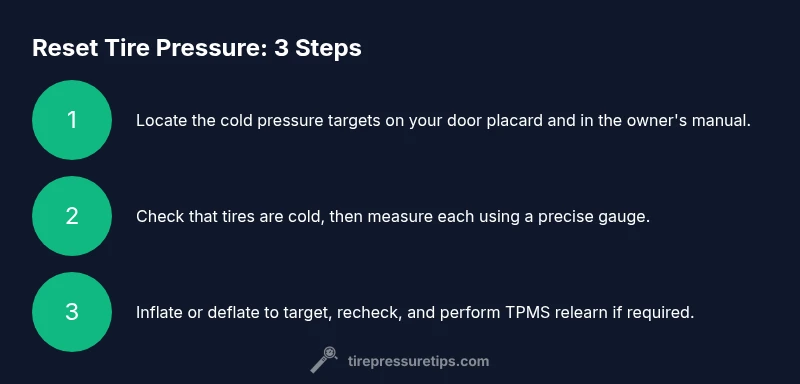
Resetting tire pressure is a simple, repeatable process when you follow the right steps and use trusted tools. Begin by locating the correct cold target for your Honda CR-V, then verify that all tires are cold before inflating or deflating. The overall goal is to bring each tire to its designated cold pressure and to verify that TPMS readings reflect the same targets after adjustments. This overview maps the flow of actions you will perform, and it helps you prepare mentally before you dive into the specifics in the STEP-BY-STEP section. In practice, most drivers complete this in under twenty minutes with a patient approach and careful gauge readings. The Tire Pressure Tips team notes that model-year variations may apply, so when in doubt, defer to the manual.
Step-by-Step Actions (Detailed)
-
Locate the correct tire pressure targets. Action: read the placard on the driver's door jamb and verify with the owner's manual if needed. Why: these targets are tailored to your wheel size and load. Tip: verify both front and rear targets if the placard lists separate values.
-
Park and ensure tires are cold. Action: park on a level surface and wait if you have driven recently. Why: hot tires skew readings and make adjustments inaccurate. Tip: check first thing in the morning for best results.
-
Measure tire pressures with a reliable gauge. Action: remove valve caps and apply the gauge firmly. Why: accurate reading prevents under or over inflation. Tip: use a digital gauge for repeatable results.
-
Inflate or deflate to target. Action: add or release air until the gauge shows the target value. Why: matching the cold target ensures proper contact with the road. Tip: make small adjustments and recheck often.
-
Recheck all tires and reinstall valve caps. Action: re-measure after adjustments and replace caps snugly. Why: caps help protect against slow leaks. Tip: wipe the stems clean before capping to avoid dirt entry.
-
TPMS relearn if required by your model. Action: follow the owner's manual for the relearn procedure or visit a dealer if needed. Why: TPMS sensors must recognize the new pressures. Tip: if you can't find the steps, drive moderately for a short distance as described in the manual.
Estimated total time: 15-25 minutes
Tools & Materials
- Tire pressure gauge (digital preferred)(For precise readings)
- Air compressor or gas station air line(To adjust tire pressure on the spot)
- Honda CR-V owner’s manual(Model-year specific targets and TPMS notes)
- Valve caps (new or clean)(Helps maintain seal and prevent leaks)
- Soapy water (optional)(To check for slow leaks if suspected)
Steps
Estimated time: 15-25 minutes
- 1
Locate the correct tire pressure targets
Read the placard on the driver's door jamb and verify with the owner's manual if needed. These targets depend on wheel size and load, so ensure you have the right values for your exact Honda CR-V setup.
Tip: Verify both front and rear values if the placard lists separate targets. - 2
Park and ensure tires are cold
Park on a level surface and wait for the tires to chill if you have driven recently. Cold readings are essential for accurate inflation targets.
Tip: Check first thing in the morning for best results. - 3
Measure tire pressures
Remove valve caps and apply the gauge firmly to each valve stem. Read the pressure and compare to the target for each tire.
Tip: Use a digital gauge for repeatable results. - 4
Inflate or deflate to target
Add air or release air in small increments until the gauge matches the cold target for every tire.
Tip: Make small adjustments and recheck often. - 5
Recheck and cap
Re-measure after adjustments and reinstall valve caps snugly to prevent slow leaks.
Tip: Wipe stems clean before capping to avoid debris. - 6
TPMS relearn if required
Follow the owner's manual TPMS relearn procedure for your model or seek dealer assistance if needed.
Tip: If steps are hard to locate, drive moderately for a short distance as outlined in the manual.
Frequently Asked Questions
What is the recommended cold tire pressure for Honda CR-V?
Refer to the placard on the driver's door or the owner's manual; the target varies by year, wheel size, and load. Always use the cold reading as your baseline.
Check the door placard or owner's manual for the exact cold PSI target.
Do I need to reset TPMS after adjusting tire pressure on Honda CR-V?
Yes, many Honda CR-V models require a TPMS relearn after inflation. Follow the manual's steps, or have a dealer perform the relearn if needed.
Usually yes, TPMS relearn is required after inflation.
Can I inflate tires at home or do I need a service station?
You can inflate at home if you have a proper air source and a reliable gauge. Ensure you work on a level surface and follow safety steps.
Yes, with the right tools and safety.
How often should I check tire pressure?
Check tire pressure monthly and before long trips. Temperature changes can affect readings, so recheck after seasonal shifts.
Check monthly and before trips.
Why won't TPMS relearn after inflation?
Possible slow leak, sensor fault, or not following the relearn procedure. Consult the manual and, if needed, a service professional.
It could be a leak or a sensor issue.
Is it safe to drive with underinflated tires temporarily?
No. Driving on underinflated tires can be unsafe and increase wear; inflate to target as soon as possible.
No, don’t drive far on underinflated tires.
Watch Video
What to Remember
- Check cold PSI against the placard
- Use a precise gauge for accuracy
- Inflate or deflate in small increments
- Relearn TPMS if required by your model
- Verify all tires for even wear