CR-V Tyre Pressure: A Practical Guide for Honda CR-V Owners
Learn how to check, adjust, and maintain CR-V tyre pressure for safety, fuel efficiency, and longer tyre life. Follow these steps using door placards, TPMS insights, and temperature-aware guidance.


This how-to guide shows you how to check and adjust CR-V tyre pressure for safety, fuel efficiency, and TPMS reliability. You’ll learn where to read the correct pressure (door placard), how to use a gauge, how temperature and load affect readings, and when TPMS alerts warrant action. By following these steps, you’ll maintain consistent tyre performance on your Honda CR-V.
Why CR-V tyre pressure matters
According to Tire Pressure Tips, maintaining correct tyre pressure on your Honda CR-V directly affects safety, handling, and efficiency. Properly inflated tyres improve cornering grip, shorten stopping distances on wet pavement, and reduce uneven wear that can shorten tyre life. For CR-V owners, the tire setup is typically optimized for mixed driving conditions—city commutes, highway cruising, and light off-road in some trims. The Tire Pressure Tips team found that even modest deviations from the recommended pressure influence fuel economy and ride quality. This section explains why keeping the right pressure matters, what happens when pressure is too high or too low, and how to think about the load you carry. You’ll also learn how heat from driving expands air inside the tire and why outdoor temperature changes can make a noticeable difference in readings. In short, correct CR-V tyre pressure is a simple, effective lever for safety, performance, and long-term savings.
How to locate the correct tyre pressure for your CR-V
Finding the right pressure starts with the door placard on the driver’s door jamb and the owner’s manual. For most CR-V models, there are separate pressures for front and rear tyres that reflect weight distribution and tyre wear patterns. If the placard is missing or unreadable, the owner’s manual or the manufacturer website provides the official figures. Always ensure you use the tire size currently mounted on your vehicle, as different sizes can have different pressure targets. Remember that pressures are specified when the tyres are cold, before a drive of more than a couple of miles.
Reading the door placard and owner's manual
The door placard is your first reference for CR-V tyre pressure. It lists the recommended cold pressures for the front and rear tyres and sometimes for the spare. Compare these values to what you read on a gauge after a cold reading. If you notice a discrepancy, recheck after a longer cool-down period or consult the manual. The placard may also note seasonal adjustments or load-specific targets. This is why keeping the manual handy is essential for accurate maintenance decisions and keeping your CR-V running safely and efficiently.
Tools you'll need to check tyre pressure accurately
To get precise readings for CR-V tyre pressure, assemble a reliable digital or analogue gauge, a portable inflator or access to an air compressor, and a way to log readings. A valve-cap removal tool helps when the caps are tight or damaged. If you regularly drive on winter or summer routes, you might also want a tyre pressure gauge with a memory feature to compare readings over time. Having a notebook or digital log makes it easy to spot gradual changes that indicate a slow leak or a puncture.
Step-by-step: check cold tyre pressure
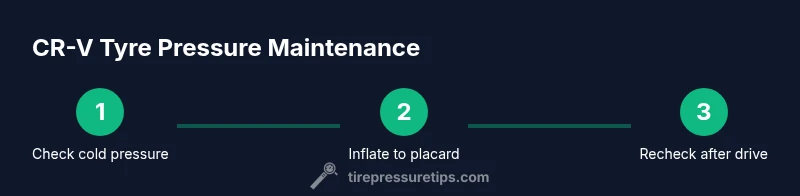
- Park on a level surface and wait for tyres to cool. 2) Remove the valve cap and place the gauge on the valve stem. 3) Note the reading and repeat on all tyres, including the spare if you routinely check it. 4) Compare each reading to the door placard and manual targets. 5) If a tyre is low, inflate to the recommended pressure, recheck, and adjust other tyres if needed. 6) Replace valve caps securely. 7) Recheck one final time after you complete inflation. 8) If readings are wildly different, inspect for leaks and revisit the procedure. 9) Log the results for future reference. 10) Store your gauge in a safe place.
Adjusting tyre pressure for load, speed, and temperature
Adjustments for CR-V tyres depend on load and driving conditions. Heavier loads or frequent highway speeds may justify slightly higher pressures within the placard range, while a light city commute could use the standard target. Temperature and altitude changes also play a role: cold mornings yield lower readings, while heat from driving can temporarily raise pressure. The aim is to keep all tyres within the manufacturer targets, with front and rear values respected as specified. Regularly recalibrate when you change wheel sizes or tyres; small changes can make a big difference in handling and wear.
Temperature effects on tyre pressure
tyres contain air, which expands with heat and contracts when cold. In winter, you may notice pressure drops as outdoor temperatures fall. In summer, higher ambient temperatures can push readings upward. Because of these fluctuations, always measure tyre pressure when tyres are cold, ideally before you drive more than a few miles. For CR-V owners, it is especially important to check pressures after seasonal transitions and following long trips in hot weather, to avoid under- or over-inflation that could affect grip and tyre wear.
TPMS: understanding warnings and maintenance
The CR-V’s TPMS alerts you when a tyre’s pressure deviates beyond a safe range. If TPMS signals a low-pressure warning, check all four tyres and adjust as needed to the placard numbers. A slow leak can cause a gradual drop in pressure; a repair or replacement may be required if the valve stem, bead, or tire is compromised. Regular TPMS maintenance includes ensuring sensors and batteries are functional and that the system’s calibration remains accurate after tire changes. Keeping TPMS in good condition supports reliable readings and safer driving.
Common mistakes and how to avoid them
Avoid inflating tyres while hot, as readings will be inaccurate. Don’t mix tyre sizes or pressures on the same axle, and never exceed the placard's maximum recommended pressure. Don’t assume the spare has the same pressure as the other tyres unless the placard specifies it. Finally, avoid relying on a single reading; temperature, recent driving, and gauge quality can all skew results. By staying consistent and following the official targets, you’ll extend tyre life and maintain better handling.
Maintenance routine and when to inspect tires
Create a simple maintenance routine: check pressure monthly, before long trips, and after seasonal changes. Mark calendar reminders to re-check after cold days or new tyres are installed. Inspect tyres for wear patterns, cracks, and punctures during pressure checks. If you notice slow leaks, damaged valves, or abnormal wear, consult a tire professional. Consistency is the key to safe, efficient driving in your CR-V.
Tools & Materials
- Digital tire pressure gauge(Calibrated, reads in psi or kPa, easy to read display)
- Air compressor or portable inflator(Provide steady, controllable airflow; ensure compatibility with gauge)
- Owner's manual or door placard(Refer to front/rear axle pressures and seasonal notes)
- Notebook or mobile app for logging readings(Helpful for tracking changes over time)
- Valve-cap wrench or spare valve caps(Prevents damaged caps and helps with hard-to-remove caps)
Steps
Estimated time: 15-25 minutes
- 1
Find the door placard and confirm targets
Locate the door jamb placard on the driver’s door and read the recommended front and rear tyre pressures. If the placard isn’t legible, consult the owner’s manual or manufacturer site for the exact values.
Tip: Double-check both front and rear pressures; CR-Vs may differ axle-to-axle. - 2
Check tyres when cold
Ensure tyres are cold before measuring; a warm tyre will show higher readings due to air expansion.
Tip: If you’ve been driving, wait at least 3 hours or test after a cool night. - 3
Remove valve cap and attach gauge
Take off the valve cap and firmly place the gauge onto the valve stem without air leaks; secure a tight seal for an accurate reading.
Tip: If you hear air escaping, stop and reseat the gauge before inflating. - 4
Read the pressure on all tyres
Record the reading for each tyre, comparing it to the placard values. Don’t forget the spare if you routinely check it.
Tip: Use the same gauge for all readings to avoid variation due to device differences. - 5
Inflate or deflate to target
If a tyre is under-inflated, add air until you reach the recommended pressure. If over-inflated, let out air gradually until the target is met.
Tip: Inflate in small increments and recheck after each adjustment. - 6
Recheck after adjustment
Recheck all four tyres after inflation to confirm uniform pressure across the axle. This helps maintain balanced handling.
Tip: Small changes on one tyre can affect steering feel; verify all tyres. - 7
Replace caps and close
Screw the valve caps back on securely to protect the valve stems from dust and moisture.
Tip: Tighten caps gently; overtightening can strip the valve stem. - 8
Log readings for future reference
Record dates and pressures so you can track trends and detect slow leaks.
Tip: Note weather, driving style, and mileage when you log readings. - 9
Inspect for leaks or damage
Look for punctures, cracks, or blisters in tyres; if you detect any, seek professional inspection.
Tip: A sidewall bubble or nail puncture requires professional assessment. - 10
Reassess periodically
Regular checks help you maintain optimal grip, wear, and fuel economy over time.
Tip: Set a monthly reminder to check pressures.
Frequently Asked Questions
What is the correct tyre pressure for a CR-V?
The correct pressure depends on your CR-V model and tyre size. Always start with the front and rear values shown on the door placard or in the owner’s manual, and read cold with a reliable gauge.
Use the door placard values and measure when the tyres are cold; consult the manual for model-specific targets.
Should I check tyre pressure when the tyres are hot or cold?
Check tyres when they are cold for the most accurate readings. Hot tyres will show higher pressures due to air expansion after driving.
Check when cold for accuracy; avoid inflating just after a run.
What if my TPMS warning stays on after inflating?
If the warning remains, recheck all tyres for leaks or incorrect readings. If readings still don’t align with placard targets, seek professional inspection.
Recheck all tyres for leaks; if unresolved, see a tire professional.
Can driving with low tyre pressure cause damage?
Yes. Low pressure causes increased tyre wear on the edges, higher rolling resistance, and potential heat buildup that can lead to tire failure.
Low pressure wears out tyres faster and can be unsafe; fix promptly.
Is it okay to mix tyre sizes or different pressures on the same axle?
Mixing tyre sizes or pressures on the same axle is not recommended. Keep tyres within the manufacturer targets and ensure matching sizes for best handling.
Stick to the recommended sizes and equal pressures on each axle.
How often should I inspect tyre pressures for a CR-V?
Check at least monthly, before long trips, and after seasonal changes or new tyres. Regular checks help catch leaks early and keep performance steady.
Check monthly and after seasons change; it helps prevent surprises.
Watch Video
What to Remember
- Check cold tyre pressures monthly.
- Follow the door placard for front/rear targets.
- Use a reliable gauge and inflate in small steps.
- Account for temperature changes in readings.
- Maintain TPMS and log readings for trend tracking.