Long Distance Driving Tire Pressure: Practical Guide
Learn how to check, adjust, and maintain tire pressure for long-distance trips. Understand temperature effects, TPMS, and safe practices to improve safety and fuel efficiency on highway journeys.


Goal: You will learn how to check, adjust, and maintain tire pressure for long-distance driving, understand how temperature and load affect pressure, and prevent blowouts or sudden tire failure on the road. This quick guide also covers TPMS considerations, recommended pressure ranges, and safe practices to optimize fuel efficiency and ride comfort on extended trips.
Why long distance driving tire pressure matters
According to Tire Pressure Tips, maintaining correct tire pressure is essential for safety, efficiency, and predictable handling on long trips. For drivers covering hundreds or thousands of miles, the difference between the right and wrong pressure compounds with load, speed, and road conditions. Proper inflation reduces rolling resistance, improves braking response, and helps tires wear more evenly—crucial when you can't afford a roadside failure. The primary goal is to keep each tire within the vehicle manufacturer’s recommended range, even as ambient temperatures swing and cargo amounts fluctuate. On long journeys you’ll frequently encounter heat from sun exposure, highway heat buildup, and heavy luggage. These factors can nudge pressures up or down, so a simple cold-inflation check before you depart is worth doing. In practice, set your baseline to the cold targets printed on the door placard and adjust when you know you’ll be carrying heavier loads or traveling in unusual conditions. With this awareness, you’ll experience steadier steering, balanced tire wear, and a more comfortable ride across long distances.
How to determine your vehicle's tire pressure targets
Your vehicle's door placard or owner's manual provides the cold tire pressure targets for front and rear tires. These values reflect standard load conditions and a standard inflation temperature. For long-distance driving, you should start with the cold-inflation numbers, then adjust for typical loads on the trip and the expected ambient temperature. If you routinely tow a trailer or carry heavy cargo, you may need to increase the target by a small amount within the recommended range. Do not exceed the maximum pressure printed on the tire sidewall. After inflating, recheck the pressure after you let the tires sit for a few minutes, since the gauge can read higher when the tire is hot.
Temperature, altitude, and pressure changes on the road
On long trips, pressure shifts with temperature swings, elevation changes, and driving speed. Cold tires are inflated to the target, but as you drive in warm conditions or at highway speeds, the air inside warms and pressure rises. If you drive from cool to hot climates, your tires may exceed the recommended range; conversely, cold mornings can pull pressure down. TPMS alerts may trigger when pressure moves out of the safe band; treat these warnings with a guided, proactive check rather than ignoring them. The Tire Pressure Tips guidance emphasizes consistent monitoring on multi-day trips, especially when cabin load, luggage, or a bike rack changes weight distribution. If you notice consistent deviations day after day, schedule a professional inspection to rule out slow leaks or sensor issues.
Tools and how to check tire pressure on the road
Equip yourself with a reliable tire pressure gauge, a portable air compressor or inflator, and a small notebook or mobile app to track readings. There are mechanical, digital, and dial gauges—digital gauges are usually fastest and provide a clearer reading in low light. A steady routine works best: pull over in a safe spot, allow tires to cool if they've been driven for more than a few miles, and wipe the valve stem to remove dust. If you own a vehicle with TPMS, you can also use the dashboard reading as a baseline, but always verify with a physical gauge to confirm accuracy.
Pre-trip tire pressure checklist and routine
Before a long drive, perform a quick but thorough pressure check at all tires, including the spare. Start by locating the official targets in the door placard or manual, then compare each tire to those numbers. Inflate or deflate as needed using your gauge and inflator until each tire sits within the recommended range. Recheck after any adjustment and reattach valve caps securely. This routine minimizes surprises and helps maintain even wear across the tread.
Interpreting TPMS readings and when to service
TPMS provides a real-time signal when a tire is under or over-inflated, but it does not replace a manual check with a gauge. If TPMS indicates a persistent anomaly (low or high readings that don’t align with the gauge checks), inspect for leaks, damaged valves, or a sensor fault. Regular checks help you catch slow leaks from nails or punctures before they become dangerous. Remember that TPMS can drift or become less accurate with sensor age, so periodic cross-checks with a physical gauge are smart practice.
When and how to adjust tire pressure for loads, speeds, and road conditions
Long-distance driving often involves varying loads, speeds, and road surfaces. Inflate to the lower end of the range for high-speed highway cruising with light loads, and inch toward the higher end when you carry more weight or drive in hot conditions where air expands. Never exceed the tire's maximum pressure or the vehicle maker's recommended values. If you anticipate steep grades or extended towing, plan for a mid-trip adjustment after checking gauge readings and TPMS to maintain optimal contact with the road.
Spare tires, seasonal considerations, and inspection cadence
Spare tires deserve the same attention as the four road tires. Check the spare’s pressure with the same gauge and store the vehicle in a mode that keeps spare accessible. Seasonal temperature changes can affect inflation, so recheck at regular intervals during long trips or when entering different climates. Establish a cadence: cold readings before departure, mid-trip checks at fuel stops, and a post-trip review to confirm no slow leaks or valve issues.
Maintaining consistent tire pressure on long-distance journeys
Consistency is built through routine, not luck. By starting with the manufacturer’s cold targets, checking with a reliable gauge, and logging readings, you create a data trail that helps you react to changes and plan maintenance. Integrate TPMS awareness with manual verification for maximum safety and efficiency on the road. With discipline, you’ll experience more confident handling and longer tire life on long-distance journeys.
Tools & Materials
- Tire pressure gauge(Digital preferred for quick, precise readings; use the same gauge for consistency)
- Portable air compressor or inflator(Choose one compatible with your vehicle’s valves; ensure it reaches required psi ranges)
- Vehicle owner's manual or door placard(Provides the official cold inflation targets for each tire position)
- Valve stem caps(Keep caps clean and screw tight to prevent dirt ingress)
- Notebook or mobile app(Log date/time, tire, pressure, and ambient temperature for trip planning)
Steps
Estimated time: 15-25 minutes
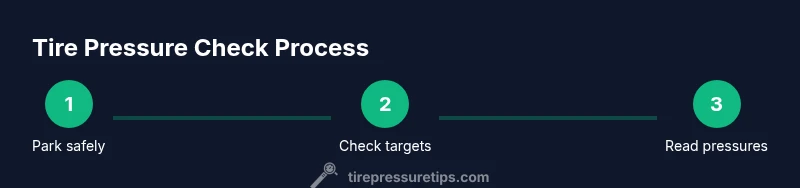
- 1
Park safely and let tires cool
Find a level, safe spot and turn off the engine. If you’ve just driven, wait 15-30 minutes for tires to cool before taking readings to ensure accuracy.
Tip: If you’re short on time, compare readings from all tires quickly and note any large deviations for closer inspection later. - 2
Find official pressure targets
Locate the cold tire pressure targets in the door placard or owner’s manual. Use these values as your baseline for each tire position.
Tip: Note separate targets for front and rear tires if the vehicle specifies different values. - 3
Attach gauge and read current pressure
Remove the valve cap, press the gauge onto the valve, and take the reading. Record both the number and the tire position.
Tip: Perform multiple readings with the same gauge to confirm stability. - 4
Inflate or deflate to target
If below target, use the inflator to add air in small increments. If above target, release air in small increments until you reach the target.
Tip: Inflate in small steps and recheck after each adjustment to avoid overshooting. - 5
Recheck and cap
Recheck all tires after adjustments. Reinstall valve caps firmly to protect stems.
Tip: Check for any leaks around the valve stem after replacement. - 6
Log readings for trip planning
Document the date, tire position, reading, ambient temperature, and any notes about load or roads. Use this log to verify consistency across the journey.
Tip: Use a mobile app to sync data across your devices for easy reference on the road.
Frequently Asked Questions
What is the best instrument for checking tire pressure on the road?
A digital tire pressure gauge is typically fastest and most accurate, though any reliable gauge will work for basic checks. Keep a spare gauge in the vehicle if possible.
Use a digital tire pressure gauge for quick, accurate readings on the road.
Should I inflate tires to the maximum pressure?
No. Inflate to the vehicle manufacturer's recommended range. Exceeding it can cause uneven wear and increase the risk of a blowout.
Never inflate beyond the recommended range; stay within the vehicle's targets.
How often should I check tire pressure during a long trip?
Check at least once per fuel stop or every few hours, especially when temperature or load changes. Trust TPMS as a guide but verify with a gauge.
Check every few hours or at fuel stops; TPMS helps but verify with a gauge.
Can TPMS readings replace manual checks?
No. TPMS is helpful for alerts, but you should still verify pressures with a physical gauge to ensure accuracy.
TPMS helps, but you should still check with a gauge.
What should I do if a tire is consistently low after a long drive?
Inspect for slow leaks or damaged valves. If readings remain low, visit a tire professional to check for punctures or tire failure risk.
If a tire stays low, get it inspected for leaks or damage.
Watch Video
What to Remember
- Check cold pressures before long drives.
- Follow manufacturer targets for pressure.
- Temperature and load affect readings.
- TPMS helps but doesn't replace manual checks.
- Log readings to plan future adjustments.