Is It Bad to Have Different Tire Pressures? A Practical Guide
Learn why uneven tire pressures matter, how to measure accurately, and how to set the right pressures for safety, handling, and tire longevity. Practical guidance from Tire Pressure Tips for drivers and car owners.


Is it bad to have different tire pressures? In general, yes—large discrepancies can harm handling, wear, and safety. This guide helps you evaluate and correct uneven pressures using a consistent baseline. You’ll learn how temperature, load, and tire age affect readings, plus a practical, step-by-step method to measure, adjust, and maintain tire pressures across all tires.
Why inconsistent tire pressure matters
According to Tire Pressure Tips, consistent tire pressure is a cornerstone of vehicle safety. Is it bad to have different tire pressure across tires? Yes, when pressures differ between tires, handling becomes unpredictable and tread wear accelerates. Manufacturers often specify different targets for the front and rear axles, and vehicle behavior can depend on those numbers. Even when there is an explicit difference, large, persistent mismatches can compromise grip, braking, and cornering confidence. Temperature and driving conditions can blur the line between acceptable variation and a safety concern. The key is to establish a baseline that reflects your vehicle's design, your typical loads, and your climate, then monitor for deviations. This article explains why this matters and how to keep pressures consistent for safety and efficiency.
How variation affects safety, comfort, and efficiency
Variation in tire pressure affects performance in several ways. Uneven pressures can alter contact patch shapes, changing how tires grip the road during braking and cornering. Underinflated tires tend to run hotter, wear faster on the edges, and can increase rolling resistance, reducing fuel efficiency. Overinflated tires may ride stiffly, resulting in a harsher ride and uneven wear on the center tread. Even small differences between tires can cause steering feel to shift, affecting driver confidence. For everyday driving, maintaining close-to-spec pressures on all tires helps preserve consistent handling, predictable braking, and even wear patterns across the tread. Remember that your vehicle’s recommended values come from the manufacturer, and TPMS alerts may reflect abrupt changes that require attention.
Common causes of uneven tire pressures
- Slow leaks from nails, repaired plugs, or damaged valves can produce a gradual drop in one tire.
- Temperature differences between day and night or between roads and parking areas can cause readings to differ.
- Variations in tire size, wear patterns, or mismatched tires on AWD systems can appear as pressure differences.
- Recently rotated tires or changing loading conditions can temporarily shift readings until pressures settle. This section helps you identify whether the variation is likely a temporary fluctuation or a sign of a more serious issue.
The role of temperature, load, and road conditions
Pressure changes occur with temperature: warmer tires expand air and read higher; cooler tires read lower. A heavy load, high-speed driving, and long highway trips can exacerbate pressure shifts, especially in the front tires that handle most of the weight. Road conditions such as rough pavement can cause micro-heat buildup, leading to readings that shift during a drive. In short, climate and usage create a moving target for optimal pressure, which is why regular checks are essential.
How to measure tire pressure accurately
- Always measure when tires are cold for baseline readings. If you’ve just driven, wait at least three hours or until the tires have cooled before checking.
- Remove the valve stem cap and use a reliable tire pressure gauge (digital or dial).
- Read the gauge when the air stops moving; note the reading for each tire.
- Compare with the placard on the driver’s door jamb or the owner’s manual. If you don’t know your target, contact the manufacturer or local dealer.
- Recheck after adjusting; pressures should settle within a few minutes.
Front vs rear: should you always use the same pressure?
Many vehicles specify different recommended pressures for front and rear tires. Always follow the placard; some vehicles require higher pressures in the front due to weight distribution or performance characteristics. If your tires are near the ends of their life, a small deviation may be more noticeable; consult your manual for any model-specific guidance.
Per-axle vs all-around pressures: practical guidance
For most cars, the recommended pattern is to match all four tires to the manufacturer's spec unless the placard indicates a per-axle setup. On AWD vehicles, equalizing pressures across all tires is often recommended to avoid drivetrain stress. In any case, do not mix old and new tires with different wear patterns or mismatch in size, as this can affect handling.
Step-by-step overview of verification and adjustment
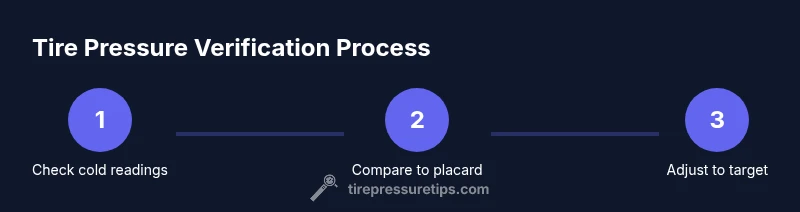
Use the STEP-BY-STEP block for the formal procedure, which is designed to be followed in sequence and with time to set. Here is a quick overview: check cold pressures, compare to placard values, adjust as needed, recheck after settling, inspect for leaks, and record the readings for future reference. The following STEP-BY-STEP block provides the full sequence with time estimates and tips.
When to seek professional help
If you notice persistent pressure differences after inspection and adjustment, or your TPMS warning persists, it’s wise to have a tire technician inspect for slow leaks, valve issues, or sensor faults. A professional can verify the tire's integrity, verify the TPMS calibration, and help you set the correct target pressures for your vehicle.
Real-world scenarios and practical tips
Consider a typical daily routine: before a long trip you check all tires; after winter storms you re-check due to temperature swings; on AWD vehicles you ensure all four tires are within the same band of pressure; these habits help avoid last-minute tire problems. A simple log of readings helps you track changes and catch slowly developing leaks.
Maintenance routine and seasonal considerations
Make tire pressure checks part of your monthly maintenance and seasonal changes. In cold weather, pressure can drop and require adjustments; in warm weather it can rise. Always validate against manufacturer targets and re-check after inflating or rotating tires. Pair tire pressure checks with tread depth inspection, wheel alignment checks, and TPMS battery status if applicable.
Tools & Materials
- Digital or Dial Tire Pressure Gauge(Use cold tires for accuracy)
- Air Compressor or Access to Public Air Pump(Ensure gauge reads in psi/bar; stay within max PSI)
- Owner's Manual or Vehicle Door Placard(Reference target pressures per axle)
- Pen and Notepad(Record readings and adjustments)
- Valve Core Tool(Optional for leaks inspection)
Steps
Estimated time: 25-40 minutes
- 1
Check cold pressures
Park on a level surface and allow tires to cool to ambient temperature. Remove valve caps and read each tire's pressure with a gauge. Note the readings for all four tires, plus the spare if required by your setup.
Tip: Always measure when tires are cold to avoid inflated readings from heat. - 2
Locate target pressures
Find the vehicle's recommended pressures on the door placard or in the owner's manual. Record front vs rear targets if your model specifies different values.
Tip: If your placard shows different front/rear targets, follow those exactly. - 3
Inflate or deflate to target
Set each tire to its target pressure using an air compressor or pump. Do not exceed the maximum PSI printed on the tire sidewall. Recheck after a minute for settling.
Tip: If you overinflate, release air gradually and recheck. - 4
Recheck after settling
Tires tend to settle a bit after adjustment; re-measure once they've cooled or after a short drive and confirm all four are within spec.
Tip: Let tires cool before rechecking if you’ve recently driven. - 5
Inspect for leaks or damage
While checking, look for nails, cracks, or damaged valves. If you detect a leak, do not continue driving; address promptly.
Tip: If you hear hissing, stop and inspect the area closely. - 6
Check the spare tire
If your vehicle has a designated spare, verify its pressure and keep it at the recommended level.
Tip: Spare tires are often neglected; include it in your pressure log. - 7
Document and schedule checks
Log readings and set reminders to recheck regularly, especially after temperature changes or rotations.
Tip: Create a monthly reminder and note any patterns over time. - 8
When TPMS warrants service
If TPMS remains illuminated after adjustments, seek professional inspection to rule out sensor issues or slow leaks.
Tip: Persistent TPMS alerts should not be ignored.
Frequently Asked Questions
Is it okay to have different tire pressures on front and rear tires?
Some vehicles require different pressures per axle; always follow the placard. If you notice large discrepancies, recheck after rotation.
Some cars have different front and rear pressures; follow the placard.
What happens if I drive with underinflated tires?
Underinflation can cause heat buildup, irregular wear, and reduced handling.
Underinflated tires heat up and wear unevenly.
Do temperature changes really affect tire pressure?
Yes, air expands with heat and contracts when cold; readings shift with weather.
Temperature changes shift tire readings.
Should I inflate all four tires to the same pressure?
Not always; many vehicles specify different front/rear pressures. Check placard.
Follow the driver's placard.
How often should I check tire pressure?
Check monthly and before long trips; especially after seasonal temperature changes.
Check monthly and before trips.
What if the TPMS warning stays on after I adjust pressures?
Persisting warning can indicate a slow leak or sensor issue; have it inspected.
If TPMS stays on, get it checked.
Watch Video
What to Remember
- Follow manufacturer-recommended tire pressures.
- Temperature and load affect readings over time.
- Check all tires and the spare for balanced pressures.
- Keep a log of readings and adjustments for future reference.