Different Tire Pressures: A Practical Guide for Drivers
Learn how different tire pressures affect safety, fuel economy, and tire wear, plus a practical step-by-step guide to check and adjust inflation for your vehicle.


Understanding different tire pressures helps you stay safe, save fuel, and extend tire life. Front and rear axles, vehicle load, and seasonal temperatures influence ideal inflation. This quick guide previews typical effects, explains how to check your tires, and outlines when to adjust pressures for comfort, handling, and efficiency. By following these steps, you’ll maintain optimal performance with confidence.
Why different tire pressures matter
Different tire pressures influence how your vehicle behaves on the road, how it wears its tread, and how efficiently it uses fuel. The term refers to the fact that there isn’t a single universal pressure that fits every car, load, or weather condition. Instead, most vehicles have a recommended range or a precise figure shown on a door placard, in the owner’s manual, or on the tire itself. According to Tire Pressure Tips, the goal is to keep tires within the recommended range for everyday driving, with adjustments for heavier loads, higher speeds, or extreme temperatures. The Tire Pressure Tips team found that small deviations from the recommended pressure can lead to noticeable changes in handling, ride quality, and tire wear over time. Maintaining proper pressures helps protect wheel rims from impact damage, preserves even contact with the road, and supports braking performance. In short, different tire pressures are a practical lever you can use to optimize safety, comfort, and longevity without purchasing new hardware.
Tools & Materials
- Tire pressure gauge (digital or analog)(Choose a gauge you can read easily; verify it against a known reference occasionally.)
- Air compressor or access to a gas station air pump(Use it to reach the exact target pressure slowly and safely.)
- Vehicle owner’s manual and tire placard(Find the exact front/rear axle pressures and cold-inflation values.)
- Soapy water (optional, for leaks)(Check for slow leaks around valve stems or bead seals if you suspect a leak.)
- Notebook or mobile app for recording pressures(Track seasonal changes and maintenance reminders.)
Steps
Estimated time: 15-25 minutes
- 1
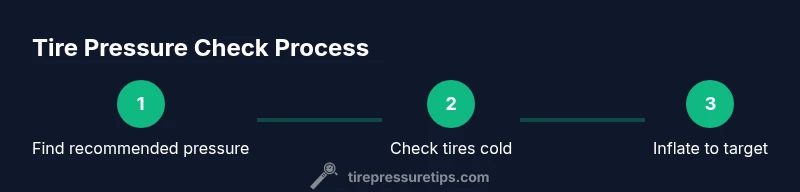
Find the recommended pressures
Look up the cold-inflation pressures on the door placard or in the owner’s manual. Note separate values for front and rear axles if provided. This is your target, not the tire’s maximum inflation rating.
Tip: Always use the official spec for your vehicle, not the tire’s max sidewall pressure. - 2
Check tires when cold
Park in shade and wait several hours after driving to ensure tires are cool before measuring. Temperature inside a tire can skew readings.
Tip: If you’ve just driven, wait at least 3 hours or cool the tires before checking. - 3
Remove valve caps and attach gauge
Remove the valve cap and press the gauge firmly onto the valve stem to get an accurate reading. If you hear air escaping, reseat and try again.
Tip: Make sure there is no dirt blocking the valve stem before measurement. - 4
Inflate or deflate to the target
If low, add air in small increments and recheck after each addition. If high, release air slowly until you hit the target.
Tip: Always re-measure after adjustments to confirm accuracy. - 5
Re-check all tires
Measure all four tires and, if you rotate the spare, include it too. Ensure consistent readings across the wheel set for balanced handling.
Tip: Uneven pressures can cause steering pull or uneven tread wear. - 6
Record and monitor
Log the readings with date, temperature, and load conditions. Review the log seasonally and before long trips.
Tip: Keeping a history makes it easier to notice drifting pressures.
Frequently Asked Questions
What exactly are 'different tire pressures' and why do they matter?
Different tire pressures refer to the range of inflation values that match your vehicle’s design and loading. Proper pressures influence safety, handling, tire wear, and fuel economy—so staying within the recommended range matters for daily driving.
Different tire pressures are the inflation amounts your car was designed to use. Keeping them in the recommended range keeps you safe and saves tires and fuel.
Can I inflate tires to the max limit on the tire sidewall?
No. The maximum printed on the tire is not the target for everyday driving. Use the vehicle’s official recommended pressure for safe performance.
Don’t inflate to the sidewall max—use the car’s recommended pressure instead.
Does TPMS show the exact pressure?
TPMS alerts you when a tire is under- or over-inflated, but it does not provide a precise PSI reading. Use a gauge for exact measurements.
TPMS warns you, but use a gauge to know the exact numbers.
Should I adjust pressures for cold weather?
Yes. Cold weather lowers tire pressure. Check and adjust when tires are cold to maintain safe handling and efficiency.
Yes, colder weather means lower pressure, so check when cold and adjust accordingly.
What about the spare tire?
Spare tires should be checked as part of routine maintenance. Some spares require different pressures, especially if they are a space saver.
Check the spare too; some spares have different targets.
How often should I check tire pressure?
Check at least monthly and before long trips, especially when seasons change or you adjust cargo loads.
Check monthly and before trips, especially in seasonal changes.
What to Remember
- Check your vehicle’s recommended cold pressures first
- Measure all four tires (and spare if applicable) when tires are cold
- Inflate or deflate in small steps and recheck for accuracy
- Maintain a simple log of readings to track changes over time