Hyundai Tucson Tire Pressure: Check, Set, and Maintain
Learn how to check, set, and maintain proper tire pressure for your Hyundai Tucson. Practical steps, TPMS insights, and safety tips from Tire Pressure Tips.


Check and set your Hyundai Tucson tire pressure to the vehicle's recommended specification, usually found on the door jamb sticker or in the owner’s manual. Use a reliable gauge, check when tires are cold, and adjust all four tires to the same target pressure. Remember TPMS warnings and inspect for leaks or damaged sensors if the light stays on.
Why Tire Pressure Matters for Hyundai Tucson
Maintaining correct tire pressure is essential for safety, performance, and efficiency on every Hyundai Tucson. The Tire Pressure Tips team emphasizes that underinflated tires can reduce steering response, increase tire wear, and raise the risk of a blowout, especially on highway ramps or during quick maneuvers. Overinflated tires may improve steering feel briefly but result in harsher rides, uneven wear, and reduced traction in wet conditions. Consistent, correct tire pressure helps your Tucson deliver optimal fuel economy, balanced handling, and longer tire life. In daily driving, checking pressure monthly and before long trips is a practical habit that pays off in safer starts and smoother commutes.
Understanding the Hyundai Tucson Tire Pressure Specs
Your Tucson’s correct tire pressure isn’t a fixed number for every tire; it depends on the tire size, load, and vehicle configuration. The door jamb label usually lists separate front and rear targets and sometimes different values for the front axle versus the rear axle. When you see “cold tire pressure” on the sticker, that means tires should be checked after a few hours of no driving, not after a highway run. If you’ve replaced wheels or tires, the new specs may differ—always cross-check with the owner’s manual. According to Tire Pressure Tips, relying on the vehicle label is the safest first step, with the manual providing any model-year caveats. For SUVs like the Tucson, the recommended pressures are designed to balance ride comfort with tire wear and vehicle stability. When in doubt, use the factory targets rather than generic “one size fits all” numbers.
How to Find the Right Pressure for Your Tucson
To find the exact target pressure, locate the door jamb sticker on the driver’s side and read the listed front and rear pressures. If the label is missing or illegible, consult the owner’s manual or contact a Hyundai dealership for the correct specifications for your trim and tire size. Note that different trims may use different wheels or tires with varying pressure targets. Also remember that the recommended pressure is for cold tires and does not account for seasonal weather or heavy loads. Tire Pressure Tips recommends writing down the target pressures and keeping them in your glove compartment for quick reference on the road.
Checking Tire Pressure: Tools and Best Practices
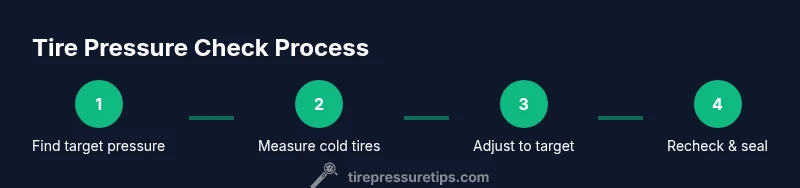
Always use a reliable tire pressure gauge, preferably a digital or dial gauge with a clear readout. Before measuring, ensure tires are cold and have rested for at least 3 hours, or wait until you haven’t driven more than a mile. Remove the valve cap, press the gauge onto the valve stem squarely, and note the reading. If the reading is low, add air in small increments and recheck. If it’s high, release air until you reach the target pressure. After adjusting, recheck with the gauge to confirm accuracy, then replace the valve caps tightly to prevent dirt and moisture ingress.
Adjusting Pressure for Load, Speed, and Temperature
Your Tucson may regularly carry passengers or cargo, which can change the ideal pressure. Heavier loads typically require higher pressures on some vehicles, while high-speed driving can alter tire behavior as well. Temperature also plays a role: colder weather usually lowers tire pressure, while warm weather increases it. Make it a habit to check tire pressure when temperatures change significantly, such as during season transitions. Aim to keep front and rear tires within their target range and distribute air evenly to maintain stable handling and even tread wear.
Implementing TPMS and What It Tells You
Tire Pressure Monitoring System (TPMS) provides a real-time alert when a tire is underinflated or overinflated. The Tucson’s TPMS should light up if a tire falls outside the acceptable range by a margin set by the manufacturer. If the light stays on after you’ve adjusted pressures, there may be a slow leak, a puncture, or a faulty sensor. In some cases, TPMS sensors require calibration after tire changes or after replacing sensors. Regularly check TPMS status in the vehicle’s menu and ensure the system is up to date with the latest software and sensor health.
Troubleshooting Common Tire Pressure Issues
If you notice rapid pressure loss, inspect tires for punctures, nails, or sidewall damage. A noticeable drop after a short drive could indicate a leak at the valve stem or a faulty TPMS sensor rather than a flat tire. Ensure valves and caps are clean and properly tightened. For persistent TPMS warnings, consider having the sensors tested by a professional and verify that the tire bead seals properly after inflation. Regular inspections can prevent unsafe driving conditions and help you avoid unexpected tire failures.
Tools & Materials
- Tire pressure gauge (digital or analog)(Choose a gauge with a clear readout and a wide measurement range)
- Tire inflator or air compressor(Prefer a unit with a built-in pressure gauge)
- Valve-cap removal tool or your hands(Keep valve caps clean and replace after measurement)
- Owner’s manual or door jamb label(Used to confirm target pressures for your Tucson model)
- Notebook or mobile note app(Record the target pressures and any changes for quick reference)
Steps
Estimated time: 15-25 minutes
- 1
Identify target pressures
Locate the front and rear tire pressure targets on the driver’s door jamb sticker. If the sticker is unreadable, consult the owner’s manual for the exact values for your tire size. Note that some Tucson models show different targets for front and rear axles.
Tip: Always confirm the target pressures are for cold tires before you measure. - 2
Prepare your tools
Gather a reliable tire pressure gauge and an inflator. Make sure the tires are cold and have rested for several hours. Remove the valve caps so you can access the valve stems.
Tip: Keep valve caps in a safe place to avoid losing them. - 3
Measure current pressure
Press the gauge onto the valve stem in a straight, perpendicular motion to get an accurate reading. Read the pressure and compare it with the target. If you measure after driving, recheck when tires are cold for accuracy.
Tip: Take multiple readings on each tire to ensure consistency. - 4
Adjust to target pressure
If pressure is low, add air in small 1-2 psi increments and recheck. If pressure is high, release air slowly until you reach the target. Repeat for all four tires to maintain even handling.
Tip: Never exceed the maximum tire pressure listed on the tire sidewall. - 5
Recheck and seal
After adjustments, recheck all four tires. Ensure valve caps are tightened to prevent dirt or moisture ingress. Recheck TPMS status if your vehicle has active warnings.
Tip: Check for any slow leaks around the valve stem or bead area. - 6
Verify safety and record
Drive a short distance and recheck the tire pressures to ensure stability. Record the final numbers for future reference and note any discrepancies that may require service.
Tip: Keep a simple log of dates, pressures, and ambient temperatures.
Frequently Asked Questions
What is the correct tire pressure for Hyundai Tucson?
The correct pressure is listed on the door jamb sticker or in the owner’s manual for your specific Tucson model and tire size. Check cold tires and use a gauge to set all four tires to those targets.
Check the door jamb sticker or the manual for your exact numbers, and remember to measure when tires are cold.
How often should I check tire pressure?
Check at least once a month and before long trips. Temperature changes and load can affect pressure, so inspect more often during seasonal transitions.
Check monthly, and before long trips, especially when temperatures shift.
What causes TPMS light to come on?
TPMS lights illuminate when a tire is significantly underinflated or overinflated or when sensors fail. If the light remains after adjusting pressures, inspect for leaks or sensor issues.
TPMS lights trigger for underinflation, overinflation, or sensor problems. If it stays on after adjustments, get the sensors checked.
Can underinflated tires cause damage?
Yes. Underinflation increases heat, accelerates wear on the outer tread, and reduces fuel efficiency. It can also compromise grip in wet or snowy conditions.
Underinflation can wear tires faster and affect grip and fuel economy.
Should tire pressure change with load or speed?
Yes. Heavier loads or different driving conditions can shift the target pressure slightly. Always follow the door jamb label for your setup, and adjust using proper gauges.
Load and speed can alter the ideal pressure; follow the label and use a gauge when adjusting.
How does temperature affect tire pressure?
Temperature changes affect air pressure; colder weather typically lowers pressure, while warmer weather raises it. Check pressures during seasonal transitions for accuracy.
Temperature affects pressure—check more often when seasons change.
Watch Video
What to Remember
- Check tire pressure when tires are cold
- Use a reliable gauge and verify readings
- Follow the door jamb label for target pressures
- Adjust all four tires to the same target range
- Monitor TPMS and inspect for leaks if warnings appear